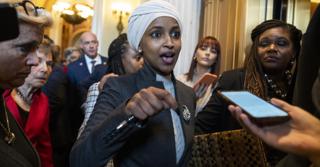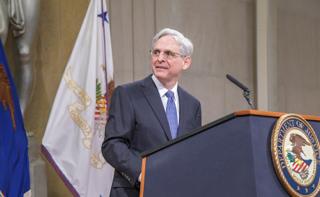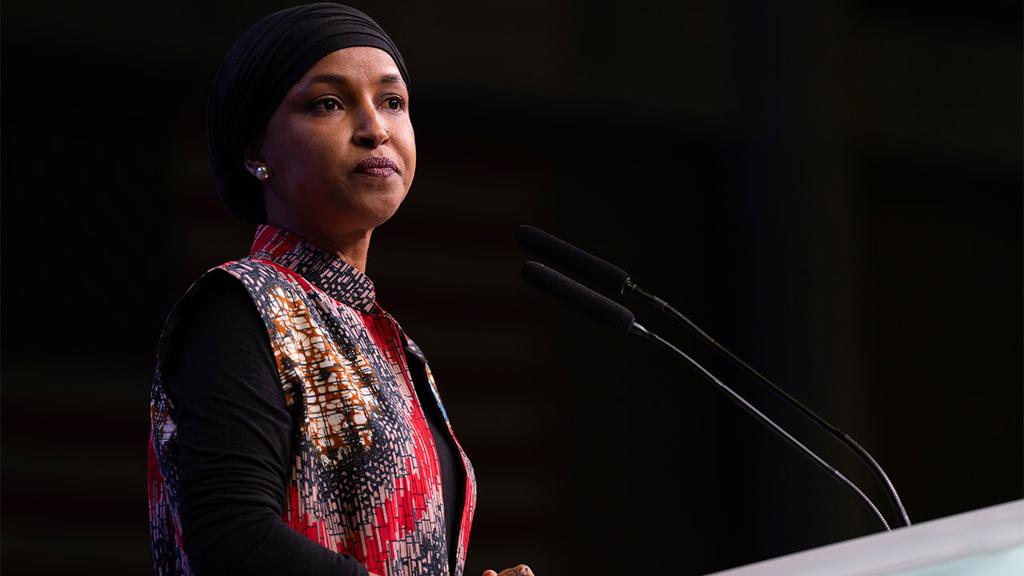
Federal authorities recently conducted a raid on the Washington, D.C., home of Rep. Ilhan Omar, D-Minn., as part of an ongoing federal investigation. The operation involved more than a dozen Homeland Security Investigations agents, who seized 17 items, including cellphones and notebooks. The search was carried out under a warrant signed by Magistrate Judge Matthew Sharbaugh, a judge with a record of donating to Democratic campaigns and who previously clerked for an Obama-appointed judge.
The investigation into Rep. Omar, along with recent statements by Democratic leaders regarding legal action against Republicans, has intensified the national debate over the direction and impartiality of the U.S. justice system. The events have become a flashpoint for competing visions of the rule of law, with both supporters and critics weighing in on the significance and motivations behind these legal actions.
Details of the Omar Investigation
The search of Omar's home was authorized after a judge determined there was probable cause to proceed. The investigation reportedly focuses on several areas, including questions about Omar's marriage history, possible immigration fraud, and her financial connections to a longstanding Somali fraud ring in Minnesota. These issues have been the subject of public scrutiny for years, with critics pointing to allegations of immigration fraud and a notable increase in Omar's net worth as evidence warranting further investigation.
Some observers have emphasized the legitimacy of the probe, noting that the warrant was issued by a judge with a liberal background, which they argue counters claims of partisan motivation. Federal officials have not commented publicly on the specifics of the case or the evidence that led to the search.
Omar, for her part, has strongly criticized the investigation. She has described the probe as "bizarre," "pointless," and politically motivated, suggesting that it is an intimidation tactic orchestrated by her political opponents. Former President Barack Obama has echoed Omar's claims, defending her and characterizing the investigation as an effort to intimidate and silence political adversaries. Omar's supporters argue that the investigation is part of a broader pattern of targeting minority and progressive lawmakers, while her critics maintain that the probe is overdue and based on substantial evidence.
"Omar, always eager to play victim, dismissed the investigation as 'bizarre,' 'pointless,' and an intimidation tactic from a political foe."
— Rep. Ilhan Omar, D-Minn.
The investigation has also drawn attention to broader concerns about fraud within Minnesota's Somali community, though Omar and her allies have rejected attempts to link her to these issues, calling such connections unfounded and politically charged.
Slotkin’s Comments on Legal Action
The day after the raid on Omar's home, Sen. Elissa Slotkin, D-Mich., addressed the University of Chicago's Institute of Politics. During her remarks, Slotkin discussed the idea of pursuing "signature" legal cases against individuals who "enabled" former President Donald Trump. She described this approach as a "deterrence message" intended to discourage young conservatives from seeking positions in future Republican administrations.
Slotkin's comments have drawn criticism from conservative groups and some legal experts, who argue that such rhetoric risks criminalizing political opposition and could deter qualified individuals from public service. Critics contend that using legal action as a deterrent undermines the principle of equal justice under the law and politicizes the justice system.
"Slotkin admitted her desire to pursue 'signature' legal cases against those who have 'enabled' President Donald Trump, in order to push a 'deterrence message' for young people."
— Sen. Elissa Slotkin, D-Mich.
Slotkin has not publicly responded to the criticism of her remarks. Supporters of her position, however, argue that holding government officials accountable for their actions is essential for upholding democratic norms and ensuring that abuses of power are addressed. They maintain that legal accountability is a necessary component of a functioning democracy, even if it has political consequences.
Broader Political Context
The developments involving Rep. Omar and Sen. Slotkin have become central to a wider debate over the rule of law in the United States. The article notes that Democratic leaders, including House Minority Leader Hakeem Jeffries, D-N.Y., have discussed the possibility of impeachment proceedings or further investigations should Democrats regain control of the House. This rhetoric has fueled concerns among critics that legal investigations are increasingly being used as tools for political gain, rather than as impartial mechanisms for enforcing the law.
Opponents of this approach argue that it threatens to erode public trust in the justice system and could discourage talented individuals from entering public service due to fears of politically motivated investigations. They warn that the perception of a politicized justice system undermines the foundational principle that all individuals are equal before the law.
Supporters, on the other hand, contend that robust legal accountability is necessary to maintain the integrity of democratic institutions. They argue that investigations and legal proceedings against public officials, regardless of party affiliation, are vital for deterring misconduct and preserving public confidence in government.
As the investigation into Rep. Omar continues and Democratic leaders debate the use of legal action against political opponents, these issues are expected to remain at the forefront of public discourse. Voters will likely weigh these competing visions for justice and the rule of law as they consider their choices in the upcoming election cycle. The outcome of these debates may have lasting implications for the balance between political accountability and the impartial administration of justice in the United States.