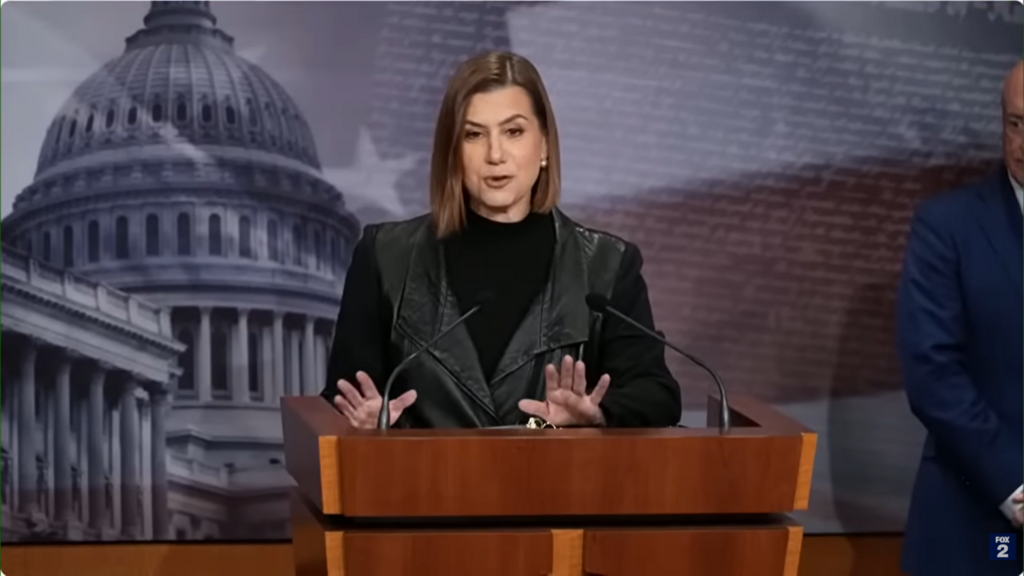
Sen. Elissa Slotkin, D-Mich., recently told constituents at a town hall that the Safeguarding American Voter Eligibility (SAVE) Act would "make it hard for any Democrat in any state to win an election." Her remarks have drawn renewed attention to the ongoing partisan divide over voter identification and citizenship requirements in federal elections.
Explainer Election Integrity in America: Safeguarding Voter Trust and Ballot Security
The SAVE Act, also referred to as the SAVE America Act, is at the center of a national debate over election integrity and voter access. Supporters argue that the legislation is necessary to protect the electoral process by ensuring that only eligible U.S. citizens can register and vote in federal elections. Opponents, however, warn that the proposed requirements could disenfranchise eligible voters and disproportionately affect certain groups.
Details of the SAVE Act
The SAVE Act would require individuals registering to vote in federal elections to provide documentary proof of U.S. citizenship. In addition, the bill mandates that voters present photo identification when casting a ballot. The legislation also directs states to update and maintain accurate voter rolls, a step proponents say is essential to prevent ineligible voting and maintain public confidence in election outcomes.
According to reporting by The Federalist, the SAVE Act has passed the Republican-controlled House of Representatives on party-line votes three times. However, the bill has stalled in the Senate, where it has faced a Democratic filibuster and opposition from some Republicans. The ongoing impasse reflects deep partisan divisions over how best to balance election security with voter access.
Slotkin’s Remarks and Reactions
At her recent town hall, Slotkin addressed the SAVE Act and explained why Democrats have blocked the bill. She stated that the legislation would "literally allow this administration to rig our democracy so that it would be hard for any Democrat in any state to win an election." Her comments were met with applause from attendees and quickly circulated on social media platforms. Outlets such as TheBlaze highlighted the exchange, amplifying the debate online.
"The SAVE America Act would make it hard for any Democrat in any state to win any election."
— Sen. Elissa Slotkin, D-Mich.
Slotkin’s remarks prompted swift responses from Republican lawmakers. Sen. Mike Lee, R-Utah, a lead sponsor of the SAVE Act, responded on X (formerly Twitter), questioning whether Democrats were admitting they could not win elections without noncitizen votes. Sen. Rand Paul, R-Ky., also weighed in, criticizing Slotkin's assertion that the bill would "disenfranchise all married women." Paul called the claim false and argued that requiring identification to vote is a matter of "common sense."
Partisan Divide and Legislative Outlook
The SAVE Act has faced near-unanimous opposition from Democrats in both chambers of Congress. In the House, nearly every Democrat voted against the bill, and in the Senate, Democrats have blocked it from advancing to a floor vote. Slotkin’s comments have intensified scrutiny of the Democratic Party’s stance on voter ID and citizenship requirements, with critics contending that opposition to the bill undermines election security.
Supporters of the SAVE Act, including many Republican lawmakers, argue that the legislation is needed to ensure that only eligible U.S. citizens participate in federal elections. They point to polling data, cited by The Federalist, indicating broad public support for election integrity reforms such as those proposed in the bill. Proponents also emphasize the importance of maintaining accurate voter rolls to prevent potential fraud and bolster public trust in election results.
Democrats and other opponents of the SAVE Act argue that the bill’s requirements could disenfranchise eligible voters, particularly those who may have difficulty obtaining the necessary documentation. Slotkin specifically raised concerns that married women could be disproportionately affected, although this claim has been disputed by Republican lawmakers. Critics of the bill also warn that stricter requirements could create barriers for low-income individuals, minorities, and elderly voters.
Broader Context and Ongoing Debate
The debate over the SAVE Act comes amid broader national discussions about election security, voter access, and the integrity of the democratic process. In recent years, disputes over voting laws have intensified, with states enacting a range of measures aimed at either expanding or restricting access to the ballot box.
While Republican leaders and conservative commentators have pressed Democrats to address concerns about noncitizen voting, Democratic officials have not issued detailed responses to the latest criticisms. The future of the SAVE Act in the Senate remains uncertain, as partisan divisions over voting requirements and election security persist. The ongoing debate underscores the challenges lawmakers face in balancing efforts to protect election integrity with the need to ensure broad and equitable access to the polls.
As the 2024 election cycle approaches, the fate of the SAVE Act and similar proposals will likely remain a focal point in the national conversation about voting rights and election reform.