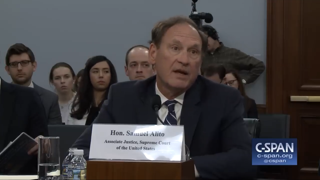
Justices Clarence Thomas and Samuel Alito have issued pointed critiques of lower courts for allegedly ignoring Supreme Court rulings and federal immigration law in recent decisions. Their comments arose in the context of two significant cases, Mullin v. Doe and Mullin v. Al Otro Lado, where they expressed deep concern over judicial interpretations that they believe undermine established legal frameworks and the authority of the Supreme Court.
Explainer Understanding the Supreme Court’s Impact on Law and Liberty
The core issue revolves around the authority of lower courts to grant relief that the justices argue is explicitly prohibited by federal immigration law. Justice Thomas emphasized that the Immigration and Nationality Act (INA) limits federal courts' jurisdiction, stating that lower courts cannot certify classes of individuals for injunctions that the statute does not allow. This interpretation is crucial as it delineates the boundaries of judicial authority in immigration matters.
In the case of Mullin v. Al Otro Lado, Justice Thomas noted that the challengers sought relief that the law explicitly prohibits. He stated, "The District Court acknowledged that our interpretation of §1252(f )(1) in Aleman Gonzalez barred this relief … Nonetheless, the District Court effectively gave Respondents all that they asked for in the form of nominally declaratory relief." This raises significant questions about the boundaries of judicial authority and the separation of powers, particularly in the context of immigration law.
Judicial Authority and Immigration Law
Justice Thomas's concurrence highlighted the implications of lower courts granting class-wide relief under the INA. He argued that such actions may infringe on the President's constitutional authority to regulate immigration. He stated, "any statute that forced the President to allow aliens to cross the border against his will would appear to exceed Congress’s enumerated powers." This assertion underscores the delicate balance between judicial intervention and executive power in immigration policy.
Justice Alito's critique was more subtle but equally pointed. In his opinion on Mullin v. Doe, he noted that while some Temporary Protected Status (TPS) designations have been challenged in court, similar actions by previous administrations were not met with legal opposition. He remarked, "Legal challenges to [President Trump’s] decisions began almost immediately," suggesting a pattern of judicial scrutiny that he believes is politically motivated. This observation raises concerns about the consistency of judicial responses to executive actions across different administrations.
Alito referenced the Trump administration's attempts to end TPS for Venezuelan nationals, which faced multiple injunctions from lower courts. He expressed concern that these judicial interventions have continued despite the Supreme Court's previous rulings in favor of the administration. This ongoing tension reflects a broader issue regarding the role of the judiciary in immigration matters and its relationship with executive authority.
Patterns of Judicial Intervention
The justices' comments are part of a broader trend where members of the Supreme Court have criticized lower courts for overstepping their authority. Last year, Justice Neil Gorsuch, joined by Justice Brett Kavanaugh, condemned lower court judges for disregarding Supreme Court guidance. He stated, "Whatever their own views, judges are duty-bound to respect ‘the hierarchy of the federal court system created by the Constitution and Congress.’" These remarks underscore a growing tension between the Supreme Court and lower courts regarding the interpretation and application of immigration law.
Critics of the justices' positions argue that the judicial system must remain a check on executive power, particularly in matters of immigration, where the stakes are high for individuals seeking asylum or protection. The role of the judiciary is vital in ensuring that the rights of individuals are upheld, even in the face of executive actions that may be deemed controversial.
Supporters of the lower court decisions have not publicly responded to the justices' critiques, leaving some questions about the balance of judicial authority and executive power in immigration matters unresolved. Legal experts note that while the Supreme Court's interpretations are binding, the complexities of immigration law often lead to varied interpretations at the lower court level. This variability can create confusion and uncertainty for individuals navigating the immigration system.
The implications of these decisions and critiques could shape future immigration policy and the role of the judiciary in overseeing executive actions. As the Supreme Court continues to navigate these contentious issues, the balance of power between branches of government remains a focal point of legal debate. The ongoing dialogue between the Supreme Court and lower courts will likely influence how immigration law is interpreted and enforced in the years to come.