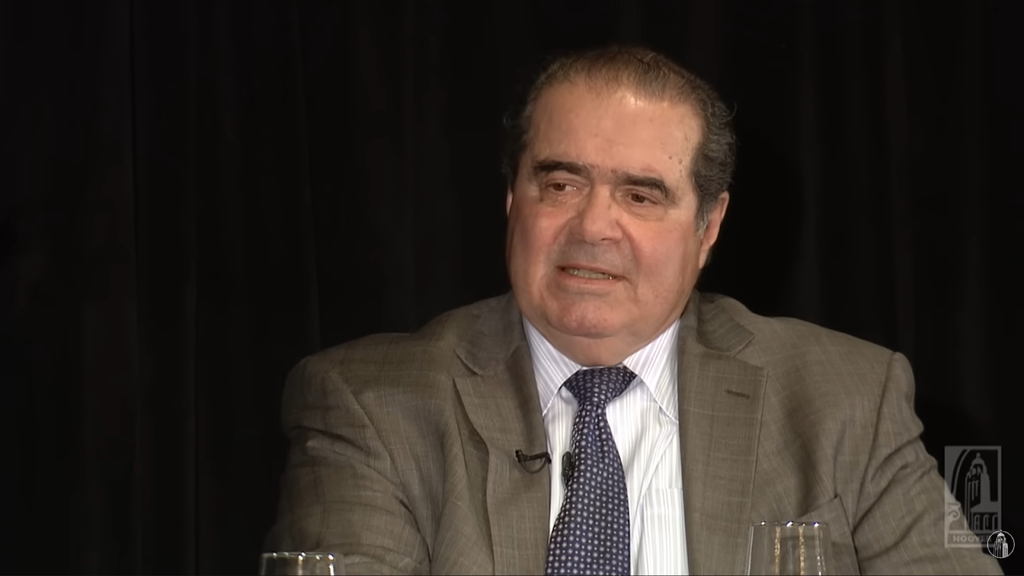
Supreme Court Justice Antonin Scalia passed away on February 13, 2016, leaving behind a legacy that continues to shape legal discourse in the United States. As the legal community reflects on his contributions, the tension between originalism and judicial activism remains a focal point of debate among scholars and practitioners.
Scalia, appointed by President Ronald Reagan, was a leading figure in the originalist movement, advocating for a strict interpretation of the Constitution as it was understood at the time of its enactment. His views often put him at odds with those who support a more flexible interpretation of constitutional law, raising questions about the role of the judiciary in a democratic society.
A Pioneer of Originalism
Throughout his nearly 30-year tenure on the Supreme Court, Scalia was known for his sharp wit and incisive legal reasoning. He argued that judges should not create new rights or provisions based on contemporary public opinion. In a 2004 speech, he warned of the dangers of judicial activism, stating, "As long as judges tinker with the Constitution to ‘do what the people want,’ instead of what the document actually commands, politicians who pick and confirm new federal judges will naturally want only those who agree with them politically."
Scalia's commitment to originalism was evident in many of his opinions, including the landmark 2008 case District of Columbia v. Heller, where he affirmed the Second Amendment right to bear arms. He wrote, "Undoubtedly some think that the Second Amendment is outmoded... what is not debatable is that it is not the role of this Court to pronounce the Second Amendment extinct."
Judicial Restraint vs. Activism
A recurring theme in Scalia's judicial philosophy was the belief that judges should not act as lawmakers. In a 2011 interview, he emphasized that it is not the job of unelected judges to change the Constitution. "You don’t need a constitution to keep things up to date. All you need is a legislature and a ballot box," he said. This perspective has drawn criticism from those who argue that judicial intervention is sometimes necessary to protect individual rights.
Supporters of judicial activism contend that the courts play a crucial role in addressing social injustices and evolving societal norms. They argue that Scalia's strict interpretation can lead to a failure to protect marginalized groups. Critics of his approach have pointed out that while he championed originalism, it can sometimes hinder progress on civil rights issues.
Controversial Opinions and Dissent
Scalia's dissent in the 2015 Obergefell v. Hodges case, which legalized same-sex marriage, exemplified his stance against what he viewed as judicial overreach. He described the majority opinion as an extension of the Court's power to create rights not mentioned in the Constitution, stating, "Hubris is sometimes defined as o’erweening pride... with each decision that takes from the People a question properly left to them, we move one step closer to being reminded of our impotence."
His colorful language and memorable phrases often captured public attention. In a dissent regarding the Affordable Care Act in 2015, he referred to the majority's reasoning as "interpretive jiggery-pokery" and criticized it as "pure applesauce."
Personal Reflections and Legacy
Beyond his legal opinions, Scalia was known for his humor and personal anecdotes. He often joked about his family life, once comparing his first child to a pancake, saying, "In a big family the first child is kind of like the first pancake. If it’s not perfect, that’s OK. There are a lot more coming along."
His deep Catholic faith also influenced his views on the role of religion in public life. Scalia argued against the separation of church and state, asserting that honoring God in public ceremonies is part of American tradition. He encouraged others to embrace their faith, stating, "Have the courage to have your wisdom regarded as stupidity. Be fools for Christ."
As the legal community commemorates a decade since Scalia's passing, his influence on originalism and judicial philosophy remains significant. While his views have sparked debate, they have also shaped the conversation around the role of the judiciary in American democracy. His legacy continues to inspire both supporters and critics of his approach to constitutional interpretation.