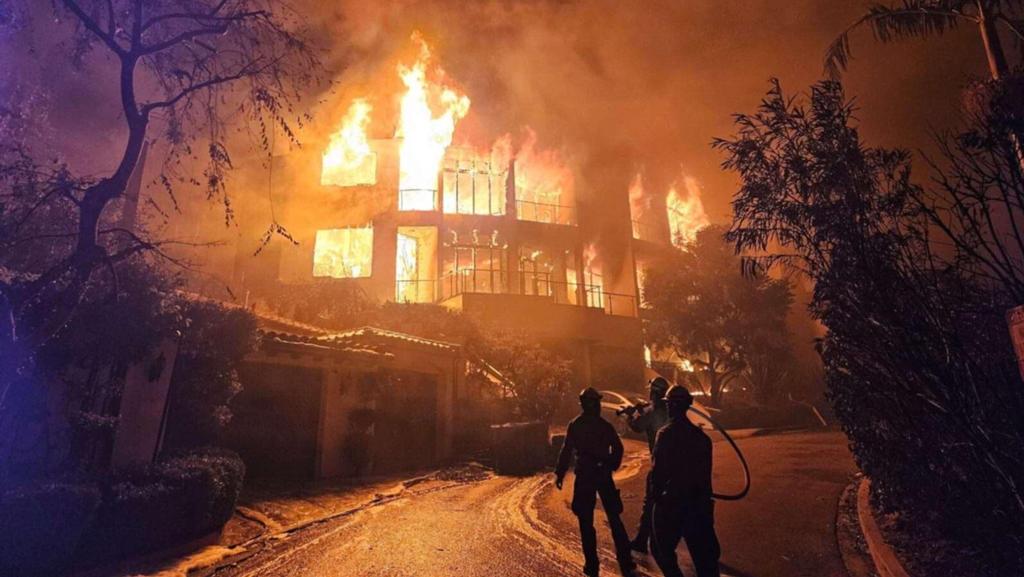
Twelve people died and thousands were displaced in January 2025 when the Palisades wildfire swept through Los Angeles County, becoming one of California's most destructive wildfires. Prosecutors now claim the fire was not merely a natural disaster but was driven by radical left-wing ideology, allegedly linked to the actions of Jonathan Rinderknecht, a 30-year-old Uber driver.
The case highlights a growing concern over how political beliefs can inspire violent actions, with Rinderknecht reportedly expressing resentment toward the wealthy and admiration for Luigi Mangione, who is accused of murdering UnitedHealthcare CEO Brian Thompson. This connection raises questions about the normalization of political violence in some circles.
In the days leading up to the wildfire, Rinderknecht allegedly ranted to customers about capitalism and vigilantism. According to prosecutors, he expressed that setting the blaze was a form of desperation against the rich, stating, "we're basically being enslaved by them." This sentiment echoes the ideology purportedly espoused by Mangione, who claimed in a manifesto that his violent actions were justified due to systemic corruption and greed in the healthcare system.
Ideological Connections
Mangione's alleged murder of Thompson has sparked a complex debate about the motivations behind such acts. In his manifesto, he wrote, "Frankly, these parasites simply had it coming," suggesting that his actions were a response to perceived injustices. This framing has led some commentators to view him as a revolutionary figure.
Self-described journalist Taylor Lorenz referred to Mangione as a "morally good man," arguing that some individuals are drawn to figures who challenge the status quo. Meanwhile, Senator Elizabeth Warren, D-Mass., acknowledged the potential for violence, stating, "Violence is never the answer, but people can only be pushed so far."
The case has drawn mixed reactions from the public and political figures. University of Pennsylvania Assistant Professor Julia Alekseyeva initially described Mangione as "the icon we all need and deserve," but later retracted her statement after facing backlash. This incident illustrates the divisive nature of the discourse surrounding political violence and its justification.
Reactions and Implications
Critics argue that the glorification of figures like Mangione contributes to a culture that normalizes violence as a means of enacting change. They contend that when media and political figures elevate such individuals, it sends a message that political violence can be justified under certain circumstances.
Prosecutors allege that Rinderknecht's actions were inspired by this ideology, framing his alleged arson as a misguided attempt to "fight" against the wealthy. This connection raises alarms about the potential for further violence rooted in political beliefs.
While some commentators have condemned the actions of Rinderknecht and Mangione, others have not issued unequivocal rebukes, leading to concerns about a lack of accountability. The absence of a unified response from prominent Democrats and media figures has left room for interpretation and justification of violent actions.
In light of these events, the implications for political discourse and public safety are significant. As the investigation into the Palisades wildfire continues, the case serves as a stark reminder of the potential consequences of radical ideologies and the importance of addressing the underlying grievances that may fuel such actions.
The ongoing debate about the intersection of ideology and violence underscores the need for a more nuanced understanding of the motivations behind these acts. As communities grapple with the aftermath of the wildfire, the focus will likely remain on how to prevent similar incidents in the future and the role that political rhetoric plays in shaping public perceptions of justice and violence.