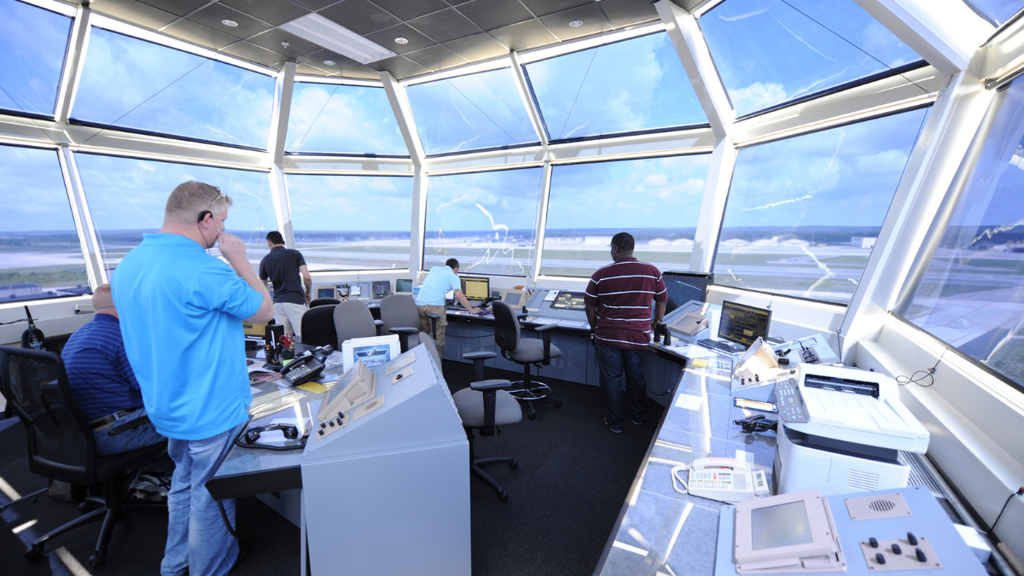
As the government shutdown ends, the crisis at airports may also subside. Air traffic controllers, labeled as 'essential' but forced to work without pay, have called in sick, revealing the fragility of the national aviation system. This chaos highlights both political and structural failures, suggesting a clear solution: privatize air traffic control. The airlines, as the primary beneficiaries of this essential service, should be responsible for paying the controllers' salaries.
Currently, taxpayers fund the entire Federal Aviation Administration's (FAA) air traffic control system, obscuring a fundamental truth: the commercial airlines benefit most from a safe aviation system. The public benefit is largely captured by the airlines' customers. In most sectors, consumers directly pay for services; for instance, package delivery is not funded through general tax revenues, and rental car fleets are not federally funded. Air traffic control should follow this model. When costs are socialized but benefits concentrated, political gamesmanship and underinvestment are inevitable.
There is no inherent reason for air traffic control to remain a federal function. Airlines could employ controllers just as effectively as the government. Private firms manage complex systems, such as global logistics and financial markets, which must be responsive to their users. Similarly, air traffic control could be managed by a federally chartered nonprofit entity funded by user fees from airlines. This concept is not radical; Canada successfully privatized its air navigation system, NAV CANADA, two decades ago, becoming a global leader in safety and efficiency without relying on government appropriations.
Adopting this model would allow air traffic control to operate like a business rather than a bureaucracy. A private entity could raise its own capital for technology and infrastructure upgrades, avoiding the delays and inefficiencies that have plagued the FAA's modernization efforts. Disconnecting from the political appropriations process would enable investment in new technologies that enhance safety and efficiency, such as more direct routing, which saves fuel and time for passengers.
The most immediate benefit of privatization would be insulating the national transportation network from political dysfunction. Controllers would no longer be pawns in legislative budget battles; their salaries would be funded by the airlines that depend on their services, not by a Congress that struggles to pass funding bills. Markets can separate daily operations from partisan conflicts, allowing airlines, as direct payers, to demand cost-effectiveness and performance.
Critics might argue that this change would simply shift costs to travelers. While this is true, travelers already bear costs through federal taxes that fund the FAA and through lost time and canceled plans during government shutdowns. Currently, millions of taxpayers pay regardless of their flying frequency, with costs hidden within the broader implications of a shutdown. A transparent fee structure ensuring that controllers are paid and present is a more honest and efficient approach. If it saves airlines money on fuel and reduces delays, as demonstrated by the Canadian model, market forces will likely compel airlines to pass savings onto consumers.
Moreover, the impact on air traffic controllers, who are often at the mercy of government dysfunction, cannot be overlooked. They want to work, and the public wants them to work, but they face difficult choices during political standoffs. A user-funded, privately run system would treat controllers as valued professionals, with compensation tied to performance and experience. Higher wages could attract skilled controllers to busier locations, enhancing safety. A competitive labor market would better reflect the value of controllers' specialized skills, rather than confining them to a rigid government pay scale.
In conclusion, the current model of air traffic control is unsustainable and inefficient. Privatization could lead to a more responsive, efficient, and accountable system that benefits both airlines and travelers while valuing the critical work of air traffic controllers. The time has come to consider a new approach to managing this vital national infrastructure.