Recently released intelligence summaries indicate that Chinese operatives planned to encourage violent Black Lives Matter (BLM) protests and other social unrest in 2020, aiming to exploit racial divisions and undermine then-President Donald Trump’s reelection, according to documents made public by the White House on Thursday.
These disclosures have raised new questions about the extent of foreign influence in domestic unrest and the role of media and activist groups in either amplifying or countering such efforts. The documents, reportedly withheld from the president at the time, describe Chinese efforts to "encourage violent demonstrations and looting to increase the appearance of social unrest" and "exploit U.S. societal fissures and vulnerabilities." The intelligence summaries, attributed to a "sensitive government agency," detail plans to incite demonstrations as evidence of racial divides, escalate conflicts between police and anti-racism activists, and promote narratives alleging that "White people hate Black people."
Chinese Influence Operations Detailed
According to the intelligence summaries, China had developed capabilities to project divisive themes into U.S. social media platforms such as TikTok, Facebook, Twitter, and YouTube. These efforts reportedly extended into mainstream media, using both overt and covert influencers. The documents suggest that these operations aimed to fuel perceptions of a "racial reckoning," encourage corporate responses to activist demands, and contribute to billions in damages from riots and arson in American cities.
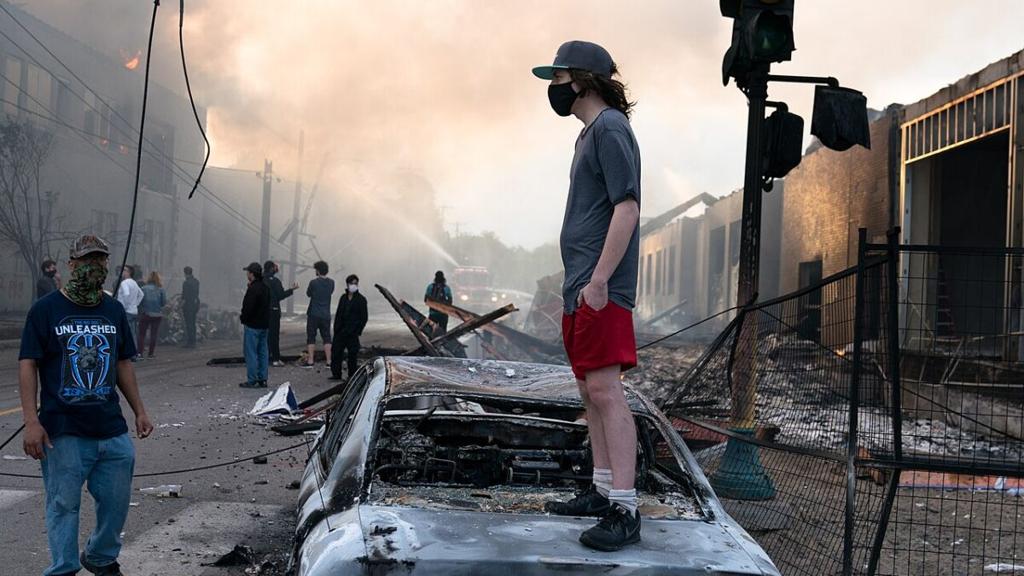
A photograph from May 28, 2020, shows the aftermath of overnight riots in Minneapolis, where buildings burned and residents surveyed the destruction following the murder of George Floyd. The image, captured by Lorie Shaull, documents the scale of property damage attributed to the unrest, which intelligence officials now say was targeted by foreign actors for exploitation.
The intelligence summaries highlight that Chinese operatives sought to amplify existing tensions by promoting divisive content and narratives online. By leveraging popular social media platforms, Chinese actors could reach large audiences quickly, spreading messages that heightened perceptions of division and unrest. The documents also indicate that these influence campaigns were not limited to social media, but included efforts to sway mainstream media coverage and public opinion through both direct and indirect channels.
Media and Advocacy Group Responses
The Heritage Foundation publicly raised concerns in September 2020 about possible Chinese involvement in the BLM protests. The organization urged the U.S. government to investigate the extent of support from the Chinese Communist Party for the Black Lives Matter organization and related riots. Heritage cited evidence of Chinese activist group funding and claimed that 95 percent of the riots were linked to BLM.
One month later, Axios published a story headlined "Right-wing media falsely ties Black Lives Matter movement to Beijing," pushing back on claims of Chinese involvement. Axios CEO Jim VandeHei sent an email to staff expressing support for the BLM protests, stating, "We proudly support and encourage you to exercise your rights to free speech, press, and protest. If you’re arrested or meet harm while exercising these rights, Axios will stand behind you and use the Family Fund to cover your bail or assist with medical bills."
"We proudly support and encourage you to exercise your rights to free speech, press, and protest. If you’re arrested or meet harm while exercising these rights, Axios will stand behind you and use the Family Fund to cover your bail or assist with medical bills."
— Jim VandeHei, Axios CEO
While some media outlets and advocacy groups dismissed or downplayed the allegations of Chinese influence, the newly released intelligence documents have renewed calls from some quarters for further investigation into foreign interference in domestic protests. Supporters of BLM and media organizations have not directly addressed the latest intelligence disclosures.
The debate over the accuracy and significance of these claims has continued. Some analysts argue that foreign actors have a long history of attempting to exploit social divisions in the United States, while others caution against overstating the impact of such influence campaigns. The intelligence documents do not provide detailed evidence of direct coordination between Chinese operatives and protest organizers, but they do outline a strategy of amplifying unrest through digital and media channels.
Ongoing Debate Over Foreign Interference
The release of these intelligence summaries adds to the ongoing debate over the extent of foreign involvement in U.S. social movements and the challenges of distinguishing between organic activism and externally driven influence campaigns. The White House has not commented on whether further action will be taken in response to the findings. The Heritage Foundation and other groups continue to urge a comprehensive investigation into the matter.
As the discussion continues, questions remain about how best to address potential foreign interference in domestic affairs, particularly when it comes to sensitive issues such as race relations and political protests. The intelligence documents underscore the complexity of identifying and countering influence operations that seek to exploit existing divisions within American society. Policymakers and analysts alike are likely to continue examining the evidence and debating the appropriate response in the months ahead.