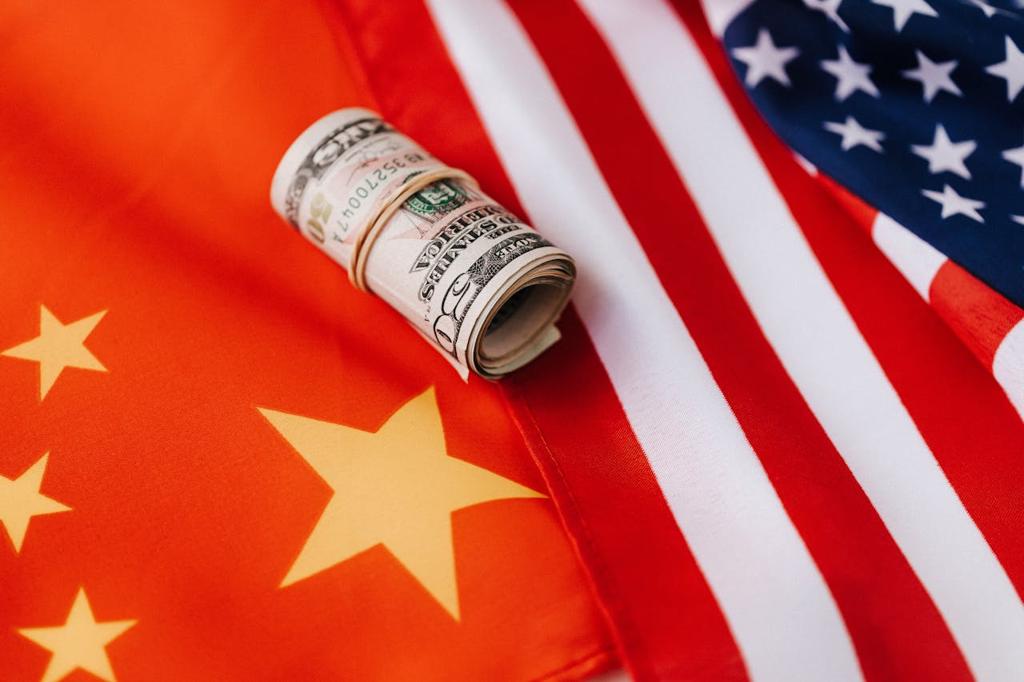
California's partnership with Tsinghua University in China is under scrutiny following a report from the National Association of Scholars (NAS) that alleges the collaboration undermines American energy independence. The report suggests that this relationship may warrant an investigation by the Department of Justice due to concerns over national security and economic implications.
Explainer Election Integrity and Voter Access in California: A Complex Landscape
The core issue revolves around allegations that California's climate policies, influenced by the Chinese Communist Party (CCP), could weaken the United States' energy autonomy. Critics argue that the partnership facilitates China's economic leverage over the U.S. as it transitions to alternative energy sources.
The NAS report, authored by Ian Oxnevad, a senior fellow for foreign affairs and security studies, outlines how China is allegedly using climate control policies as a form of economic warfare. Oxnevad's findings, published in May, indicate that China aims to dominate supply chains for critical resources, such as rare earth elements essential for electric vehicles, thereby positioning itself as a key player in the global energy market.
California's Ties to China
California's relationship with Tsinghua University began in 2015 when the University of California (UC) system signed a Memorandum of Understanding (MoU) to collaborate on energy and climate change initiatives. Tsinghua University has been flagged as a high-risk institution due to its connections with the Chinese military and its involvement in various technological advancements, including nuclear weapons and artificial intelligence.
In 2019, the partnership evolved into the California-China Climate Institute (CCCI), which has reportedly received funding from the China Institute for Innovation and Development Strategy (CIIDS), a think tank linked to the CCP. Oxnevad claims that this partnership has significant implications for U.S. policy, as it shapes California's environmental regulations and, by extension, influences other states.
California's Assembly Bill 39, signed into law by Governor Gavin Newsom in 2021, legally solidified the partnership with Tsinghua, designating the CCCI as California's primary liaison for climate-related information sharing. Critics, including Oxnevad, argue that this agreement with a foreign adversary raises constitutional concerns, particularly regarding Article I, Section 10, which prohibits states from entering into treaties with foreign nations.
Economic Implications of Green Policies
The report highlights how California's green energy policies, driven by the CCCI, may inadvertently benefit China. As California pushes for increased adoption of electric vehicles and renewable energy sources, the demand for materials controlled by China rises. Oxnevad notes that California's policies could lead to increased dependency on Chinese supply chains, stating, "[California] is a backdoor into energy policy nationally."
The involvement of organizations like the Natural Resources Defense Council (NRDC), which has ties to former Chinese officials, further complicates the situation. The House Committee on Natural Resources has raised concerns about the NRDC's connections to the CCP and its perceived bias against American interests. In response to these allegations, a spokesman for Newsom's office insisted that the MoU is lawful and non-binding, emphasizing California's need for global partnerships to tackle climate challenges.
Calls for Investigation and Accountability
In light of these findings, Oxnevad is calling for a federal investigation into the CCCI partnership and other agreements between California and Chinese entities. He argues that the partnership could violate the Supremacy Clause of the U.S. Constitution and suggests that the federal government should amend the Foreign Agent Registration Act (FARA) to enhance oversight of foreign influence in U.S. policy.
Oxnevad also advocates for increased domestic energy production, including oil, coal, and nuclear energy, to reduce reliance on foreign sources. He emphasizes that American citizens play a crucial role in this effort through their voting and purchasing decisions, stating, "The mindset … and the wallet of the American citizen is the biggest commodity that everyone wants to control and manipulate."
While the report raises significant concerns about California's partnership with Tsinghua University, officials from the UC system and the California government have not provided detailed responses to the allegations. As the debate continues, the implications of this partnership for U.S. energy policy remain a contentious issue.