American scientist Youlin Chen, a naturalized U.S. citizen and seismologist, has been detained in China for nearly two years on espionage charges, with his case drawing increasing attention from U.S. officials as nuclear tensions between Washington and Beijing escalate.
The case underscores concerns that China is using its justice system to target foreign scholars as part of a broader strategy to gain leverage in diplomatic disputes and advance its nuclear ambitions.
Chen, 54, was arrested by Chinese state security at Beijing Capital International Airport on November 5, 2024, as he prepared to return to the United States after a family visit and academic lectures. He was not formally charged until May 2025, nearly seven months after his detention, and remains in custody without trial. Espionage charges in China can carry sentences up to life imprisonment or, in some cases, the death penalty.
Details of Chen’s Detention
Chen specializes in detecting underground nuclear tests and published a technical report for the U.S. government in December 2020, analyzing North Korea’s nuclear detonations using publicly available seismic data from China. The report, which remains accessible on the Defense Technical Information Center website, contains no classified information, according to the source.
His wife, Yufang Rong, has described the "harsh conditions" of his detention, including prolonged sitting on a hard stool, denial of diabetes medication, and insufficient food, resulting in a weight loss of 30 to 50 pounds. Chinese authorities have barred direct family contact, and U.S. consular visits are monitored by Chinese officials, preventing private conversations.
"Chinese interrogators have questioned Chen over 100 times about his expertise in nuclear seismology, knowledge that China likely seeks to improve its ability to conceal future underground tests and circumvent international monitoring."
— Yufang Rong, Chen's wife
Chen’s family and some U.S. officials believe the charges are pretextual, suggesting Beijing is interested in his technical knowledge to advance its nuclear capabilities. The Chinese judicial process in national security cases is largely opaque, with a reported 99 percent conviction rate, making acquittal unlikely.
Nuclear Expansion and Diplomatic Fallout
Chen’s detention comes as China rapidly expands its nuclear arsenal. The Pentagon’s 2025 Chinese Military Power Report states that Beijing’s stockpile has surpassed 600 warheads, more than tripling since 2020, and is projected to exceed 1,000 by 2030. The expiration of the New Strategic Arms Reduction Treaty (New START) between the U.S. and Russia earlier this year has heightened calls in Washington for future arms control talks to include China, which has so far resisted participation.
Beijing claims adherence to the 1996 Comprehensive Nuclear-Test-Ban Treaty (CTBT), but the Trump administration has alleged that China conducted low-yield nuclear tests in 2020 using chamber techniques to suppress seismic signatures, accusations China denies.
U.S. Response and Broader Pattern
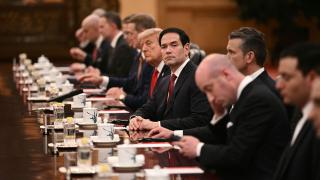
The Trump administration has designated Chen as "wrongfully detained," with Secretary Rubio making his release a priority. President Trump reportedly raised the case with Chinese leader Xi Jinping during his May state visit, but Xi has not relented. The article notes that quiet diplomacy has so far failed to secure Chen’s release.
Chen’s case is part of a broader pattern, with other American citizens, such as U Min Zin, a UC Berkeley doctoral candidate, recently arrested in China on similar espionage charges. The source argues that these detentions represent a shift in China’s approach, targeting not only political dissidents but also foreign scholars whose expertise may be valuable or threatening to the regime.
Chinese officials have not publicly addressed the specific allegations against Chen or responded to U.S. criticism of his detention.
The article calls for the U.S. to adopt a more assertive strategy, including linking high-level talks to progress on detainee cases, imposing targeted sanctions, and publicly naming wrongful detentions. It warns that American scholars, especially those of Chinese descent, should exercise caution when traveling to China.
Washington’s next steps remain closely watched as Chen’s case continues without a scheduled trial date.