Recent calls for the United States to cooperate with China on artificial intelligence regulation have drawn skepticism from policy analysts and commentators, who point to a history of unmet commitments by Beijing on major international agreements.
The debate centers on whether the U.S. should trust China to uphold joint AI safety standards, given longstanding concerns about the Chinese Communist Party’s (CCP) record on trade, security, and technology.
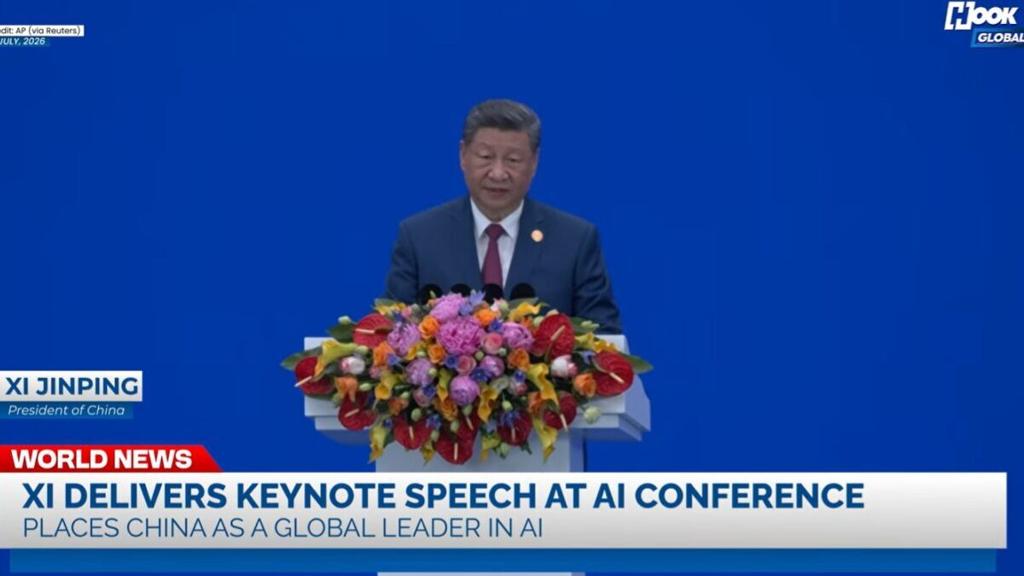
In recent weeks, OpenAI CEO Sam Altman suggested that a U.S.-China agreement on AI safety could merit a Nobel Peace Prize, while former Secretary of State Hillary Clinton urged the Trump administration to seek Beijing’s cooperation during an upcoming visit by President Xi Jinping. Clinton said on social media that the administration has “a huge opportunity to enlist China in the effort to rein in AI when President Xi visits.”
Past Trade and Security Promises
Skeptics argue that past efforts to secure Chinese cooperation on global issues have often failed to produce lasting results. When President Bill Clinton advocated for China’s entry into the World Trade Organization (WTO) in 2000, he described the move as a “win-win” for both nations, promising economic growth and political liberalization. However, subsequent analyses, including a report by the Information Technology and Innovation Foundation, found that China did not fully implement market-oriented reforms and continued practices such as intellectual property theft, forced technology transfers, and industrial subsidies. These actions have been cited as causing significant losses for American businesses and contributing to the decline of U.S. manufacturing jobs.
A 2021 ITIF report concluded that “China remains woefully short of meeting a broad range of commitments and responsibilities, to the detriment of both its trading partners and the international economic system.” Policy Magazine also noted that China’s WTO accession enabled it to modernize its economy at the expense of U.S. competitiveness, while failing to deliver on promises of liberalization.
Security and Drug Enforcement Concerns
Similar patterns have emerged in the security arena. In 2015, Chinese President Xi Jinping assured then-President Obama that China would not militarize artificial islands in the South China Sea. Yet, three years later, U.S. military officials reported that China had deployed runways, missile defenses, and other military assets to those islands.
On drug enforcement, China pledged to limit exports of fentanyl and precursor chemicals during the U.S. fentanyl crisis. While some substances were added to controlled lists, enforcement has been inconsistent. A 2024 congressional report found that Chinese companies producing fentanyl chemicals continued to receive export tax rebates, and U.S. agencies identified China as a primary source of chemicals used by Mexican cartels. A 2025 ProPublica investigation linked Chinese groups to illegal marijuana operations in the U.S.
AI Competition and Strategic Interests
Analysts warn that China’s approach to AI is shaped by its desire to strengthen its military-industrial base, increase domestic control, and gain a strategic edge over the U.S. Beijing has invested heavily in AI infrastructure and views the technology as critical to its national interests. A recent editorial in the state-owned Global Times rejected U.S. calls for AI cooperation, describing them as attempts to “contain” China’s AI development. China’s top intelligence official has stated that the main AI safety concern is protecting the CCP’s rule, not global safety.
"Each time the United States has sought cooperation from the CCP on major issues, the CCP has used these opportunities to advance its own interests at the expense of the United States."
— Helen Raleigh, senior contributor at The Federalist
During the Covid-19 pandemic, the CCP delayed information and blocked independent investigations, prioritizing regime security over public health, according to critics. Observers argue that similar dynamics could undermine any AI safety agreement.
Balancing Speed and Security
Supporters of U.S.-China cooperation on AI, such as Altman and Clinton, contend that joint regulation is necessary to address global risks. However, critics maintain that the CCP is unlikely to slow its AI development and may exploit any U.S. slowdown to close the technological gap. They urge U.S. policymakers to focus on maintaining domestic leadership in AI, establishing rules for high-risk applications, and avoiding reliance on a rival with a record of unfulfilled commitments.
Neither Chinese nor U.S. officials have publicly addressed these criticisms in detail. The upcoming visit by President Xi is expected to test whether any meaningful AI safety compact can be reached.