Alaska voters are projected to reject Measure 2, a ballot initiative that sought to repeal the state's ranked-choice voting (RCV) system. According to preliminary results with more than 95 percent of votes counted, the measure is expected to fail by a margin of 7.2 points. This outcome means Alaska's top-four RCV system will remain in place for future elections, continuing a significant shift in how the state conducts its electoral process.
Explainer Navigating Indiana’s Election Landscape: Key Races, Legal Battles, and Political Shifts
The result underscores the ongoing debate over the merits and drawbacks of RCV. Supporters of the system argue that it broadens voter choice, encourages more civil campaigns, and ensures that elected officials have majority support. Critics, on the other hand, contend that RCV can confuse voters, complicate the ballot-counting process, and disadvantage conservative candidates.
Alaska first adopted ranked-choice voting in 2020, following a successful ballot measure that was supported by a coalition including allies of Republican Sen. Lisa Murkowski. The system has since played a decisive role in the state's elections. Notably, RCV was a key factor in Murkowski's successful defense against a primary challenge in 2022. Under the RCV system, voters rank candidates in order of preference. If no candidate secures a majority in the first round, the candidate with the fewest votes is eliminated, and those votes are redistributed to the remaining candidates based on the voters' next preferences. This process continues until one candidate achieves a majority.
Out-of-State Funding in Campaign
The campaign to retain RCV in Alaska received significant financial backing from national organizations. Groups such as Unite America, the National Education Association, and the American Federation of State, County, and Municipal Employees (AFSCME) were among those that collectively contributed millions of dollars to oppose Measure 2. These organizations are headquartered outside Alaska, primarily in the Lower 48 states, highlighting the national interest in Alaska's voting system.
This is not the first time out-of-state funding has played a role in Alaska's RCV debate. A previous attempt to repeal RCV in Alaska narrowly failed, with the margin of defeat reportedly fewer than 700 votes. That campaign also saw a surge of external spending, a pattern that was repeated in the campaign against Measure 2 this year. The influx of national money has become a point of contention, with some critics arguing that outside interests are influencing Alaska's electoral system.
Impact on Recent Elections
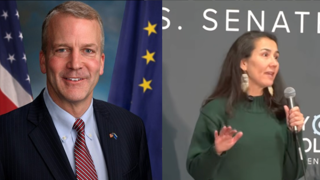
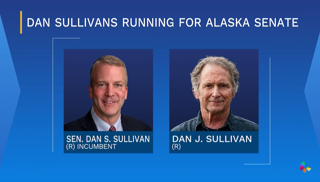
Alaska's use of RCV has drawn national attention, particularly for its impact on recent high-profile races. The system was used in the most recent Senate race, where Democrat Mary Peltola and her campaign aides reportedly recruited candidates with similar names to incumbent GOP Sen. Dan S. Sullivan. According to reports, this strategy was intended to split the conservative vote, potentially giving Peltola an advantage. While the Senate race had not been officially called at the time of reporting, Peltola appeared poised to win.
The effects of RCV have also been seen in other statewide races. Democrats have secured the governor's office, and under the RCV system, an independent candidate could potentially win the state's at-large U.S. House seat, according to unfinalized results. These outcomes have fueled arguments from critics who say that RCV benefits Democrats and liberal Republicans at the expense of more conservative candidates.
A report from The Federalist described the recruitment of similarly named candidates as a deliberate strategy to confuse voters and siphon votes away from Sen. Sullivan, thereby boosting Peltola's chances. This allegation has contributed to the broader debate over whether RCV is being used to manipulate election outcomes.
Ongoing Debate Over RCV
The debate over ranked-choice voting is not limited to Alaska. Nearly 20 states have banned RCV, citing concerns about election integrity, voter confusion, and the complexity of the system. In Alaska, however, voters have now twice rejected efforts to repeal the system, signaling a measure of support for the new approach.
Critics of RCV in Alaska argue that the system is designed to benefit certain candidates and political parties, particularly Democrats and moderate Republicans, while making it more difficult for conservative candidates to win. They also point to the significant out-of-state funding as evidence that national organizations are seeking to influence Alaska's elections.
Supporters, meanwhile, maintain that RCV ensures broader representation, reduces negative campaigning, and gives voters more meaningful choices. They argue that the system helps to elect candidates who are more broadly acceptable to the electorate, rather than those who simply win a plurality in a crowded field.
Despite the ongoing controversy, supporters of RCV and officials backing the system did not respond to criticism regarding out-of-state funding or the alleged recruitment of decoy candidates, according to the report. As Alaska prepares for future elections, the debate over ranked-choice voting is likely to continue, with both sides closely watching the system's impact on the state's political landscape.