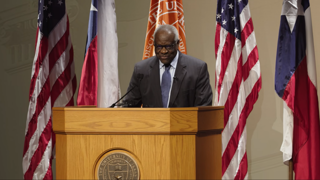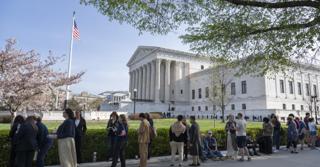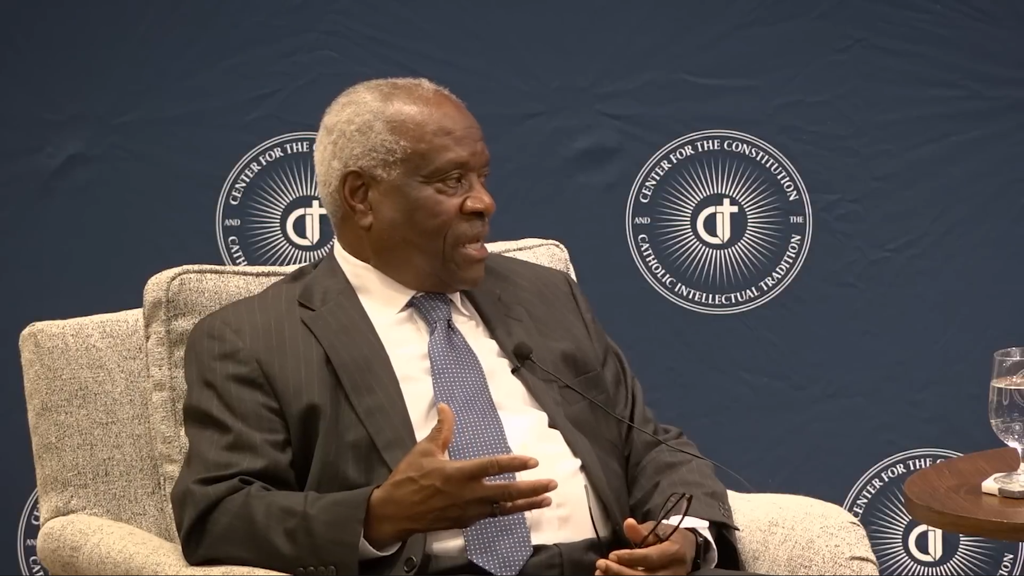
Justice Clarence Thomas has called on the Supreme Court to revisit the constitutionality of state laws that restrict where firearms may be carried, following the Court’s recent decision not to hear arguments in Novotny v. Moore. This case challenged Maryland’s prohibitions on carrying guns in a variety of so-called "sensitive places," such as public demonstrations, mass transit, and healthcare facilities.
Explainer Second Amendment Rights and Federal Courts: Balancing Liberty and Regulation
The central issue in the dispute is whether state bans on firearms in these locations are consistent with the Second Amendment and the nation’s historical tradition of firearm regulation. The debate comes at a time when the Supreme Court is preparing to hear oral arguments in other cases that could further define the limits of gun regulation, including a pending decision on bans of certain semiautomatic rifles.
Thomas’s Statement on Sensitive Places
In a statement issued in connection with the denial of certiorari in Novotny v. Moore, Justice Thomas explained his reasoning for agreeing with the Court’s decision not to take up the case. He noted that the challenge was broad, targeting multiple statutes at once, but made clear his ongoing skepticism about the constitutionality of such restrictions. Thomas emphasized that the Second Amendment protects the right to keep and bear arms, and that only exceptions with strong historical grounding are permissible.
"The Second Amendment recognizes the people’s 'inherent' right to keep and bear firearms, a right that admits of only historically grounded exceptions. ... Thus, when a State seeks to restrict the right to bear arms — including by limiting the places in which a law-abiding citizen may carry his firearm — the State must root its law in the Second Amendment’s 'historical understanding' by 'demonstrat[ing] that the regulation is consistent with this Nation’s historical tradition of firearm regulation.'"
— Justice Clarence Thomas, Supreme Court
Thomas referenced the Supreme Court’s 2022 decision in New York State Rifle & Pistol Association v. Bruen. In that case, the Court held that gun regulations must be consistent with the nation’s historical tradition, and that the Second Amendment presumptively protects the right to carry firearms in public for self-defense. The majority opinion in Bruen, authored by Thomas himself, rejected the use of a two-step means-end scrutiny in favor of a test rooted solely in the text of the Second Amendment and historical context.
While the Court in Bruen acknowledged a limited tradition of regulating firearms in certain "sensitive places," Thomas warned that expanding this category too broadly could undermine the general right to carry arms in public. He expressed concern that if states are allowed to designate too many locations as sensitive, it could effectively nullify the right to public carry for law-abiding citizens.
Maryland’s Laws and the Court’s Response
The Maryland statutes at issue in Novotny v. Moore prohibit carrying firearms in a range of public spaces, including at public demonstrations, on mass transit, and in healthcare facilities. Thomas argued that the cumulative effect of these laws could amount to a near-total ban on public carry, which he described as "an affront to the right of 'law-abiding citizens' to 'carr[y] arms in public for' their 'ordinary self-defense.'" He stated that he has "serious doubts" about the legality of these restrictions under the Second Amendment and suggested that the Court should consider the issue in a future case that presents a more narrowly focused challenge.
The Supreme Court’s order list did not include any response from Maryland officials or supporters of the state’s restrictions. By denying certiorari, the Court leaves the lower court’s ruling in place for now, meaning Maryland’s laws remain in effect unless and until the Supreme Court takes up a similar case in the future.
Broader Legal Context and Upcoming Cases
The ongoing debate over "sensitive places" is shaped by the framework established in Bruen. Under this framework, courts must determine whether a gun regulation is consistent with the nation’s historical tradition of firearm regulation. The Bruen decision has had a significant impact on how courts evaluate state and local gun laws, with many ongoing legal challenges now focusing on whether specific restrictions can be justified by historical precedent.
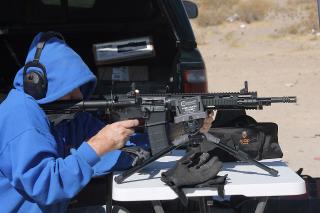
Looking ahead, the Supreme Court is scheduled to hear oral arguments in Viramontes v. Cook County and Grant v. Higgins, two consolidated cases that will address the legality of bans on AR-15s and similar semiautomatic rifles. The outcome of these cases could further clarify the scope of permissible firearm regulations under the Second Amendment and may influence how courts approach restrictions on carrying firearms in sensitive places.
Justice Thomas’s statement signals that the issue of sensitive place restrictions remains unresolved at the highest level of the judiciary. As legal challenges continue to move through the courts, the Supreme Court may soon have another opportunity to address the balance between public safety concerns and the constitutional right to bear arms.