Two undersea data cables connecting Finland to Germany and Sweden to Lithuania were damaged in November 2024, drawing attention to persistent security and legal challenges in the Baltic Sea region. European investigators focused on the Chinese cargo ship Yi Peng 3, whose movements matched the locations of the cable breaks, but struggled to gather evidence and establish jurisdiction as the ship was monitored by Danish naval vessels and later left Scandinavian waters.
Explainer Understanding China’s Strategic Role in Global Politics and U.S. Relations
The incident underscores the difficulty of holding parties accountable for underwater infrastructure damage when evidence collection and legal authority are limited by international law and jurisdictional boundaries.
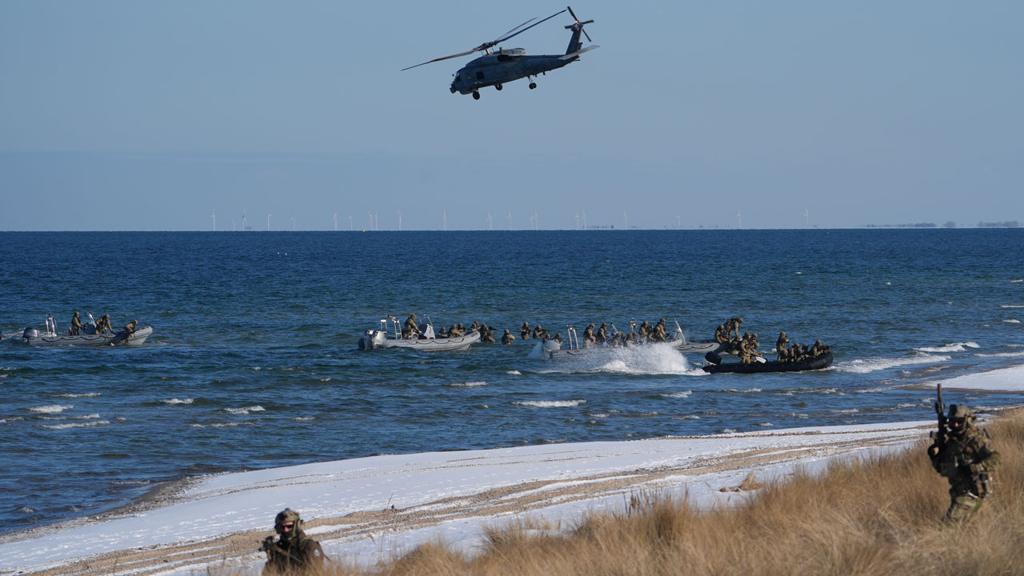
The Baltic Sea is a critical hub for underwater cables and pipelines that supply Europe with electricity, communications, and energy. Disruptions can impact entire communities and cost millions to repair. NATO has increased its focus on maritime security, launching the Baltic Sentry operation in January 2025 and testing over 70 autonomous air, surface, and underwater systems through Task Force X-Baltic. According to NATO, these uncrewed vessels provided surveillance at one-third the cost of traditional frigates.
Evidence Collection Challenges
Despite improved surveillance, European authorities faced obstacles investigating the Yi Peng 3. Swedish police were only allowed aboard as observers during a Chinese-led investigation, while Sweden’s prosecutor was denied access. The ship ultimately departed, leaving European governments unable to conduct a full investigation on their terms. The Swedish Coast Guard confirmed ongoing monitoring of the vessel before its exit from the region, according to its public updates.
NATO officials and security analysts argue that evidence collection should be integrated into underwater surveillance, not treated as an afterthought. Regular underwater drone surveys could create a record of the seabed, enabling investigators to compare time-stamped images and sonar data with vessel logs if damage occurs. This approach could help establish timelines and preserve physical evidence for potential court proceedings, though it would not automatically prove sabotage.
Legal and Jurisdictional Disputes
International law complicates enforcement. The United Nations Convention on the Law of the Sea (UNCLOS) requires countries to criminalize deliberate or negligent damage to submarine cables and pipelines by vessels under their flags, as outlined in Article 113. However, exclusive economic zones do not grant coastal states the same authority as territorial waters, limiting their ability to board foreign vessels suspected of wrongdoing.
The legal complexity was highlighted by the Eagle S case. In December 2024, Finnish authorities suspected the Cook Islands-flagged tanker had dragged its anchor across the Estlink 2 power cable and four communications cables. A Finnish district court initially dismissed charges against three crew members, citing lack of jurisdiction. On August 27, 2026, the Helsinki Court of Appeal reversed that decision, ruling that Finnish courts could hear the case because the conduct had consequences in Finland and did not qualify as an ordinary maritime accident under UNCLOS. The case was returned for trial, but the ruling was not final and did not establish guilt.
The appellate court referenced the 2012 Enrica Lexie incident, where an international tribunal found overlapping jurisdictional claims between India and Italy after two Indian fishermen were killed, though the Italian marines involved were protected by immunity. These precedents illustrate the challenges of prosecuting cross-border maritime incidents.
NATO and Regional Responses
NATO has credited Adm. Pierre Vandier, supreme allied commander transformation, for advancing the alliance’s use of autonomous maritime systems. The Baltic Sentry operation and Task Force X-Baltic have expanded surveillance capabilities, allowing NATO to monitor more territory without relying solely on expensive warships. Ukraine’s use of maritime drones in the Black Sea has also demonstrated the value of such technology for surveillance and deterrence.
Security experts and NATO officials have called for a shared system to monitor vessel movements, identify vulnerable cable routes, and conduct underwater surveys when damage is discovered. They argue that legal and military coordination must improve to address these vulnerabilities before another incident occurs. Supporters of current protocols have not publicly addressed the criticism regarding evidence collection and jurisdictional gaps.
The Helsinki Court of Appeal’s decision in the Eagle S case remains under review, with further legal proceedings expected as Finland seeks to assert jurisdiction over the alleged cable damage.