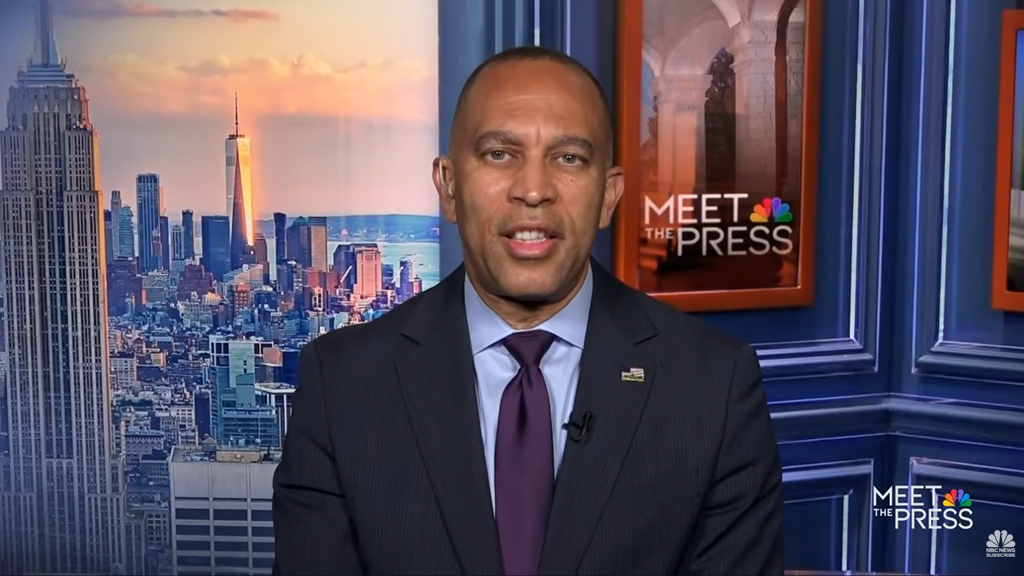
House Minority Leader Hakeem Jeffries signaled openness to significant changes to the U.S. Supreme Court, including the possibility of expanding its size, during a recent appearance on NBC News' Meet the Press. While Jeffries stopped short of directly endorsing the addition of new justices, he repeatedly emphasized the need for what he called “dramatic Supreme Court reform.”
Explainer Understanding the Supreme Court’s Impact on Law and Liberty
The question of whether to expand the Supreme Court has become a central issue for Democrats, particularly in the wake of a series of high-profile conservative rulings. Supporters of expansion argue that increasing the number of justices could help restore what they see as lost balance on the Court, while critics warn that such a move would politicize the judiciary and undermine its legitimacy.
Jeffries Cites Judiciary Democrats, Avoids Direct Endorsement
Pressed by Meet the Press host Kristen Welker on whether he supports increasing the number of Supreme Court justices, Jeffries declined to give a yes or no answer. Instead, he pointed to the leadership of House Judiciary Committee Democrats, specifically mentioning Rep. Jamie Raskin (D-Md.) and Rep. Hank Johnson (D-Ga.), as those who would “take the lead on what dramatic reform of the Supreme Court looks like.”
"Rep. Jamie Raskin, D-Md., and other leading Democrats on the House Judiciary Committee are going to take the lead on what dramatic reform of the Supreme Court looks like."
— Hakeem Jeffries, House Minority Leader
Jeffries also called for the implementation of an ethical code of conduct for Supreme Court justices, a proposal that has gained traction among Democrats in response to recent controversies involving members of the Court. However, he did not specify whether such reforms would include expanding the number of justices, often referred to as "court-packing."
Judiciary Act Proposes Expansion to 13 Justices
The Judiciary Act, sponsored by Rep. Johnson and Sen. Ed Markey (D-Mass.), would expand the Supreme Court from nine to 13 justices. According to a press release from Rep. Johnson, the bill’s supporters argue that Congress has changed the size of the Court multiple times throughout U.S. history. They contend that expansion is necessary to restore public confidence in the judiciary, which they say has been eroded by recent confirmation battles and controversial rulings.
The Judiciary Act has drawn support from progressive advocacy groups and some Democratic lawmakers, but it remains a divisive issue within the party. While some leaders, including former Vice President Kamala Harris, have expressed openness to the idea, others have avoided taking a clear position. The bill’s prospects in Congress remain uncertain, especially as the midterm elections approach and party leaders weigh the political risks of pursuing such a controversial change.
Criticism of Recent Supreme Court Rulings
During his NBC interview, Jeffries criticized the Supreme Court’s recent decision in Louisiana v. Callais, arguing that the majority was “doing the bidding of extreme MAGA Republicans” and enabling “Jim Crow-like tactics” through colorblind redistricting. He described the ruling as “inconsistent with the law and with the Constitution,” though he did not elaborate on the specific legal grounds for his criticism.
Jeffries’ comments reflect broader Democratic frustration with the Court’s conservative majority, which has issued a series of rulings on voting rights, abortion, and other key issues. Many Democrats argue that these decisions have undermined civil rights protections and shifted the Court far to the right of public opinion.
Internal Democratic Debate and Republican Opposition
The issue of Supreme Court reform has exposed divisions within the Democratic Party. Some members, particularly on the party’s progressive wing, have pushed for aggressive action, including court expansion. Others have cautioned that such moves could backfire politically and further erode trust in the judiciary.
Republican leaders and conservative groups have strongly opposed any effort to expand the Supreme Court, arguing that it would set a dangerous precedent and permanently damage the institution’s credibility. They point to the long-standing tradition of a nine-member Court and warn that expansion could lead to a cycle of partisan retaliation.
Despite the controversy, Jeffries did not clarify whether he would oppose court-packing or why he would delegate leadership on the issue to Judiciary Committee members who have championed expansion if he were against the idea. Coverage by NBC News and C-SPAN confirms that Jeffries avoided a direct answer, instead emphasizing the role of Judiciary Democrats in shaping any reform proposals.
Uncertain Path Forward
Neither Jeffries nor other top Democratic leaders have provided a detailed outline of what “dramatic reform” of the Supreme Court would entail, beyond references to ethical codes and possible structural changes. The Judiciary Act remains pending in Congress, and its future is unclear amid ongoing debate within the party and strong opposition from Republicans.
As the midterm elections draw nearer, the question of Supreme Court reform is likely to remain a contentious issue, with party leaders weighing how aggressively to pursue changes to the nation’s highest court. For now, Jeffries’ comments suggest that Democratic leadership is open to significant reforms, but is leaving the specifics to be determined by Judiciary Committee lawmakers and ongoing debate within the party.