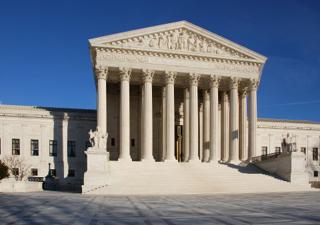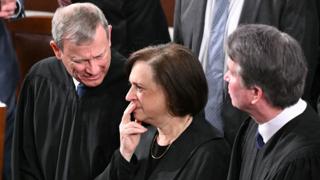
Democrats are advocating for the expansion of the Supreme Court after a 6-3 ruling affirmed that temporary protected status (TPS) for certain foreign nationals is indeed temporary. The decision, which upheld former President Donald Trump's efforts to revoke TPS for approximately 350,000 Haitian nationals, has reignited calls among some lawmakers for significant reforms to the judiciary.
Explainer Understanding the Supreme Court’s Impact on Law and Liberty
The core tension arises from the ruling's implications for thousands of individuals who may face deportation, as critics argue that the decision undermines protections for vulnerable populations. Supporters of the ruling maintain that it upholds the rule of law and the executive branch's authority over immigration policy.
In the case of Mullin v. Doe and Trump v. Miot, the Supreme Court ruled that the administration's actions to revoke TPS were lawful. This ruling came after U.S. District Judge Ana Reyes blocked Trump's efforts earlier this year, claiming that the historical context supported the continuation of TPS. Reyes's decision was met with criticism from Republican lawmakers who argued it overstepped judicial authority.
Democratic Responses
In response to the ruling, several Democratic lawmakers have expressed their discontent and called for court reforms. Rep. Seth Moulton of Massachusetts stated on social media, "Donald Trump’s Supreme Court has ended legal protections for tens of thousands of Haitian and Syrian migrants. Rather than protect the hard-working families that contribute to our communities, Trump’s justices are sending them back to the same places they fled." Moulton emphasized the need for Democrats to reform the court to safeguard the rights of TPS families.
Similarly, Rep. Jim McGovern also called for court expansion, posting on social media, "Expand the court." Sen. Ed Markey echoed these sentiments, stating, "The far-right MAGA majority on the Court cannot stand. We need to win back the House and the Senate and expand the Court." These comments reflect a growing frustration among some Democrats regarding the Court's recent decisions.
Rep. Yvette Clark of New York criticized the Court's ruling, asserting that Congress must act to reclaim power from what she described as an "activist court." She stated, "It’s clear now that this legislative body must seize back the power that our increasingly unequal branches have stolen, and that must start with action to protect the hundreds of thousands of TPS holders whose lives depend upon it."
Historical Context
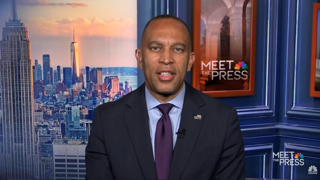
This is not the first time Democrats have sought to alter the structure of the Supreme Court in response to unfavorable rulings. Former Vice President Kamala Harris recently suggested that expanding the Court could be part of a broader strategy for Democrats. House Minority Leader Hakeem Jeffries also indicated that "everything is on the table" when addressing the Court's decisions, particularly following the ruling in Louisiana v. Callais, which limited states' ability to use race in redistricting.
Longtime Democratic strategist James Carville has suggested that if Democrats regain control of the presidency and Congress, they should consider making Puerto Rico and Washington, D.C., states while also expanding the Supreme Court to 13 justices. This reflects a broader strategy among some Democrats to reshape the political landscape in response to perceived judicial overreach.
Broader Implications
The push for court expansion raises questions about the balance of power within the U.S. government and the implications for future judicial decisions. Critics of court packing argue that it could undermine the independence of the judiciary and set a dangerous precedent for future administrations. Supporters of the current court structure maintain that it is essential to uphold the Constitution and the rule of law.
As the debate continues, it remains unclear how the Democratic leadership will proceed in light of the Supreme Court's ruling. Some officials have not publicly responded to the criticism of the Court's decision or the calls for reform, leaving the future of TPS and the structure of the Supreme Court uncertain.