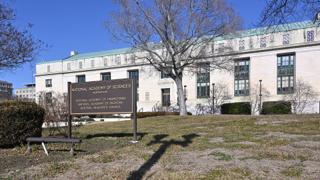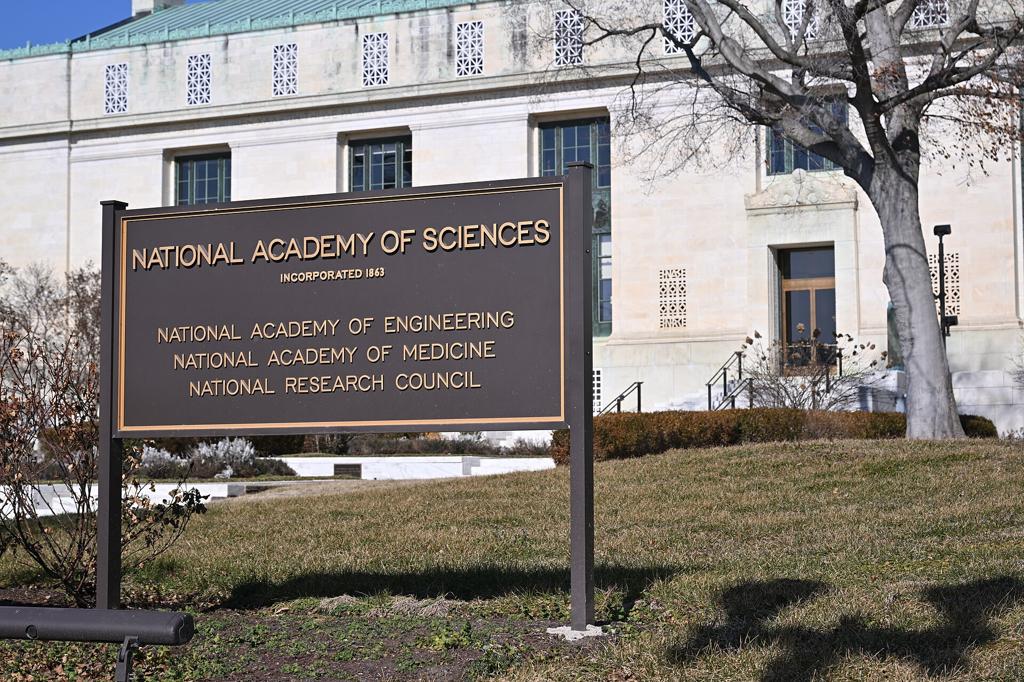
The National Academy of Sciences (NAS) has retracted its climate science chapter from the Reference Manual on Scientific Evidence, Fourth Edition, a widely used guide designed to inform federal judges, after months of mounting criticism over alleged bias in its content. The decision was announced on Friday, following significant public backlash and scrutiny from legal organizations and elected officials who questioned the neutrality of the material.
The retraction underscores ongoing debates about the impartiality of scientific resources that inform judicial decision-making in federal courts. Critics of the climate chapter argued that it cited partisan sources and advocacy groups, raising concerns that it could unduly influence judges presiding over cases involving climate science and policy.
The Reference Manual on Scientific Evidence is a collaborative publication produced by the National Academies of Sciences, Engineering, and Medicine (NASEM) and the Federal Judicial Center (FJC), which is funded by taxpayers. The manual serves as a reference for federal judges, providing guidance on how to assess and interpret scientific evidence presented during court proceedings. Earlier this year, controversy erupted when it was revealed that the climate science chapter referenced organizations and individuals known for strong political advocacy, rather than relying solely on peer-reviewed scientific literature. In response to these concerns, the FJC withdrew the climate section from its own website in February. However, NASEM continued to make the material available until the recent decision to retract it.
NAS Statement and Rationale
In a public statement, the NAS emphasized its responsibility to maintain rigorous, nonpartisan standards in its work. The organization stated, "Our core mission is to deploy science in service to the nation while employing procedures that are rigorous, nonpartisan, and that manage potential bias and conflicts of interest. When questions arise whether that standard has been met, we have an obligation to examine them honestly and act on what we find."
The NAS clarified that the retraction was not a judgment on the scientific validity of climate research itself, but rather a response to concerns about the process used to develop the climate chapter. The organization explained that the chapter would not appear on its website while a review is underway, and called for an independent assessment of how the chapter was created and vetted. This review, according to NAS, is intended to ensure that the manual meets the highest standards of impartiality and scientific integrity.
Political and Judicial Reactions
The controversy surrounding the climate chapter attracted attention at the highest levels of government. Last month, President Trump publicly criticized the manual, labeling it as "biased" and "fraudulent." He subsequently ordered a review of federal grants and contracts related to the manual and its production. The issue also surfaced during a Senate subcommittee hearing attended by Supreme Court Justices Amy Coney Barrett and Elena Kagan, who co-authored the manual's foreword. During the hearing, Justice Kagan told Senator Susan Collins that she had "become aware" of the controversy but had not read the disputed climate chapter before writing the foreword, and "still" had not read it.
"When questions arise whether that standard has been met, we have an obligation to examine them honestly and act on what we find."
— National Academy of Sciences, official statement
Several conservative legal organizations have called on the Senate Judiciary Committee to investigate Justice Kagan. They allege that her involvement with the manual could present a conflict of interest, particularly in light of an upcoming Supreme Court case involving a Colorado state tort judgment against oil and gas companies over climate change. These groups argue that Kagan should recuse herself from the case due to her association with the manual, though there has been no official response from the Supreme Court or from Justice Kagan regarding these calls.
Ongoing Review and Next Steps
The NAS has reiterated that its review is focused specifically on the process by which the climate chapter was developed, rather than on the substance of climate science itself. While the independent review is underway, the climate section will remain unavailable on the NAS website. The FJC had already removed the section from its own site in February, as confirmed by the Federal Judicial Center.
Supporters of the manual, including some members of the scientific and legal communities, have not publicly addressed the specific allegations of bias or responded to calls for further investigation. The NAS has not provided a timeline for when the independent review will be completed or when a revised version of the climate chapter might be made available. The outcome of the review could have significant implications for how scientific evidence is presented and evaluated in federal courts, particularly in cases involving complex and politically sensitive topics such as climate change.
As the review process continues, the debate over the appropriate role of scientific expertise and neutrality in the judicial system remains unresolved. The NAS has stated that it is committed to upholding the highest standards of objectivity and transparency as it moves forward with its examination of the manual's development.