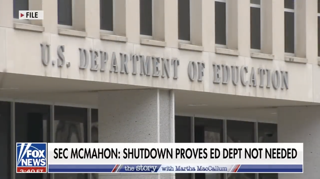
The Department of Education on Tuesday issued new guidance instructing schools not to favor or disfavor students based on race in disciplinary decisions, reversing earlier federal directives that encouraged consideration of racial outcomes in school discipline. The department also announced new civil rights investigations into several school districts accused of using race-based disciplinary policies.
Explainer The Controversy Over DEI In Education: Legal Battles and Policy Shifts
The move marks a significant shift in federal policy, with the department now emphasizing that school discipline must be neutral and non-discriminatory. This change raises questions about the future of equity-focused practices in public education, as it departs from previous efforts to address racial disparities in student discipline.
The guidance follows President Donald Trump’s April 2025 executive order, titled “Reinstating Commonsense School Discipline Policies.” The order argued that previous administrations had misinterpreted Title VI of the Civil Rights Act of 1964. Specifically, the Trump administration contended that the Obama-era approach—outlined in a 2014 "Dear Colleague" letter—threatened federal funding for schools whose discipline policies resulted in racial disparities, even if there was no evidence of intentional discrimination. Under the 2014 guidance, schools could face federal scrutiny and potential loss of funding if their disciplinary actions produced different outcomes for students of different races, regardless of intent.
New Federal Guidance
The department’s new "Dear Colleague" letter, issued Tuesday, urges all federally funded schools to "establish a disciplinary system that creates a safe and well-ordered learning environment" and to ensure that students are not treated differently based on race, color, or national origin. The letter clarifies that Title VI requires disciplinary systems to be neutral and fair, emphasizing that schools should not use race as a factor in making disciplinary decisions.
Kimberly Richey, assistant secretary for civil rights, said in a statement, "For too long, the Left’s pursuit of ‘equity’ has perversely required schools to discipline students differently, based on their race; it has prevented teachers from keeping their classrooms safe, put students in harm’s way, and severely compromised student learning opportunities."
"Today’s guidance clarifies Title VI’s legal requirements and ends these harmful practices. [The Office for Civil Rights] will vigorously enforce Title VI to ensure that schools’ disciplinary systems are neutral and fair, and that they operate in a nondiscriminatory manner."
— Kimberly Richey, assistant secretary for civil rights
The new guidance comes after the department reversed several disparate impact provisions from agency regulations last month, signaling a broader rollback of policies that prioritized racial equity in school discipline. The department’s actions reflect a growing emphasis on individual treatment rather than group outcomes, and a return to a more traditional interpretation of civil rights law in education.
Investigations Into District Practices
Alongside the guidance, the Office for Civil Rights opened three Title VI investigations into school districts accused of requiring staff to consider race when disciplining students. One investigation targets the Fayetteville, Arkansas, district, where administrators allegedly instructed teachers to factor in students’ racial identities as part of a "restorative justice" initiative aimed at addressing discipline disparities among students of color.
Another investigation focuses on a Milwaukee, Wisconsin, district, where school leaders reportedly criticized neutral discipline policies as reflecting systemic "whiteness" and encouraged officials to consider race in disciplinary decisions. The department did not specify the third district under investigation, but indicated that these cases were selected to address concerns about race-based practices in school discipline.
The department said these investigations are part of its commitment to enforcing Title VI and ensuring that school discipline practices are not discriminatory. The Office for Civil Rights will review whether the districts’ policies or practices resulted in students being treated differently based on race, and whether such actions are consistent with federal law.
Broader Policy Debate
The debate over how schools should address discipline disparities has been ongoing for more than a decade. A 2018 report from the Federal Commission on School Safety found that the 2014 guidance led some schools to "ignore or cover up" student misconduct to avoid racial disparities in discipline statistics. President Trump’s executive order cited this report, stating that such practices left dangerous students in classrooms and compromised safety for all students. A 2020 Heritage Foundation report similarly argued that racial quotas in discipline are "illegal and unjustified."
Supporters of the previous approach have argued that disparate impact policies were necessary to address systemic inequities in school discipline, pointing to longstanding data showing that students of color are disciplined at higher rates than their white peers. They contend that focusing solely on intent, rather than outcomes, fails to address the root causes of these disparities. However, the Department of Education did not include a response from advocates of race-conscious discipline policies in its announcement.
The new guidance and ongoing investigations signal a clear federal shift away from policies that consider racial outcomes in school discipline, and toward a framework that prioritizes race-neutral enforcement of civil rights law. The department’s actions are expected to prompt further debate among educators, policymakers, and civil rights advocates about the best way to ensure fairness and safety in America’s schools.
For more details on the new guidance, see the official notice in the Federal Register.