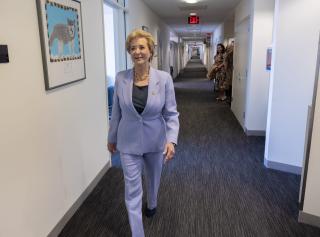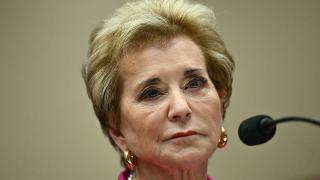
The Trump administration has announced significant changes aimed at dismantling the Department of Education, a move that aligns with President Trump's long-standing pledge to reduce federal involvement in education. Education Secretary Linda McMahon revealed on Tuesday that the administration is shifting several key programs to other federal agencies, marking a step toward fulfilling the president's promise to return education control to the states.
In a press release, McMahon detailed six new interagency agreements with four federal agencies. The U.S. Department of Labor will take over programs from the Office of Elementary and Secondary Education, as well as some postsecondary operations. Additionally, the Department of the Interior will assume responsibility for education programs related to Native American students, while the Departments of Health and Human Services and State will manage other education-related programs.
Labor Secretary Lori Chavez-DeRemer emphasized the importance of preparing students for future workforce demands, stating, "Parents and community leaders understand how important training and education are for students from all walks of life to succeed and support their local economies."
The Department of the Interior's increased role aims to address educational disparities faced by Native American students, who, according to a report from the National Conference of State Legislatures, perform significantly below their white peers and have higher dropout rates. Interior Secretary Doug Bergum expressed optimism that these changes would strengthen accountability and support for Native American education.
While the recent reorganization does not alter the management of the Department's $1.6 million student loan portfolio or federal funds for students with disabilities, it builds on previous efforts to reduce the size and scope of the Department of Education. Earlier this year, Trump signed executive orders directing McMahon to take steps to close the agency and reduce its workforce by nearly half, leading to legal challenges that were ultimately resolved by the Supreme Court.
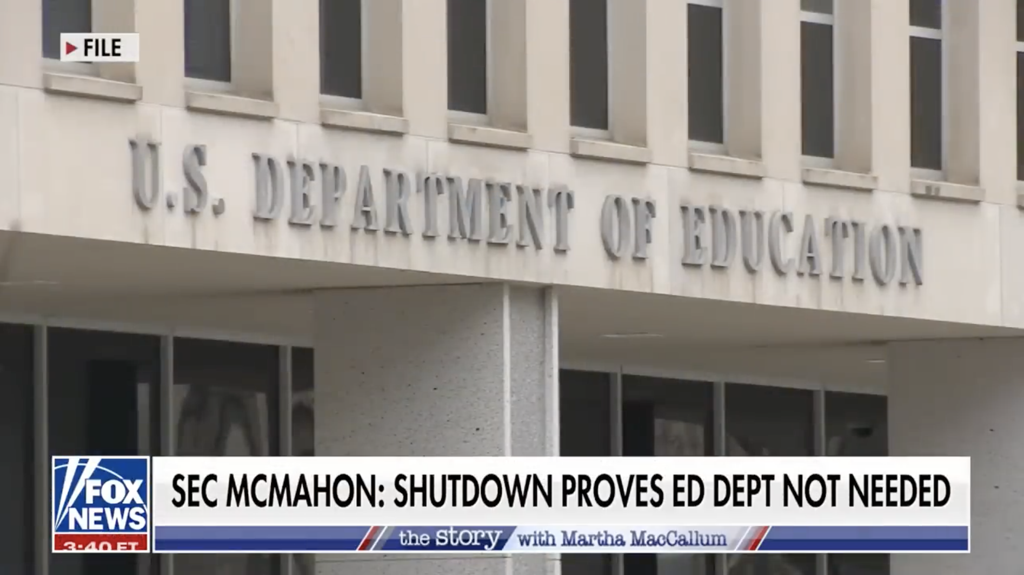
McMahon has stated that the recent federal government shutdown highlighted the Department's perceived redundancy, noting that education continued to function effectively despite the furlough of 90% of its staff. She remarked, "The federal Department of Education furloughed 90 percent of its staff and what happened? Nothing. Schools stayed open, students went to class, teachers got paid."
Education reform advocates have praised the administration's actions. Jeanne Allen, founder and CEO of the Center for Education Reform, described the reorganization as a necessary disruption of a federal system that has not served students well. She acknowledged that while the transition may not be seamless, shifting power closer to local communities is a positive step.
The Trump administration's approach marks a significant departure from previous administrations, particularly during the Obama and Biden years, when federal education policies were expanded. Critics of the Department of Education have long argued that it has become a compliance-heavy bureaucracy rather than a facilitator of educational excellence.
As the administration continues to implement these changes, the future of federal education policy remains uncertain. The ongoing debate about the role of the federal government in education is likely to intensify as stakeholders assess the impact of these significant shifts.