The U.S. Supreme Court has deferred a decision regarding President Trump's authority to fire a top official at the Library of Congress. The court's one-page order on Wednesday in the case of Blanche v. Perlmutter puts on hold a lower court's injunction that sought to prevent the Trump administration from terminating Shira Perlmutter, who led the U.S. Copyright Office until her dismissal in May.
The injunction was issued by a three-judge panel of the D.C. Circuit Court of Appeals in September, shortly after Trump removed Carla Hayden, an Obama appointee, from her position as Librarian of Congress. Todd Blanche, the Deputy Attorney General, is currently serving as the acting Librarian.
Associate Justice Clarence Thomas expressed support for the administration's request to temporarily pause the injunction. However, the Supreme Court's order indicates that the matter will be reconsidered in light of two other cases involving Trump's firing of Democrat-appointed officials at federal agencies.
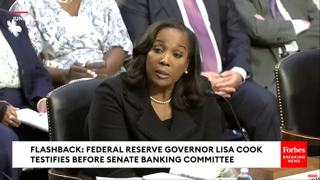
The cases, Trump v. Slaughter and Trump v. Cook, focus on the dismissals of Rebecca Slaughter and Lisa Cook from the Federal Trade Commission and the Federal Reserve Board of Governors, respectively. In both instances, lower court judges issued injunctions to block their firings, prompting the Trump administration to appeal to the Supreme Court.
In the Slaughter case, a Biden-appointed district court judge ruled against the administration, leading to an appeal that resulted in a temporary stay granted by the Supreme Court in September. The high court is set to hear arguments in this case on December 8, 2025.
The Supreme Court's order instructs the parties to address whether statutory removal protections for FTC members violate the separation of powers and whether the precedent set by Humphrey’s Executor v. United States should be overruled. This 1935 decision has been pivotal in shaping the concept of independent agencies within the federal government.
In the Cook case, the Supreme Court declined to block a lower court's injunction preventing her dismissal last month. Similar to the Slaughter case, arguments are scheduled for January 2026.
The Supreme Court's decisions in these cases could have significant implications for executive power and the structure of federal agencies. As the court navigates these complex issues, the future of the Trump administration's ability to remove appointed officials remains uncertain.