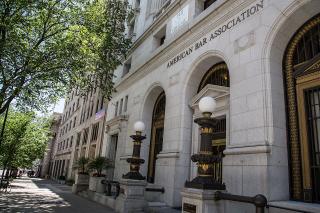
The Trump administration announced Friday that it will move forward with a proposal to end the American Bar Association’s (ABA) status as the sole recognized accreditor of U.S. law schools. This decision marks a significant escalation in the ongoing scrutiny of the ABA’s influence over legal education and could have far-reaching effects on how law schools are accredited across the country.
Explainer Education Policy Reform: Accountability, Innovation, and School Choice in America
For decades, the ABA has served as the primary gatekeeper for law school accreditation in the United States. Its approval is essential for law schools whose graduates wish to sit for the bar exam in most states and for institutions seeking access to federal student loan funding. Critics, however, argue that the ABA has used its authority to promote political agendas, and that its dominance has stifled competition and innovation in legal education.
The Department of Education’s staff has formally recommended that the ABA lose its exclusive accreditor status. This recommendation initiates a review process that will send the proposal to the National Advisory Committee on Institutional Quality and Integrity (NACIQI), a federal panel that evaluates accrediting agencies. NACIQI is scheduled to consider the issue at a hearing in September. After the committee’s review, the matter will be forwarded to Undersecretary of Education Nicholas Kent for a final decision.
Assistant Secretary of Education David Barker, speaking to The Wall Street Journal, said, “We have said many times that accreditation, in general, operates like a cartel. When there’s no competition, accreditors feel free to inject their own political preferences, their own ideologies into the work that they do.”
Carrie Severino, president of the Judicial Crisis Network, echoed these concerns, stating, “The American Bar Association has abused its role as the nation’s main law school accreditor to push leftist ideology in the legal profession. The ABA lost its credibility long ago. Now it will finally face the repercussions of prioritizing political agendas over the law.”
A Department of Education report, cited by The Wall Street Journal, spans nearly 500 pages and details concerns about the ABA’s independence from the legal profession. The report claims that the ABA does not maintain sufficient separation from the profession to be a trustworthy accreditor, raising questions about its fitness to oversee law school accreditation.
Department of Education’s Actions
The Department’s recommendation signals a new approach to challenging the ABA’s authority over legal education. According to an official familiar with the matter, who spoke to The Federalist, even if the ABA loses its accreditor status, law schools that are part of larger universities could still be accredited under their parent institutions. However, independent law schools—those not affiliated with a university—rely heavily on ABA accreditation to remain eligible for federal student loans. Loss of accreditation could jeopardize their ability to attract students and remain financially viable.
Earlier in the week, the Department of Education published a proposed rule aimed at making it easier for new accreditors to gain recognition across higher education. This move is intended to diversify the accreditation landscape and reduce the dominance of any single organization. President Trump has described accreditation as a “secret weapon” to counter what he calls far-left influence in higher education, suggesting that opening the field to new accreditors could help shift the ideological balance in legal and other professional education programs.
Criticism and Response
The Department’s actions have drawn both support and criticism. Groups such as Protect the Public’s Trust argue that recent steps by the ABA to roll back requirements like affirmative action hiring and diversity, equity, and inclusion (DEI) programming are only temporary measures. They contend that these changes could be reversed under a future Democratic administration, and that the ABA’s underlying approach remains unchanged.
The ABA itself has not issued a public response to the Department’s latest recommendation. The upcoming NACIQI hearing in September is expected to address the Department’s concerns, as well as other issues that have been raised about the ABA’s renewal as an accreditor in the past. The outcome of this process could have a significant impact on how law schools across the country maintain their eligibility for federal funding and could reshape the standards for legal education in the United States.
If the ABA loses its exclusive accreditor status, it would mark a major shift in the regulation of legal education. Law schools might seek accreditation from other recognized bodies, and new accreditors could emerge to fill the gap. Supporters of the move argue that increased competition among accreditors would lead to more innovation and less politicization in legal education. Opponents warn that it could undermine the quality and consistency of legal training, and make it harder for students to evaluate the credentials of different law schools.
As the process moves forward, stakeholders across the legal and higher education communities will be watching closely. The decision could set a precedent for how professional education is regulated in other fields, and could influence broader debates about the role of accreditation in American higher education.