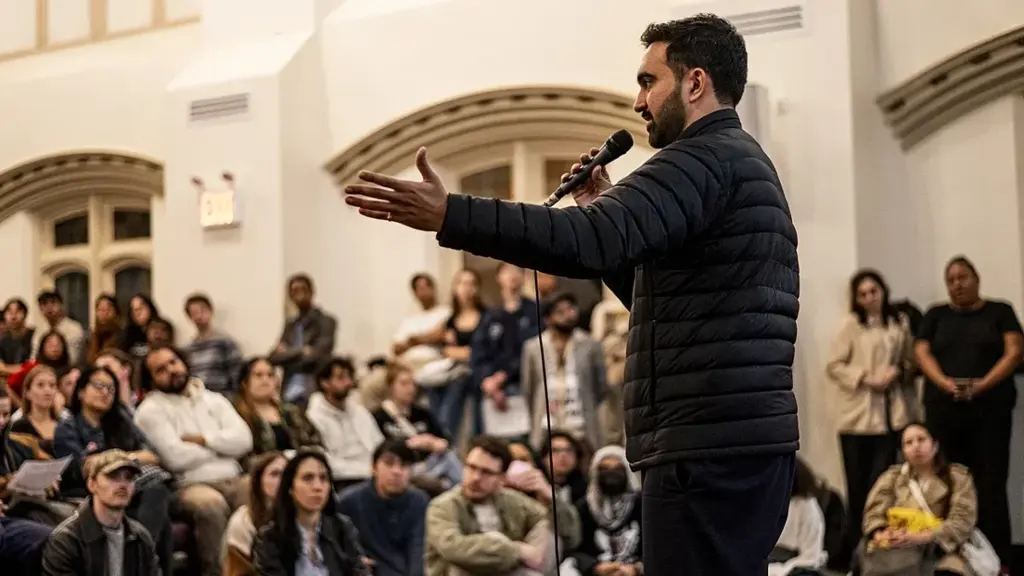
Democratic Socialist Zohran Mamdani's election as mayor of New York City has ignited discussions about the influence of higher education on political ideologies. His victory was largely supported by voters with a bachelor’s degree or higher, prompting political analyst Byron York to remark, "the non-degreed tried valiantly to save the city from the degree-holding horde. There just weren’t enough of them." This outcome raises critical questions about the current state of the higher education system and its potential role in fostering socialist sentiments among young Americans.
Higher Education and Political Ideologies
A 2023 report from Jacobin highlights a growing trend among universities to embrace Marxist ideologies, including Critical Race Theory (CRT). Critics argue that this shift has moved the focus away from teaching critical thinking and job skills toward ideological indoctrination. Observers express concern that this trend undermines the educational purpose of colleges and universities, potentially skewing the political beliefs of graduates.
"The non-degreed tried valiantly to save the city from the degree-holding horde. There just weren’t enough of them."
— Byron York, political analyst
Adding fuel to these concerns is a viral video featuring Mamdani's father, Mahmood Mamdani, a professor at Columbia University. In the video, he claims that "America is the genesis of secular colonialism" and suggests that historical figures like Abraham Lincoln influenced Hitler's genocidal policies. While such extreme viewpoints may not resonate with the broader public, they reportedly reflect a prevailing sentiment in some academic circles.
The Shift in Young Americans' Views
Many college students reportedly lack the intellectual tools to counter radical views, often not learning about the historical failures of socialism and communism. Critics argue that this educational gap contributes to a growing belief among young Americans that socialism could provide solutions to pressing issues like student debt and housing affordability.
Key statistics underscore this shift: the share of Americans aged 25 or older with a bachelor’s degree increased from 30.4% in 2011 to 37.9% in 2021. Additionally, a recent survey found that 62% of American adults under 30 view socialism favorably, up from 49% in 2020. This trend is particularly evident among young women; in the 2020 presidential election, 65% of female voters under 30 supported Democrat Joe Biden. Groups like "Hot Girls 4 Zohran" have also made socialist ideas more appealing to young voters.
Implications for Higher Education and Society
As the number of college-educated individuals leaning toward socialism increases, the political landscape is shifting. Self-identified socialists like Bernie Sanders advocate for policies such as student loan cancellation and free college education. Critics warn that as long as left-leaning administrators and professors dominate higher education, the trend toward socialism is likely to persist.
The current higher education system in the United States faces significant criticism for rising tuition costs and perceived ineffectiveness in preparing graduates for the job market. Many graduates carry an average student loan debt of about $38,375, with over half finding themselves underemployed. This situation has led some to misplace blame on capitalism for their financial struggles, despite evidence suggesting that free-market policies have contributed to reducing global poverty rates.
In response to these challenges, some advocates are calling for reforms in higher education funding and curriculum. They suggest that state and federal governments should reduce funding to encourage universities to offer more effective and relevant degrees. Alternatives to traditional college pathways are also gaining traction, with initiatives like Mike Rowe's scholarship program for skilled trades and tech companies offering free online courses.
The election of Mamdani as mayor raises important questions about the direction of American society and the role of higher education in shaping political beliefs. If current trends continue unchecked, some fear that the U.S. may increasingly lean toward socialist policies in the future.