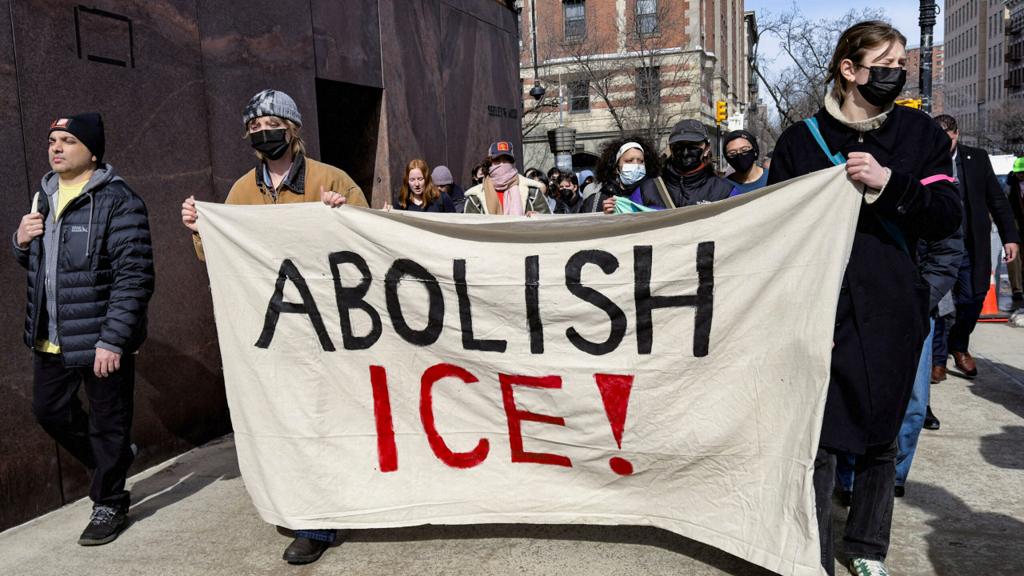
Nearly 39,000 people in the United States without legal status were released by sanctuary jurisdictions over a 20-month period, according to documents obtained by the Center for Immigration Studies (CIS) through a Freedom of Information Act request to Immigration and Customs Enforcement (ICE).
Explainer Understanding Public Safety Trends: Crime Declines and Rising Challenges for Law Enforcement
The data underscores a widening divide between federal immigration enforcement and local sanctuary policies. Thousands of individuals with pending charges or convictions for serious crimes were released after local authorities declined ICE detainers, which are requests to hold individuals for possible deportation.
The CIS analysis covers the period from October 2024 to June 2026. During this time, New York City led the nation with 12,750 declined ICE detainers, surpassing California, where 13 local jails and detention centers declined to hold 9,997 individuals. Illinois, Minnesota, and Connecticut followed, with 2,088, 1,943, and 1,259 declined detainers, respectively. The records show that from January 2025 onward, New York accounted for 39 percent of all declined detainers nationwide, indicating a significant concentration of such releases in the city.
Crime Charges and Convictions
According to CIS, many of those released had pending charges or convictions for a range of offenses, including violent and serious crimes. The report detailed specific figures: 4,050 pending assault charges and 280 assault convictions; 560 burglary charges and 79 burglary convictions; 445 robbery charges and 45 robbery convictions; 293 sexual assault charges and 42 sexual assault convictions; 208 stolen vehicle charges and 42 convictions; 75 homicide charges and 24 homicide convictions; and 51 kidnapping charges and 12 kidnapping convictions among the released individuals.
Jail systems with the highest numbers of declined detainers included Queens Central Booking (4,083), Brooklyn Central Booking (2,990), and Manhattan Central Booking (2,474) in New York. Other facilities with high numbers were Santa Clara County Jails in California (2,803) and Cook County Jail in Illinois (1,355). These figures reflect the concentration of sanctuary policies in major urban centers and their impact on federal immigration enforcement efforts.
State and Local Trends
The CIS report noted that Minnesota and Colorado experienced a significant increase in declined detainers compared to previous years. In Minnesota, 28 new sanctuary jurisdictions were added during the reporting period, the most of any state. This shift followed a February 2025 opinion by Minnesota Attorney General Keith Ellison, who asserted that state law enforcement agencies could face civil liability if they honored ICE detainers. This legal interpretation led many local agencies to change their practices regarding cooperation with federal immigration authorities.
By contrast, most local law enforcement agencies in Virginia increased cooperation with ICE compared to prior years. However, some large jurisdictions in Virginia, such as Fairfax County, continued to decline detainers, illustrating the patchwork nature of sanctuary policies even within individual states.
Policy Debate and Reactions
Jessica Vaughan, director of policy studies at CIS, criticized sanctuary policies, stating, "The only people being protected by sanctuary policies are the criminal aliens, who are the top priority for removal."
"These policies are adopted for ideological and political reasons, without legal or public safety justification, and their supporters are indifferent to the harm they cause. They will continue to hinder ICE’s ability to do its job safely unless Congress creates some greater consequences for this interference."
— Jessica Vaughan, director of policy studies, Center for Immigration Studies
Supporters of sanctuary policies have argued that such measures foster trust between immigrant communities and local law enforcement. They contend that cooperation with ICE can discourage crime victims and witnesses from coming forward, undermining public safety. However, officials in the jurisdictions named in the report did not respond to requests for comment on the findings.
CIS released its updated Map: Sanctuary Cities, Counties, and States alongside the report, listing jurisdictions with laws or practices that limit cooperation with ICE detainers. The ongoing debate over sanctuary policies continues to shape the relationship between local governments and federal immigration authorities, with both sides citing public safety and legal concerns.