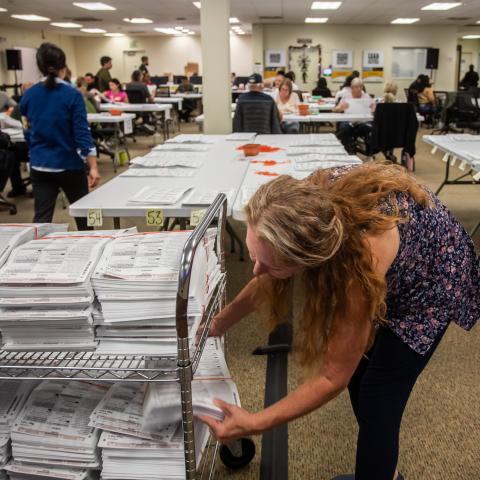
A federal appeals court has granted the Department of Justice’s (DOJ) request to dismiss its lawsuit against California over approximately 20,000 ballots that the federal government alleged were cast by individuals who were not American citizens. The DOJ acknowledged that after the election, California officials had already “commingled the challenged ballots with lawful ones,” making it impossible to separate them and rendering the lawsuit unnecessary.
Explainer Redistricting Battles: How Maps Shape American Political Power
The case centered on the federal government’s effort to force California election officials to set aside ballots it claimed were cast by noncitizens. This raised significant questions about election integrity, the rights of voters, and the practical challenges of administering elections when disputes arise over voter eligibility.
The Supreme Court had previously declined to intervene in the California case before the election. By refusing to take up the matter, the high court allowed a lower court order to stand. That lower court order found that the government’s request to segregate the ballots “would wreak havoc and disrupt the election,” highlighting the logistical and legal difficulties of separating ballots after they have been cast and processed.
DOJ’s Request and Court Decision
Earlier this month, the DOJ formally moved to drop the lawsuit, citing the state’s post-election handling of the ballots. According to the DOJ, once the ballots were mixed with other lawful ballots, it became impossible to identify or remove the disputed votes without affecting legitimate ballots. The appeals court agreed to the dismissal on Monday, effectively ending the federal challenge to California’s election process regarding these ballots.
A related lawsuit brought against the DOJ by labor unions and pro-voting groups was also dismissed this month, according to the Associated Press. These groups had intervened in the legal battle, arguing that the DOJ’s actions threatened to disenfranchise eligible voters and undermine public confidence in the election system.
Broader Legal Context
The DOJ’s move in California follows a similar attempt last week to dismiss a lawsuit in Alaska. In that case, the DOJ sought to block the certification of Democrat Mary Peltola’s victory in the Alaska Senate race after she secured an outright majority in a ranked-choice voting contest. The Alaska case, like the California dispute, involved federal intervention in state-managed election processes and raised questions about the scope of federal authority in election administration.
The Supreme Court’s earlier refusal to take up the California case left in place a lower court’s warning that separating the ballots would disrupt the election process. The DOJ’s admission that the ballots were now irretrievably mixed with lawful ones effectively ended any remaining legal avenue for challenging their validity. This development underscores the practical challenges of contesting ballots after they have been counted and combined with others, especially in large-scale elections.
Responses and Next Steps
Neither California election officials nor the DOJ issued further public statements following the dismissal. Supporters of the DOJ’s original lawsuit argued it was necessary to protect the integrity of the vote and ensure that only eligible citizens participate in federal elections. They maintained that federal oversight is essential to prevent potential irregularities and maintain public trust in the electoral process.
Critics of the DOJ’s effort, however, contended that the lawsuit risked disenfranchising lawful voters and undermining confidence in the election system. They argued that the attempt to segregate ballots after the election could have led to the exclusion of valid votes and created confusion among voters and election officials alike.
The dismissal closes one of the most closely watched federal challenges to state election procedures involving alleged noncitizen voting. With the appeals court’s decision, no further court action is scheduled in the California case. The outcome leaves in place the state’s handling of the disputed ballots and signals the end of this particular legal battle over voter eligibility and election administration.
The case highlights ongoing debates about election security, the role of federal oversight, and the complexities of managing elections in a diverse and populous state like California. While the immediate legal challenge has ended, broader discussions about voter eligibility and election integrity are likely to continue in future election cycles.