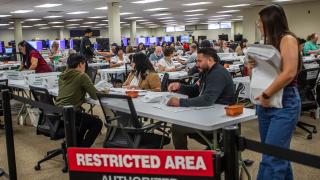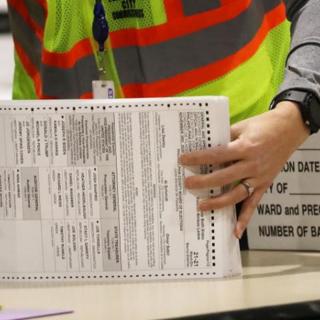
The Department of Justice (DOJ) has issued grand jury subpoenas to at least two employees of the Los Angeles County Registrar-Recorder’s office, intensifying an ongoing investigation into allegations that thousands of noncitizens may be listed on California’s voter rolls. The subpoenas are part of a broader federal probe into the integrity of the state’s election system, specifically focusing on whether ineligible individuals have participated in recent elections.
Explainer Noncitizen Voting in U.S. Elections: Risks, Realities, and Regulatory Challenges
The subpoenas demand internal communications related to the DOJ’s inquiries to both county officials and the California secretary of state. They also seek records detailing the county’s methods for screening for unlawful voting by noncitizens and any efforts to prevent such votes from being counted. The investigation is centered on the DOJ’s claim that more than 20,000 ballots in California may have been cast by noncitizen voters—a charge that state officials have strongly denied.
This federal action follows a recent court battle in which the DOJ sought to halt the counting of ballots it suspects were cast by noncitizens. A federal judge rejected the DOJ’s request for a temporary restraining order, and the department has since appealed that decision to the Ninth Circuit Court of Appeals.
Details of the Subpoenas
The subpoenas, which were delivered last week, require Los Angeles County employees to provide copies of all internal communications regarding the DOJ’s ongoing investigation. Specifically, the documents sought include correspondence with the California secretary of state and records outlining how the county identifies and addresses potential unlawful voting by noncitizens.
According to reporting by the New York Times, the grand jury proceeding related to these subpoenas is scheduled for November 4. The use of grand jury subpoenas allows the DOJ to obtain records that may not be accessible through civil lawsuits or standard written requests. Officials have emphasized that receiving a subpoena does not necessarily mean the recipient is under investigation; rather, it is a tool to gather information for the grand jury’s review.
The DOJ’s focus on Los Angeles County comes amid broader scrutiny of California’s voter registration and election procedures. Los Angeles County is the most populous county in the United States, making its election practices a focal point in national debates over voting integrity.
Federal Court Ruling and Appeal
U.S. District Judge David Carter, who was appointed by former President Bill Clinton, recently ruled against the DOJ’s request for a temporary restraining order to sequester the ballots in question. In his decision, Judge Carter wrote that granting such an order “would wreak havoc and disrupt the election.” The judge’s ruling emphasized the importance of maintaining stability and continuity in the election process, even as the DOJ pursues its investigation.
Following the court’s decision, the DOJ immediately appealed to the Ninth Circuit Court of Appeals, seeking to overturn Judge Carter’s ruling. The outcome of this appeal could have significant implications for how ballots suspected of being cast by noncitizens are handled in California and potentially in other states with similar concerns.
Bill Essayli, a U.S. Attorney involved in the case, stated, “The district court denied our emergency request to sequester ballots from 20,000 suspected noncitizens. Every day, more ballots are processed by election officials. This ongoing emergency disenfranchises American citizens through dilution.”
Broader Context and Reactions
The investigation and legal dispute have brought renewed attention to the ongoing national debate over election integrity and the accuracy of voter rolls, particularly in states with large and diverse populations like California. Critics of the state’s election procedures argue that insufficient screening could allow ineligible individuals to vote, potentially undermining public confidence in election outcomes. On the other hand, state officials maintain that California’s existing safeguards are robust and effective at preventing unlawful voting.
So far, neither the California secretary of state nor Los Angeles County officials have issued public statements in response to the latest subpoenas or the DOJ’s allegations. The lack of comment underscores the sensitivity and complexity of the issue, as both state and local officials navigate the legal and political ramifications of the federal investigation.
The DOJ’s appeal remains pending before the Ninth Circuit, and its resolution could set important precedents for how suspected unlawful ballots are managed in future elections. The outcome may also influence ongoing policy debates over voter registration, eligibility verification, and the balance between election security and access.
As the investigation continues, election officials, legal experts, and advocacy groups across the country are closely watching the developments in Los Angeles County. The case is likely to remain a focal point in discussions about election law and the role of federal oversight in state-administered voting systems.