Consumer prices in the United States have climbed sharply since 2020, with Bureau of Labor Statistics (BLS) data showing that items costing $40 in July 2020 now average $51.55, and those at $100 in 2020 now cost $128.88 in July 2026. The pace of price increases over the last six years has outstripped the previous 14-year period, according to BLS historical tables and inflation calculators.
The rapid rise in prices has become a central concern for Americans, with the main tension centering on the causes of this inflation and the federal government's response.
The current inflationary period follows years of relatively slow price growth, with the BLS reporting that from July 2006 to July 2020, $100 worth of goods rose to $127.32. In contrast, the same amount jumped to $128.88 in just the six years since 2020, underscoring the acceleration in price increases.
Inflation Under Biden and Trump
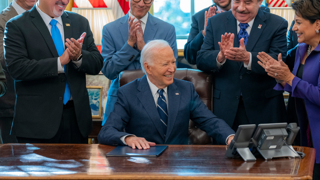
Most of the post-2020 price surge occurred during Joe Biden's presidency. When Biden took office, the inflation rate stood at 1.4 percent, but it peaked at 9.1 percent less than 18 months later. The average annual inflation rate during Biden's four-year term was 5 percent, the highest for any presidential term in the last 45 years, based on the consumer price index for all urban consumers from January 2021 to January 2025. Over Biden's term, $100 lost value, dropping to $82.34 by the time he left office.
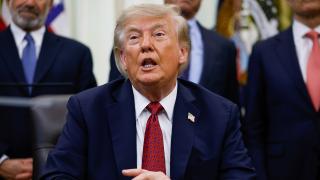
By comparison, inflation during President Trump's second term has generally remained below 3 percent, with a single month exceeding 4 percent (4.2 percent in May of this year). Trump has not seen inflation rates reach the 5 percent threshold in either of his terms, while Biden's tenure saw 21 consecutive months above that mark. As of July, the inflation rate was 3.4 percent, slightly higher than the 3.0 percent rate when Trump began his current term.
Federal Spending and Deficit Trends
Analysts and commentators have pointed to federal spending as a key driver of recent inflation. The federal government spent more than $6.5 trillion in 2020 and $6.8 trillion in 2021, according to the Office of Management and Budget's historical tables. The Congressional Budget Office (CBO) reports that Biden's American Rescue Plan Act alone added $1 trillion to 2021 spending. In those two years, the government accumulated $5.5 trillion in deficit spending (in constant 2017 dollars), exceeding the total deficits from 1947 to 1989 after adjusting for inflation.
Since 2020, annual federal spending has not dropped below $6.1 trillion, and annual borrowing has remained above $1.3 trillion. The national debt is approaching $40 trillion, and the CBO projects that more than $1 trillion in tax revenue this year will go toward interest payments on the debt—surpassing discretionary defense spending ($885 billion) and nearly matching non-defense discretionary spending (just under $1 trillion).
"As the price of money falls, the price of every other commodity must go up. And what causes the price of money to fall? The answer is very simple: an increase in the supply of money relative to other goods and services."
— John Steele Gordon, financial writer
Policy Criticism and Competing Views
Critics argue that Biden-era policies, including pandemic-related lockdowns and increased government spending, contributed to supply disruptions and excess currency in the economy, fueling inflation. Financial writer John Steele Gordon and others have linked the surge in prices to these factors, emphasizing the impact of increased money supply and supply chain constraints.
Some commentators, such as Gerard Baker in The Wall Street Journal, have also criticized market consolidation and regulatory policies, arguing that concentration of economic power and "cronyism" have exacerbated affordability issues for consumers. Baker contends that "oligopoly-level industrial concentration in almost every sector" and "the steady accretion of market, economic and political power by a business-political class" undermine competition and the free market.
Supporters of Biden's economic policies have argued that pandemic-era spending was necessary to stabilize the economy and support households and businesses during a period of unprecedented disruption. Biden administration officials have not directly addressed the recent criticism in these reports.
Outlook for Fiscal Policy
Looking ahead, analysts suggest that reversing high inflation will require fiscal restraint and a renewed focus on free-market competition. The CBO notes that "auto-pilot" spending—mandatory programs plus net interest—now consumes 99 percent of tax revenues, leaving only 1 percent for discretionary spending, which is largely financed with borrowed funds. The persistence of high federal deficits and debt service costs remains a key issue for policymakers and taxpayers alike.