President Donald Trump has indicated that he will not attempt to dissuade Federal Reserve Chair Kevin Warsh from raising interest rates, expressing confidence in Warsh’s judgment even as he continues to voice concerns that U.S. rates are currently too high. Trump’s comments highlight a notable policy divide at the highest levels of government, as Warsh signals a focus on inflation control while Trump pushes for lower rates to boost U.S. economic competitiveness.
The president’s remarks come just days after Warsh delivered his first address as Fed Chair at the Jackson Hole Economic Policy Symposium. In his speech, Warsh stated that inflation remains above the Federal Reserve’s 2% target and emphasized that the central bank’s “predominant focus right now should be on prices.” Warsh acknowledged that while recent inflation data had shown some improvement, “they do not tell me that underlying trends have meaningfully improved.”
Trump’s Position on Rates
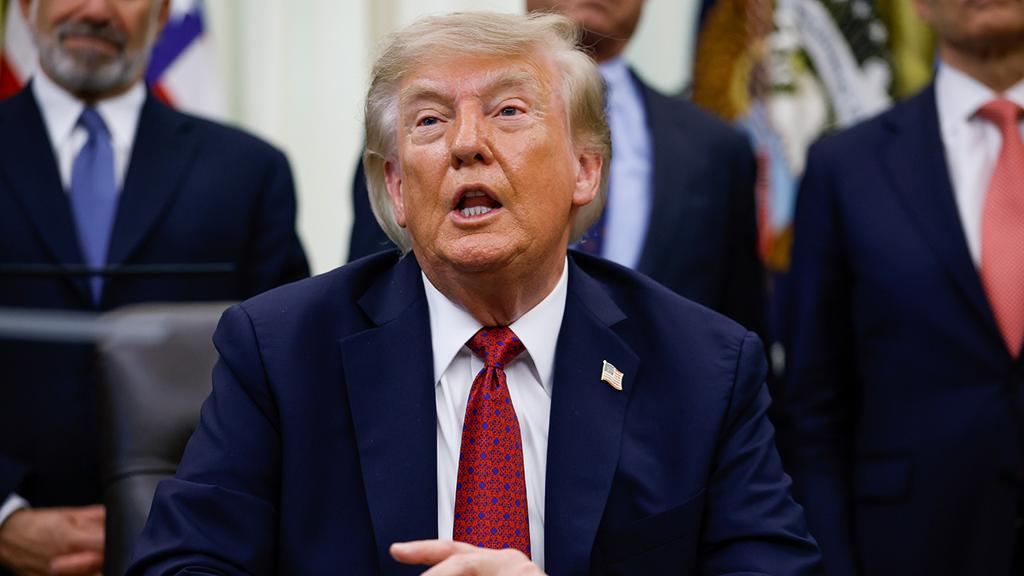
When asked directly whether he opposes a potential rate increase or has spoken to Warsh about the issue, Trump told the Daily Signal that he had not. “I have a lot of respect for him, and he’ll do what he has to do,” Trump said during an interview in the Oval Office. The president’s remarks suggest a willingness to defer to Warsh’s judgment, even as he maintains his own view that U.S. interest rates are too high.
"I have a lot of respect for him, and he'll do what he has to do."
— Donald Trump, President
Trump reiterated his belief that the United States should have the lowest interest rates in the world. He argued that many countries are able to pay lower interest rates only because of their economic ties to the U.S., and that the U.S. should take advantage of its strong economic position. “We should have the lowest interest rates in the world, because if we wanted to, you know, a lot of countries that are paying less interest rate only because of us, because they do business with us,” Trump said.
He further explained that when the U.S. economy is performing well, the Federal Reserve should consider lowering rates rather than raising them. “When we’re doing well, we become a better credit. When you become a better credit, you’re supposed to cut rates, not raise rates,” Trump said, underscoring his belief that strong economic fundamentals should lead to lower borrowing costs.
Warsh’s Inflation Concerns
In contrast to Trump’s position, Warsh used his Jackson Hole speech to emphasize the Federal Reserve’s commitment to price stability. He noted that inflation is still running above the central bank’s 2% target, making the fight against rising prices the Fed’s main priority at this time. Warsh cautioned that while recent inflation numbers had improved, these figures do not indicate a meaningful improvement in the underlying trends driving inflation.
Warsh’s comments suggest that the Federal Reserve may be considering further interest rate hikes as a tool to address persistent inflation. This stance stands in contrast to Trump’s repeated calls for lower rates, which he argues would enhance U.S. economic competitiveness and benefit American businesses and consumers.
Broader Policy Debate
The exchange between Trump and Warsh underscores ongoing tensions between the White House and the Federal Reserve over the direction of U.S. monetary policy. Trump’s public statements reflect a longstanding view that lower interest rates would benefit the U.S. economy by making borrowing cheaper and stimulating growth. In contrast, Warsh’s remarks signal the central bank’s continued focus on controlling inflation, even if that means keeping rates elevated or considering additional increases.
Trump said he hopes to eventually convince others that the U.S. should have the lowest rates globally, but he also acknowledged the Federal Reserve’s independence in setting monetary policy. The president’s comments suggest a recognition that, while he may disagree with the Fed’s approach, he respects the institution’s autonomy and Warsh’s authority as chair.
As of now, Warsh has not publicly responded to Trump’s latest comments. The ongoing debate over interest rates and inflation is likely to remain a central issue in U.S. economic policy discussions, as both the White House and the Federal Reserve weigh the best path forward for sustaining growth while keeping prices stable.
The differing perspectives of Trump and Warsh reflect broader debates within economic and policy circles about the appropriate balance between supporting economic expansion and maintaining price stability. As inflation remains above target and the economy shows signs of strength, the Federal Reserve faces difficult decisions about how quickly to adjust interest rates. Meanwhile, Trump’s calls for lower rates highlight the political pressures that can influence central bank policy, even as the Fed seeks to maintain its independence.