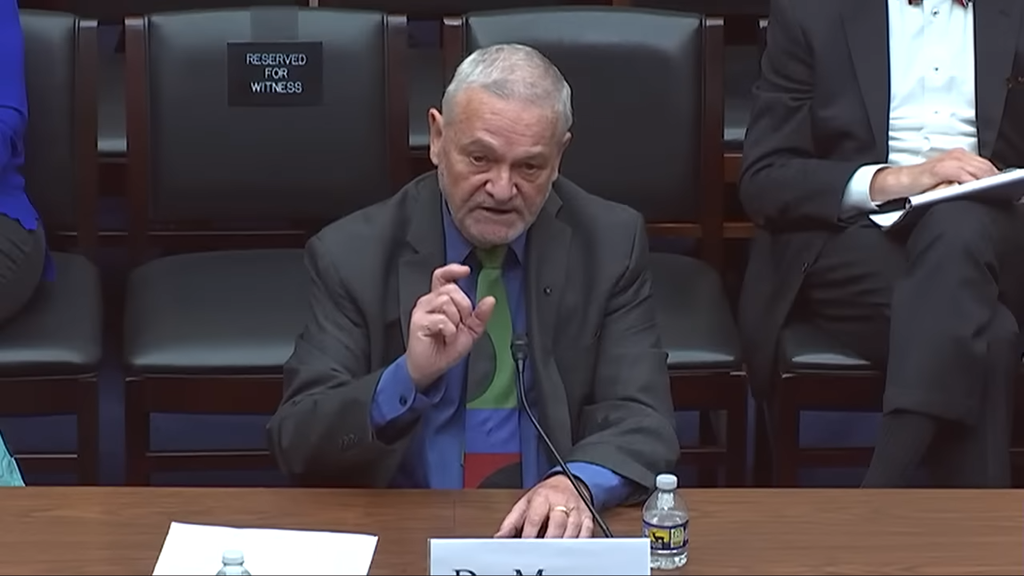
Dr. David Morens, a former senior advisor to Anthony Fauci at the National Institute of Allergy and Infectious Diseases (NIAID), pleaded guilty on Tuesday to conspiring to conceal federal records and evade open records laws related to U.S.-funded coronavirus research. The Department of Justice (DOJ) announced the plea, which comes amid ongoing scrutiny of U.S. oversight of research on bat coronaviruses and the transparency of government communications during the COVID-19 pandemic.
Morens admitted in federal court that he conspired with two others to defraud the United States by intentionally hiding official communications from Freedom of Information Act (FOIA) requests. According to prosecutors, the scheme began after the National Institutes of Health (NIH) terminated a grant titled "Understanding the Risk of Bat Coronavirus Emergence." This grant had drawn attention after allegations surfaced that the COVID-19 virus may have originated from the Wuhan Institute of Virology (WIV) in China. Under Fauci’s leadership, NIAID had awarded the grant to an organization referred to as Company 1 and an individual identified as Co-Conspirator 1, who then made a subaward to the WIV.
Details of the Guilty Plea
The DOJ stated that Morens and his co-conspirators agreed in writing to use Morens's personal Gmail account, rather than his official NIH email, to evade FOIA scrutiny. This private account was used to exchange non-public NIH information, coordinate efforts to influence NIH funding decisions, and edit drafts of letters to NIH leadership on behalf of Company 1 and Co-Conspirator 1. Morens also admitted to working with Co-Conspirator 1 to accept illegal gratuities, including wine delivered to his home in exchange for authoring a scientific commentary supporting the theory that COVID-19 had natural origins.
In one email cited in court documents, Morens wrote, "I try to always communicate over gmail because my NIH email is FOIA’d constantly." Other communications revealed that Morens deleted emails to prevent their disclosure and back-channeled information to another senior NIAID official. In another message, he wrote, "Don’t worry, just send to any of my addresses and I will delete anything I don’t want to see in the New York Times."
Connections to EcoHealth and Peter Daszak
Observers have identified Co-Conspirator 1 as Peter Daszak, the former president of EcoHealth Alliance. From 2014 to 2020, EcoHealth Alliance sent more than $500,000 in U.S. government grants, including NIH funds approved by Fauci, to the WIV for gain-of-function research on bat coronaviruses. Daszak, like Fauci, publicly dismissed the lab leak theory as a "conspiracy theory."
The Department of Health and Human Services (HHS) recently debarred EcoHealth Alliance and Daszak from receiving federal funds for five years. The HHS cited violations of grant requirements and failure to report dangerous gain-of-function experiments at the WIV. The debarment was described as necessary to "protect the Federal Government’s business interests." HHS also confirmed that Daszak’s employment with EcoHealth Alliance will end effective January 6, 2025. According to the Select Subcommittee on the Coronavirus Pandemic, EcoHealth repeatedly failed to comply with oversight requests and submitted required research reports two years late. HHS debarment letter and committee findings.
Fallout and Political Response
Morens’s guilty plea appears to corroborate communications previously released by congressional Republicans, which showed him discussing efforts to evade open records laws and downplay the lab leak theory. The emails also suggested that Fauci instructed Morens to engage with media to counter the lab leak narrative. President Biden granted Fauci a preemptive pardon before leaving office, according to Fox News.
Morens faces a maximum sentence of five years in prison. Sentencing will be determined by a federal judge in Maryland. As of publication, neither Fauci nor Daszak have publicly addressed Morens’s guilty plea. Supporters of the former officials have not responded to requests for comment.
The case underscores ongoing concerns about transparency and accountability in federally funded scientific research, particularly in the context of the COVID-19 pandemic. Congressional investigations and agency reviews continue to examine the flow of U.S. grant money to foreign research institutions and the adequacy of oversight mechanisms intended to safeguard public health and government interests.