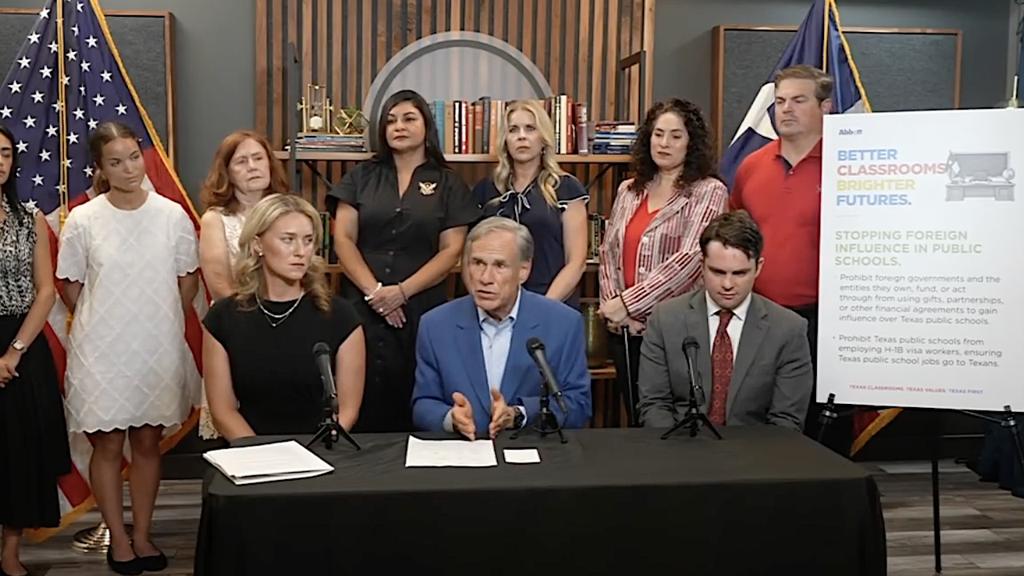
Texas Gov. Greg Abbott on Tuesday unveiled a new initiative aimed at eliminating foreign government influence from the state’s K-12 public schools and prohibiting the hiring of school employees through the H-1B visa program. The announcement marks a significant escalation in the ongoing debate over how Texas schools should manage foreign partnerships and staffing, with Abbott contending that outside influence poses a risk to the integrity of classroom instruction and job opportunities for Texas residents.
Explainer Redistricting Battles: How Maps Shape American Political Power
Abbott’s move comes in response to reports that foreign entities, including Qatar Foundation International, have provided substantial funding to Texas school districts for language and cultural programs. According to the Foundation for Defense of Democracies, Austin Independent School District received $462,000 from Qatar Foundation International between 2016 and 2022. This funding supported Arabic language and culture instruction, including the hiring of Arabic instructors at Austin High School and Burnet Middle School. The grants also covered curricular materials originating from countries such as Saudi Arabia, the United Arab Emirates, Kuwait, Egypt, and Qatar.
In Houston, the foundation reported that Qatari funding was used to support the Arabic Immersion Magnet School’s language and culture program. In 2015, former Houston ISD Superintendent Terry Grier signed a grant agreement that allowed Qatar Foundation International staff and consultants to observe classroom instruction as part of the partnership.
Prohibiting Foreign Influence in Education
Abbott stated that his new initiative would prohibit foreign entities from using gifts, partnerships, or financial agreements to influence what is taught in Texas classrooms. He warned that such arrangements could compromise educational standards and called for legislative action to codify the ban, emphasizing the need to protect the content and quality of classroom instruction from outside interests.
"Bottom line is, foreign influence of any kind has no place in our classrooms. We will achieve that goal."
— Greg Abbott, Texas Governor
Banning H-1B Workers in Schools
The plan also seeks to ban public schools from employing workers through the H-1B visa program. Abbott argued that this measure would ensure teaching jobs remain available to Texans first. He referenced his earlier directive that froze state agencies and universities from applying for new H-1B visa petitions, describing it as a foundation for the new policy targeting public schools.
According to U.S. Citizenship and Immigration Services, Dallas Independent School District received 230 H-1B approvals in 2025. The district has stated that it uses the H-1B program to fill positions such as elementary bilingual (English/Spanish) and special education teachers—roles that are often difficult to staff with local candidates.
Abbott called on the Texas Legislature to pass a law imposing a total ban on H-1B workers in public schools, declaring that “exactly zero Texas public school employees should be here on H-1B visas.” He argued that this step is necessary to prioritize Texas workers and maintain control over who is employed in the state’s education system.
Supporters of the H-1B program, including some school districts, contend that the visas are necessary to address teacher shortages in specialized subjects. Dallas ISD, for example, has said the program helps fill critical roles that are challenging to staff with local candidates, particularly in bilingual and special education. Abbott’s office did not address these concerns in his remarks, focusing instead on the need to eliminate foreign influence and ensure employment opportunities for Texans.
Abbott concluded his announcement by reiterating that foreign influence should have no impact on Texas schools or students. He emphasized the state’s responsibility to maintain control over classroom content and employment, stating that the new initiative is designed to safeguard educational standards and job opportunities for Texas residents.
The governor’s proposal is expected to spark further debate among educators, lawmakers, and advocacy groups as the Texas Legislature considers whether to adopt the recommended bans. The outcome could have significant implications for how Texas schools approach foreign partnerships and address ongoing teacher shortages in the years ahead.