Political Violence in America: Understanding the Rising Threats and Their Implications
Explore the complex rise of political violence in America, its impacts on justice and society, and conservative perspectives on countering left-wing extremism.
Additional reporting by Liam Walker, April Clark
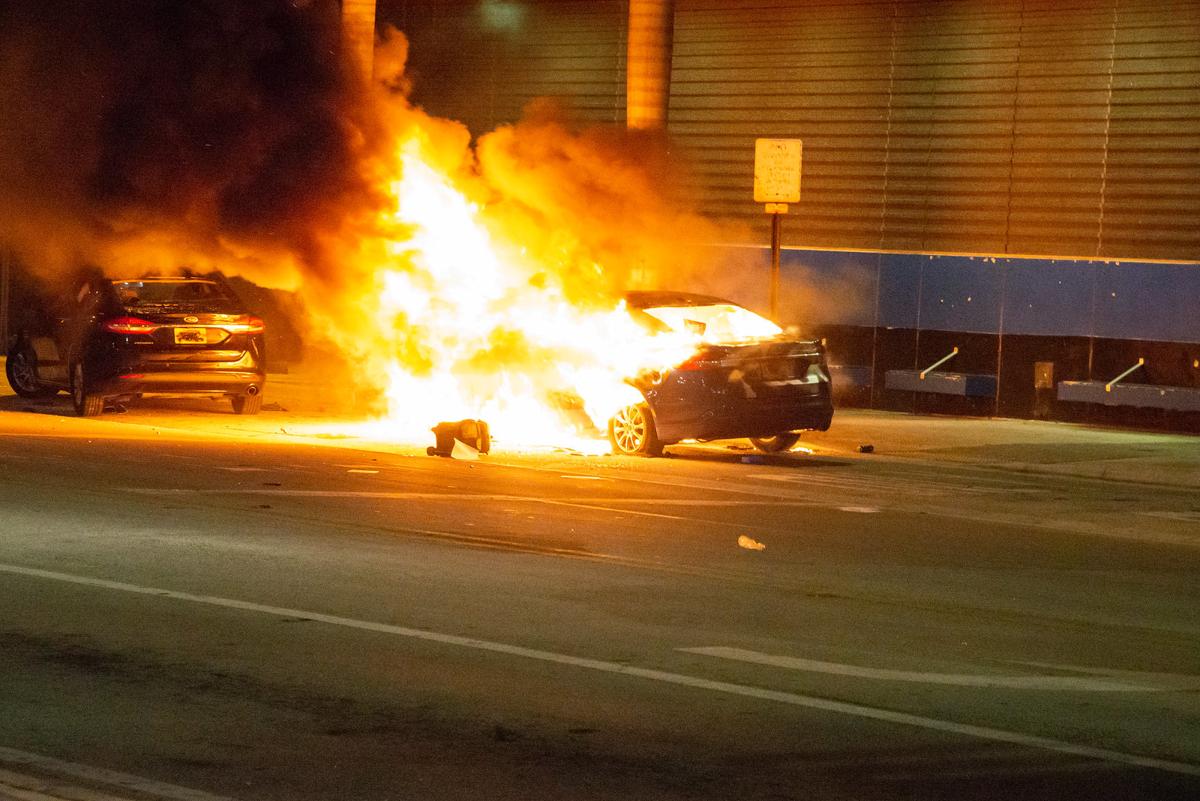
Political violence in the United States has become a growing and multifaceted threat to national stability and social cohesion. Although traditional measures of overall violent crime indicate some improvements, the surge in politically motivated assaults, targeted threats, and extremist actions reveals a darker and more complicated security landscape. This dynamic involves heightened aggression not only against civilians but also toward foundational institutions such as law enforcement and the judiciary. Understanding this crisis requires a nuanced examination of data trends, ideological drivers, broader societal impacts, and conservative strategies to safeguard law and order.
At its core, political violence in America is not a monolith but a series of complex behaviors reflecting deep ideological divides. Different factions exploit grievances ranging from racial and religious hatred to radical leftist opposition against existing power structures. This explainer unpacks those patterns through a conservative lens, highlighting how leftist militant groups have increasingly normalized violence, while emphasizing the need to uphold constitutional freedoms and democratic stability in the face of this rising menace.
Complex Trends in Crime and Political Violence
"Leftist political violence, normalized within their ranks, poses a unique threat that conservatives must confront to save American democracy."
Recent nationwide crime data presents a paradoxical picture. The FBI's 2023 crime statistics show an encouraging 3% decline in overall violent crime compared with 2022, including an 11.6% drop in murders and non-negligent manslaughter cases. These reductions suggest that public safety enhancements may be gradually taking hold across many communities. However, these macro trends obscure disturbing localized increases in politically motivated violence, which dangerously threaten national security and societal trust.
Antisemitic incidents exemplify this troubling spike, skyrocketing by an unprecedented 140% in 2023 to 8,873 reported cases according to the Anti-Defamation League—the highest tally since record-keeping began in 1979. The sharp rise followed inflammatory international events, namely the October 7 Hamas attack in Israel, but also reflects entrenched domestic antisemitism cultivated by radical ideologies. This wave of hate crimes targets not only Jewish individuals but attacks the heart of American pluralism and religious freedom.
Assaults against law enforcement personnel have reached a decade-long peak, totaling over 79,000 attacks in 2023 as reported by the FBI. Among these, 466 involved firearms—demonstrating an alarming willingness to use lethal force against officers. Such hostility toward those charged with enforcing laws erodes public safety and emboldens broader lawlessness. These attacks destabilize police morale and hinder their essential role in preserving order amid increasing political unrest.
Even more concerning is the dramatic rise in threats and assaults directed at federal judges. Over the past three fiscal years, serious threats more than doubled, culminating in 457 incidents in 2023 alone. Given judges’ roles as impartial arbiters of the law, intimidation campaigns jeopardize judicial independence and the constitutional balance of powers. When courts are vulnerable to coercion, the bedrock of democratic governance is at risk.
Ideological Roots and Manifestations of Political Violence
Political violence in the U.S. stems largely from ideologically divergent sources, but with pronounced asymmetries in targets and justifications. Left-wing extremist factions, notably anarchist and Antifa-linked cells, often justify violence as resistance against perceived systemic oppression and authoritarianism. This justification has led to episodes of arson, sabotage, and assault during protests and political confrontations. Despite some leftist denouncements of violence, hard-line militants persist in using aggression as a core tactic.
Conversely, right-wing extremist violence tends to be grounded in racial, ethnic, and religious animus, frequently targeting minority communities or government institutions associated with immigration and social change. Nevertheless, conservative analyses stress that left-wing political violence enjoys greater normalization within parts of the Democratic Party, raising alarms about double standards in both rhetoric and enforcement. Incidents such as celebrations of convicted violent offenders or leniency towards leftist agitators underscore this point, fueling calls for accountability.
This ideological confrontation plays out amid a highly polarized media environment. Conservative commentators argue that mainstream outlets tend to sensationalize right-wing threats while minimizing or ignoring comparable leftist violence. This selective narrative portrayal distorts public opinion and policy responses, leaving many Americans unaware of the full scope of left-wing militancy and its corrosive effects on democratic norms.
The Political and Cultural Consequences of Violence
The increased prevalence of political violence poses serious risks beyond immediate physical harm. Attacks on public figures, including the high-profile assassination attempt on Justice Kavanaugh, jolt national confidence and threaten the open exchange of ideas essential to democracy. When elected officials, judges, and activists live under constant threat, political discourse degrades into fear and suppression.
Hostility against law enforcement compounds the crisis by undermining the rule of law. Some Trump administration officials reportedly had to relocate to military bases for protection due to credible threats, illustrating how political conflict now endangers government function itself. This trend signals an erosion of conventional civic engagement, supplanted by confrontations that endanger public servants’ safety.
Concurrently, left-wing efforts to censor opposing voices through intimidation and mob pressure have intensified. Conservative religious groups, journalists, and politicians frequently find themselves targets of smear campaigns and threats, which limit their participation in public debate. Such tactics question long-standing American commitments to tolerance, plurality, and free expression.
Conservative Perspectives on Countering Political Violence
An essential conservative thrust in confronting America's political violence originates from a candid reckoning with the role of leftist ideologies in fostering radical behaviors. Instead of focusing solely on condemning the symptoms, conservatives emphasize the need to dismantle the underlying networks and narratives that propagate violence. This includes breaking up Antifa-led terror cells, holding radical leaders accountable, and enacting legislation to curb weaponized mob behavior.
Our coverage highlights conservative calls urging President Trump and allied leaders to prioritize eradicating these groups, warning that failure risks the broader collapse of public order and liberty. These perspectives often spotlight Democratic Party complicity or tacit support for extremist factions as part of a troubling pattern that emboldens lawlessness.
Additionally, conservatives advocate for enhanced protections for law enforcement and the judiciary. Strengthening these pillars of governance is seen as a prerequisite to prevent political violence from overwhelming the legal system. Legislative measures to toughen penalties on assaults and hate crimes, paired with vigilant investigative efforts, form a cornerstone of this approach.
The Debate Over Data, Narratives, and Political Accountability
Public debate over political violence is complicated by disagreements around data interpretation and media framing. Some government-commissioned studies, such as those linking support for transgender surgeries to violence risk, have drawn criticism from leftist groups like the Human Rights Campaign, illustrating the contested nature of research in ideologically charged environments. This illustrates how political violence discussions are intertwined with broader culture wars.
Democrats often face criticism for allegedly downplaying left-wing violence or failing to uniformly condemn extremist rhetoric, even while expressing strong concerns about right-wing threats. For example, the refusal by some liberal lawmakers to denounce explicit calls for violence against former President Trump fuels perceptions of double standards. These dynamics hinder bipartisan agreement on effective policy solutions.
Conservative media emphasize the necessity of unbiased data collection and reporting. Accurate assessments of violence attributions are essential to guiding law enforcement priorities and legislative action. Without confronting uncomfortable realities about leftist militancy, strategies risk misallocating resources and neglecting rising internal threats.
Upholding Law, Freedom, and National Unity
The confluence of rising political violence and increasing polarization demands a renewed commitment to the rule of law and individual liberties. Conservatives assert that political disagreement should never cross the line into violence or intimidation, and those who engage in such conduct must face firm legal consequences. At the same time, distinguishing violent extremism from peaceful, constitutionally protected protest is vital to preserving civil liberties.
Failure to address the growing acceptance of militant tactics among some leftist factions endangers the entire constitutional republic. When judges, law enforcement, politicians, and citizens live in fear, democratic institutions falter. Therefore, conservative calls for robust prosecution of violent offenders and stringent enforcement of hate crime statutes align with preserving order and freedom.
Equally important is fostering national unity through respectful political dialogue. While conflict is intrinsic to a pluralistic society, degradation into violence or threats threatens to unravel the social fabric. Conservatives encourage policies and cultural initiatives that promote peaceful disagreement and respect for differing views, strengthening democratic resilience.
The Role of Media and Public Discourse
Media outlets wield significant influence over shaping public perceptions of political violence. Conservative critics contend that many mainstream media entities systematically underreport left-wing violence while disproportionately focusing on right-wing threats. This skewed coverage perpetuates misinformation and deepens societal divisions by creating distorted threat narratives.
Our in-depth reviews expose multiple instances where leftist attacks have been ignored or minimized in the press, even after events as grave as the assassination of political figures. Such omissions hinder public awareness and impede informed democratic responses.
Balanced reporting that neither exaggerates nor downplays violence is necessary to maintain trust and facilitate effective policymaking. Furthermore, cultivating media environments that encourage honest discourse and reject sensationalism can reduce political animus and violent escalation.
Moving Forward: Strategies to Combat Political Violence
Addressing political violence in America requires comprehensive strategies combining law enforcement, legislative, cultural, and educational responses. Enhancing intelligence gathering and policing capabilities to target extremist leftist groups like Antifa is a top conservative recommendation. Such actions should be complemented by legislation imposing harsher penalties on violent crimes motivated by ideology.
Culturally, promoting conservative principles of lawfulness, individual responsibility, and free speech offers a counter-narrative to extremist ideologies. It is equally vital to hold all public figures accountable for incendiary rhetoric that may incite violence or hatred, regardless of political affiliation.
Education and outreach programs emphasizing respect for democratic institutions and peaceful political engagement play key roles in de-escalation. Churches, civic organizations, and schools have unique influence in shaping community attitudes toward nonviolence.
Ultimately, restoring America’s constitutional order and civil peace depends on collective resolve to reject violence as a political tool and to restore trust in governance and public discourse. These efforts are indispensable for safeguarding freedom and national unity in a time of growing internal threats.
Frequently asked questions
Has overall violent crime in the U.S. increased due to political violence?
No. While specific politically motivated crimes have risen, overall violent crime decreased by about 3% in 2023 compared to 2022.
What groups are primarily responsible for political violence in America?
Violence stems from multiple ideological groups, but conservative analysis highlights a growing problem with left-wing militant networks such as Antifa.
How has political violence impacted law enforcement?
There has been a surge in assaults on police officers, reaching a ten-year peak, with many attacks involving firearms.
Why are federal judges increasingly targeted?
Judges face threats due to high-profile rulings on contentious political and social issues, threatening judicial independence.
Does media coverage fairly report on political violence from all sides?
Conservative voices argue that media bias downplays left-wing violence while emphasizing right-wing extremism, skewing public understanding.
What measures are proposed to combat political violence?
Conservatives urge stronger law enforcement, legislative action against violent groups, and rejecting radical leftist ideology fueling unrest.
Timeline of our coverage
- 2026-08-28 — Human Rights Campaign Condemns HHS-Commissioned Study Linking Transgender Procedure Support to Political Violence
- 2026-07-17 — Rubio Warns of Leftist Terror Threat, Cites Institutional Blind Spots
- 2026-05-22 — Supporters of Accused Killer Luigi Mangione Spark Controversy in New York
- 2026-05-21 — Raskin Defends SPLC Amid Fraud Allegations, Citing Donor Support
- 2026-05-05 — Prosecutors Link Palisades Wildfire to Radical Ideology
- 2025-11-20 — Democrats Face Scrutiny Over Political Rhetoric Ahead of Midterms
- 2025-11-12 — Trump Must Crush The Left's Antifa-Led Terror Network Or It Will Crush His Movement
- 2025-11-03 — Threats Force Trump Officials to Relocate to Military Bases, Claims Atlantic
- 2025-10-24 — Debate Intensifies Over Political Violence and Ideological Purity in American Conservatism
- 2025-10-20 — Leftist Demonstrators Call For Murder Of Trump
- 2025-10-10 — Spanberger Refuses to Withdraw Endorsement of Jay Jones Amid Controversy
- 2025-10-08 — Democrats Aren't 'Insane' Or 'Unhinged.' They're Anti-American
- 2025-10-07 — Senate Democrats Stand by Jay Jones Amid Controversial Comments
- 2025-10-07 — Calls for Impeachment of Judge After Light Sentence for Would-Be Assassin of Justice Kavanaugh
- 2025-10-06 — Virginia Attorney General Candidate Jay Jones Faces Scrutiny Over Text Messages
- 2025-10-06 — Virginia Attorney General Candidate Faces Backlash Over Violent Texts
- 2025-10-06 — Washington Post Dubs Armed Red Mass Suspect ’Man With Tent’
- 2025-10-06 — Man Arrested For Explosives At Judiciary Mass
- 2025-10-06 — Democrats Maintain Support for Virginia Attorney General Candidate Amid Controversial Texts
- 2025-10-03 — Concerns Grow Over Political Violence and Censorship on the Left
The Bottom Line
- Political violence threatens the foundational rule of law and democratic governance.
- Rising attacks on law enforcement and judges undermine public safety and justice.
- Understanding ideological roots is crucial to formulating effective responses.
- Media portrayal shapes public perception and policy priorities.