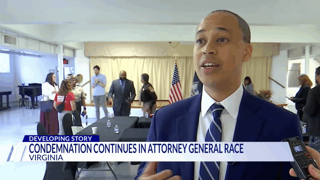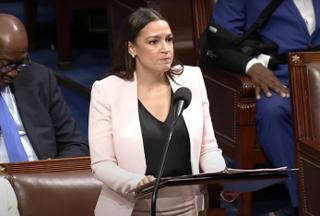
The political landscape within the Republican Party is facing scrutiny as recent comments from Virginia attorney general candidate Jay Jones have sparked controversy. Jones reportedly stated that a Republican legislator deserved "two bullets to the head" and that his children should "die in their mother’s arms." Despite these remarks, prominent Democrats have continued to support him, highlighting a perceived double standard in how political violence is addressed across party lines.
Explainer Navigating Virginia's Electoral Landscape: Key Issues and Reforms
Conservative commentators argue that the right lacks a unified response to such extremism, contrasting it with the left's tendency to shield its own. Adam Johnston, a senior contributor to The Federalist, emphasizes that the right is often subjected to moral policing from both the left and moderates within its ranks. He notes that while Democrats rally behind candidates like Jones, Republicans face backlash for not condemning every controversial statement made by their peers.
Johnston points to the ongoing violence from groups like Antifa and the assassination of conservative figure Charlie Kirk as evidence of the threats conservatives face. He claims that the left's moral outrage often targets the right's fringe elements rather than addressing the broader issues of political violence.
In a recent article for The Free Press, conservative Seth Dillon argues that the right must confront harmful ideas within its ranks instead of uniting blindly. Dillon warns that failing to challenge extremism could lead to electoral defeats similar to those experienced under previous Republican leaders like John McCain and Mitt Romney. He states, "Abandoning principles for power undermines the conservative cause."
Johnston also critiques the ideological containment efforts by disaffected liberals and Never-Trump Republicans, who he claims are attempting to reshape the party's future. He argues that these factions are more focused on policing acceptable discourse than addressing the genuine threats posed by the left.
Miles Bruner, a former GOP staffer, recently recounted his departure from the party in an article for The Bulwark, citing a shift away from principled conservatism towards loyalty to former President Donald Trump. Bruner describes this shift as a departure from democratic norms, stating that he felt compelled to resign to reclaim his integrity.
Johnston argues that both Dillon and Bruner, while claiming to defend conservative principles, are engaged in a project that aligns with leftist goals by attempting to define acceptable right-wing discourse. He asserts that equating fringe right-wing views with mainstream conservative policies creates a false moral equivalency that undermines legitimate conservative positions.
The ongoing debate highlights the challenges facing the Republican Party as it navigates internal divisions and external pressures. Johnston concludes that the right must confront threats from both the left and from within its own ranks to achieve a cohesive political strategy moving forward.