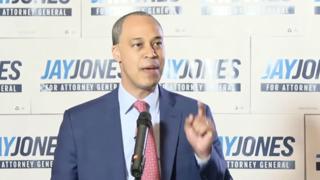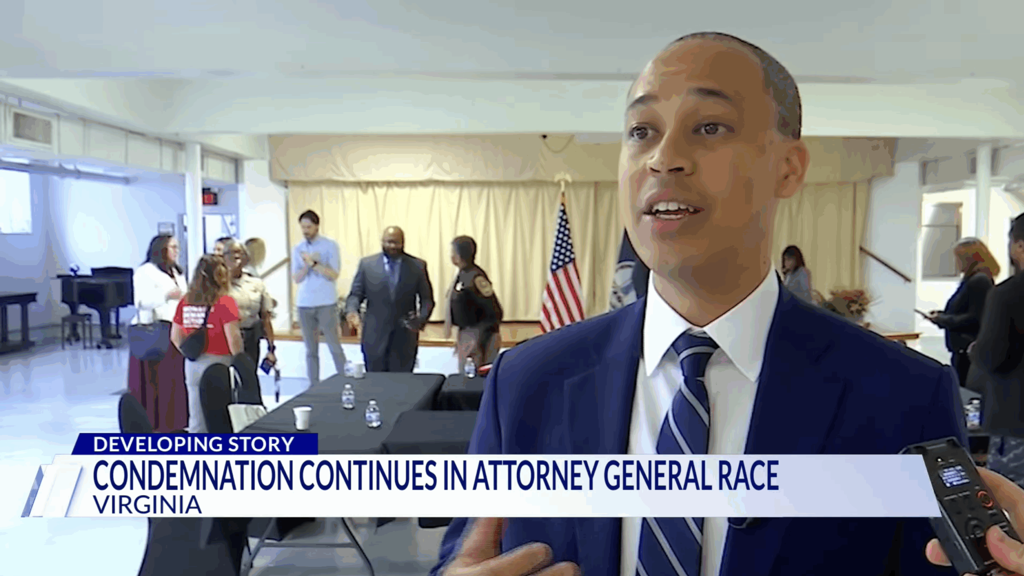
Jay Jones, a Democratic candidate for Virginia's attorney general, is under scrutiny after text messages surfaced in which he expressed violent sentiments towards Republican colleagues. The messages, exchanged in 2022, have sparked significant controversy and raised questions about the Democratic Party's response to such rhetoric.
Explainer Navigating Virginia's Electoral Landscape: Key Issues and Reforms
In the texts, Jones remarked that it would be a "good thing" (U.S. Congress) if the children of Republican House Delegate Carrie Coyner died. He specifically stated, "Three people, two bullets. [Republican House Speaker Todd] Gilbert, Hitler, and Pol Pot. Gilbert gets two bullets to the head," further confirming his wish for harm when Coyner challenged him on his comments.
These revelations come at a time when political tensions are high, and violent rhetoric has become a focal point in discussions about political discourse in the United States. Jones's comments are particularly alarming given the current climate surrounding political violence.
Despite the severity of his statements, Jones has not faced significant repercussions from his party. Abigail Spanberger, a Democratic gubernatorial candidate, expressed her disapproval, stating, "I spoke frankly with Jay about my disgust with what he had said and texted. I made clear to Jay that he must fully take responsibility for his words." (U.S. Congress)
Lieutenant gubernatorial candidate Ghazala Hashmi also condemned the comments, asserting that "political violence has no place in our country and I condemn it at every turn." (U.S. Congress)
However, the Virginia Beach Democrats and the Democratic Committees of Virginia’s 2nd Congressional District have continued to support Jones, stating they reaffirm their "full support" (U.S. Congress) despite his past mistakes. This has led critics to argue that the party is implicitly condoning violent rhetoric against Republicans.
Critics have pointed out that such reactions normalize violent language and create a culture where threats against political opponents are tolerated. They argue that the lack of decisive action against Jones reflects a broader issue within the party regarding accountability for violent statements.
The controversy surrounding Jones is not an isolated incident. It echoes a pattern observed in recent cases of political violence, including the sentencing of Nicholas Roske, who attempted to assassinate Supreme Court Justice Brett Kavanaugh. Roske received a lenient sentence of eight years in prison, despite prosecutors recommending a minimum of 30 years.
The media's handling of incidents involving left-wing violence has also come under scrutiny. A recent shooting at a Dallas immigration facility, which left one migrant dead, was reported with less emphasis on the shooter's motives, raising concerns about how such incidents are framed in the media.
As the political landscape continues to evolve, the implications of Jones's comments and the Democratic Party's response may have lasting effects on public perception and political discourse in Virginia and beyond. The situation highlights the need for a clear stance against violent rhetoric, regardless of political affiliation.