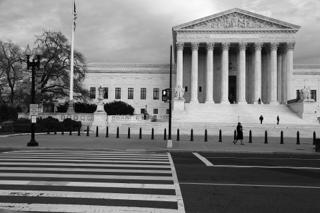
The Wisconsin Supreme Court is set to determine the future of tax-exempt status for the Catholic Charities Bureau (CCB) after the U.S. Supreme Court ruled in favor of the organization earlier this year. The June decision found that Wisconsin's denial of tax-exempt status to CCB violated its First Amendment rights, marking a significant victory for religious liberty advocates.
In the wake of the Supreme Court's unanimous ruling, Wisconsin's Democrat-led government has sought to deny tax exemptions not only to CCB but to all religious and nonreligious organizations in the state. This move has raised concerns among legal representatives for CCB, who argue it undermines the intent of the Supreme Court's decision. "This is an organization that’s trying to help people and trying to do it as efficiently as possible," said Colten Stanberry, an attorney with the Becket Fund for Religious Liberty. "You’d think the state would want to partner with that as opposed to targeting it."
"This is an organization that’s trying to help people and trying to do it as efficiently as possible."
— Colten Stanberry, attorney with the Becket Fund for Religious Liberty
The CCB, which serves as the philanthropic arm of the Diocese of Superior, provides various charitable services without requiring employees or service recipients to adhere to any specific religious beliefs. The organization has been embroiled in legal battles since 2016, when it sought an exemption from contributing to Wisconsin's unemployment system. The state initially denied this request, arguing that CCB's activities did not primarily serve a religious purpose.
The case escalated through the Wisconsin courts, culminating in the U.S. Supreme Court's ruling that reversed the Wisconsin Supreme Court's earlier decision. Justice Sonia Sotomayor emphasized the need for government neutrality regarding religious organizations, stating, "When the government distinguishes among religions based on theological differences in their provision of services, it imposes a denominational preference that must satisfy the highest level of judicial scrutiny."
Despite the Supreme Court's clear directive, Wisconsin Attorney General Josh Kaul has requested that the state Supreme Court consider additional options for remedying the First Amendment violation. In a letter, Kaul's office suggested two potential resolutions: granting the tax exemption to CCB or eliminating the exemption entirely for all organizations.
The Becket Fund responded, arguing that the Supreme Court's decision mandates the extension of the tax exemption to CCB. "The U.S. Supreme Court held that this case involved a paradigmatic form of denominational discrimination," wrote Eric Rassbach, Vice President and Senior Counsel at Becket. "It cannot be read to allow anything other than extension of the tax exemption to Petitioners."
On September 18, the Wisconsin Supreme Court agreed to hold additional briefings on the matter, prompting dissent from conservative justices who argued that the state should comply with the Supreme Court's ruling. In their brief, Kaul and his team advocated for the complete elimination of the exemption, arguing that it would prevent potential harm to Wisconsin workers and align with legislative intent regarding unemployment insurance.
The CCB's legal team contends that the state has forfeited its right to challenge the exemption at this stage, having failed to raise the issue during nearly a decade of litigation. "They’ve been litigating this case for almost 10 years. They’ve never said this was an option," Stanberry noted.
As the Wisconsin Supreme Court prepares to review the case, the outcome remains uncertain. Should the court side with the state in eliminating the exemption, it is likely that the matter will return to the U.S. Supreme Court for further consideration. The decision will have significant implications for religious organizations and their ability to operate without government interference in Wisconsin.
Key Facts:
- The U.S. Supreme Court ruled in favor of CCB in June 2023, reversing the Wisconsin Supreme Court's decision.
- Wisconsin Attorney General Josh Kaul has proposed eliminating the tax exemption entirely for all organizations.
- The Wisconsin Supreme Court has directed parties to file briefs regarding appropriate remedial measures by October 18, 2023.