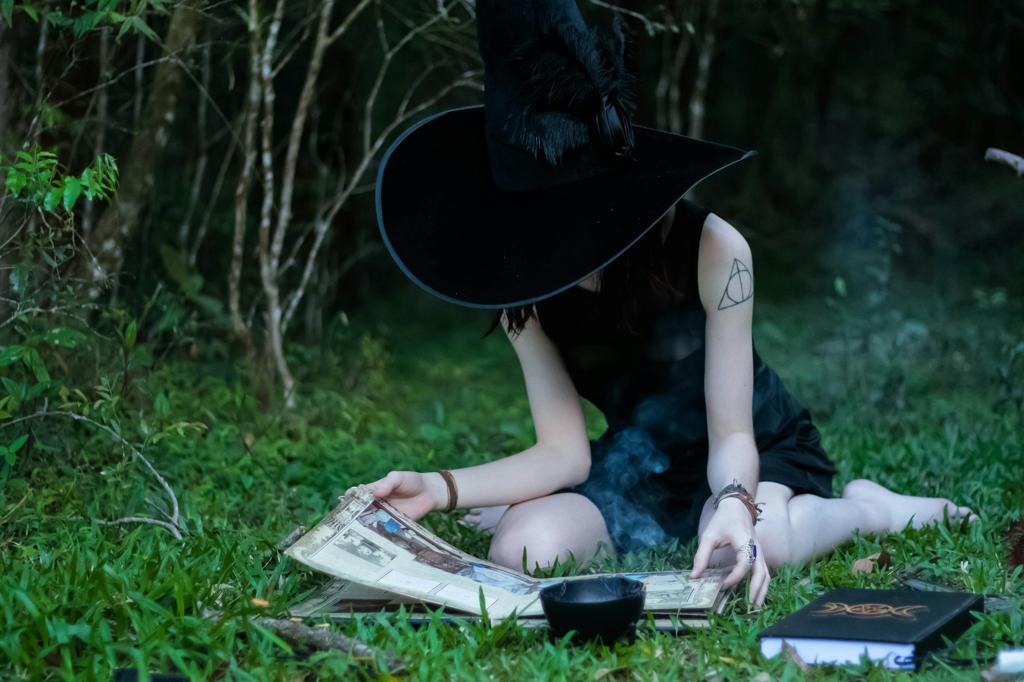
A public high school in Orange County, Florida, faced backlash after airing a weekly "Witchy Wednesday" video series that included instructions on casting spells and performing rituals. Following intervention from the legal group Liberty Counsel, which requested equal time for Christian instruction, the school canceled the series. This incident raises broader questions about the role of spirituality in public education and the implications of introducing practices rooted in witchcraft to students.
The First Amendment's establishment clause prohibits government endorsement of religion, yet some public schools have been accused of allowing pagan spirituality while restricting Christian expressions. The case of Mahmoud v. Taylor, a federal ruling from 2025, emphasized that schools cannot compel students to participate in religious exercises that conflict with their beliefs. Critics argue that if Christian prayer is deemed an endorsement, then promoting witchcraft should also raise constitutional concerns.
"The situation in Florida serves as a wake-up call for parents nationwide to engage in the ongoing discourse about the direction of public education."
— Rhonda Thomas, founder of Truth in Education
Witchcraft, often referred to as Wicca, is recognized as a legitimate religion in the United States. The U.S. Army Chaplain’s Handbook includes Wicca among faith traditions, and court cases like Dettmer v. Landon have affirmed its protection under the First Amendment. This legal recognition means that public schools introducing witchcraft rituals are presenting a specific religious worldview, even if framed as cultural expression.
Parents have both constitutional and biblical rights to guide their children's moral and spiritual education. Landmark Supreme Court cases, such as Pierce v. Society of Sisters and Wisconsin v. Yoder, have established that the state cannot override parental authority in determining the spiritual teachings their children receive. When schools incorporate witchcraft into their curriculum, they risk crossing the line from education to indoctrination, undermining parental choice.
The normalization of witchcraft in schools reflects a broader trend of replacing biblical faith with human-centered spirituality, often introduced through social emotional learning (SEL) and cultural inclusivity initiatives. Critics argue that this approach reprograms students' moral compasses, promoting the idea that all spiritual paths are equally valid, except for Christianity.
As schools blur the lines between education and spiritual indoctrination, they may inadvertently expose students to harmful influences. What begins as a seemingly innocuous program like "Witchy Wednesday" could lead to the acceptance of practices such as tarot reading or divination in the classroom. This shift raises concerns about the erosion of moral and spiritual boundaries, leaving children vulnerable to influences they may not fully understand.
The implications of normalizing witchcraft while silencing Christian perspectives suggest a broader agenda aimed at detaching future generations from absolute truths and traditional moral frameworks. The ongoing debate over the role of spirituality in education is not merely political; it is fundamentally a spiritual battle for the hearts and minds of young people.
Rhonda Thomas, founder of Truth in Education, emphasizes the need for parental involvement in education to combat harmful ideologies. Her organization advocates for homeschooling, the establishment of Christian schools, and legislative efforts to protect parental rights and children from government overreach. The situation in Florida serves as a wake-up call for parents nationwide to engage in the ongoing discourse about the direction of public education and the values being imparted to the next generation.