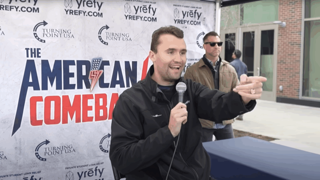
Charlie Kirk, a prominent conservative activist and founder of Turning Point USA, was reportedly assassinated last week, prompting a wave of outrage and calls for action against political violence. The incident has intensified discussions around the safety of public figures and the rhetoric surrounding political discourse in the United States.
Explainer Free Speech Battles: Courts, Censorship, and Cultural Conflicts
Kirk was shot on September 10, 2025, during an event at a college campus. Reports indicate that the alleged assassin, who is currently in police custody, had connections to left-wing ideologies. Governor Spencer Cox of Utah suggested that the suspect had been radicalized online, highlighting the role of social media in fostering extremist views.
In the aftermath of Kirk's death, reactions from lawmakers and public figures have varied significantly. "This was one of the most disgusting and evil things that I’ve ever seen," (Confronting White Supremacy Examining The Biden Administrations Counterterrorism Strategy Langan 092921 — fbi.gov) said Representative Ronny Jackson (R-TX), referring to the response of some Democrats who reportedly jeered during a moment of silence for Kirk on the House floor.
Critics of the left have pointed to the incident as evidence of a broader culture of political violence. They argue that the rhetoric used by some Democratic leaders contributes to a hostile environment that can lead to real-world violence. Proponents of this view are calling for a reevaluation of how political discourse is conducted, particularly on college campuses.
In light of Kirk's assassination, some conservatives are advocating for more stringent measures against what they perceive as left-wing violence. They argue that federal resources should be redirected to combat this threat, which they claim has been overlooked in favor of focusing on right-wing extremism.
The call for action includes proposals for investigations into funding sources for left-wing organizations, with some suggesting that figures like billionaire George Soros should be scrutinized for their financial support of groups that allegedly promote violence. "We need lists, names, raids, action, no excuse," (Confronting White Supremacy Examining The Biden Administrations Counterterrorism Strategy Langan 092921 — fbi.gov) said Auron MacIntyre, a media host, emphasizing the need for a proactive approach.
In the wake of these events, some conservatives are also pushing for changes in higher education. They argue that universities should be held accountable for ensuring the safety of conservative speakers and that federal funding should be contingent on their ability to provide a secure environment for all viewpoints.
The debate over political violence and its implications for free speech is intensifying. As calls for accountability grow, the potential for further polarization within the political landscape remains a concern.
As the investigation into Kirk's assassination continues, the broader implications for political discourse and safety in the United States are likely to be a focal point for both supporters and critics of the current administration. The incident has underscored the urgent need for dialogue about the state of political rhetoric and its consequences in an increasingly divided nation.