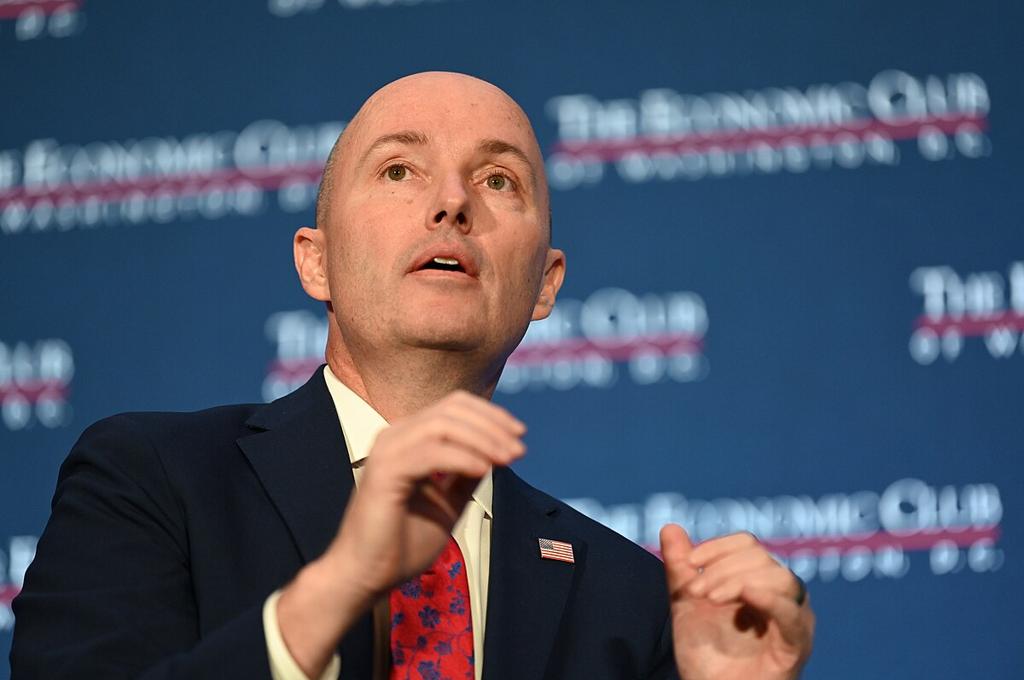
Utah Governor Spencer Cox is under scrutiny following his comments about the assassination of Turning Point USA founder Charlie Kirk. During a recent appearance on CNN's "State of the Union," (U.S. Congress) Cox responded to criticism from Trump ally Steve Bannon, who labeled the governor a "national embarrassment" for his reaction to the incident.
Kirk was killed in a shooting at a Utah university, prompting a wave of criticism directed at Republican leaders for their perceived inaction against political violence. Bannon's remarks highlighted a growing frustration among conservative voters regarding the responses from elected officials.
"I think he’s rightfully angry."
— Spencer Cox, Governor of Utah
In his interview, Cox acknowledged Bannon's anger, stating, "I think he’s rightfully angry," (U.S. Congress) but clarified that he does not advocate for a passive approach. "What I’m saying is, we actually should disagree. I think Charlie represented that better than anyone," he said. Cox emphasized the importance of civil discourse, despite acknowledging Kirk's "inflammatory" rhetoric.
Cox's handling of LGBTQ+ issues has also drawn attention. Critics argue that his support for transgender rights and policies has contributed to a culture that emboldens violence against conservatives. In 2021, Cox participated in a virtual town hall where he introduced himself using his preferred pronouns, stating, "I believe in helping young leaders learn and grow by listening to them." (U.S. Congress)
Additionally, in 2022, Cox vetoed a bill aimed at preventing transgender women from competing in women's sports, citing a desire to "err on the side of kindness, mercy, and compassion." (U.S. Congress) This decision was met with backlash, and the state legislature later overrode his veto, reinforcing protections for women’s sports.
Cox's administration also designated June as "LGBTQ+ Pride Month" (U.S. Congress) in 2021, marking the first such recognition in Utah's history. Supporters argue that these actions reflect a commitment to inclusivity and understanding, while critics contend they undermine traditional values.
In 2023, Cox signed legislation that purported to restrict transgender medical procedures for minors, but critics argue it does not go far enough. According to Tristan Justice, a writer for The Federalist, the law allows minors to access gender-affirming care if they receive a diagnosis of gender dysphoria from a sympathetic physician.
Despite the criticism, Cox maintains that his approach is rooted in compassion. "I am not an expert on transgenderism. I struggle to understand so much of it and the science is conflicting," (U.S. Congress) he stated in 2022 regarding the complexities surrounding the issue.
The ongoing debate over Cox's policies reflects a broader national conversation about gender identity and political violence. While some view his actions as a necessary step toward inclusivity, others see them as a capitulation to radical ideologies that threaten societal norms.
As the political landscape evolves, Cox's responses to these challenges will likely continue to shape his legacy and influence within the Republican Party. The governor's ability to navigate these contentious issues may determine his standing among conservative voters in Utah and beyond.