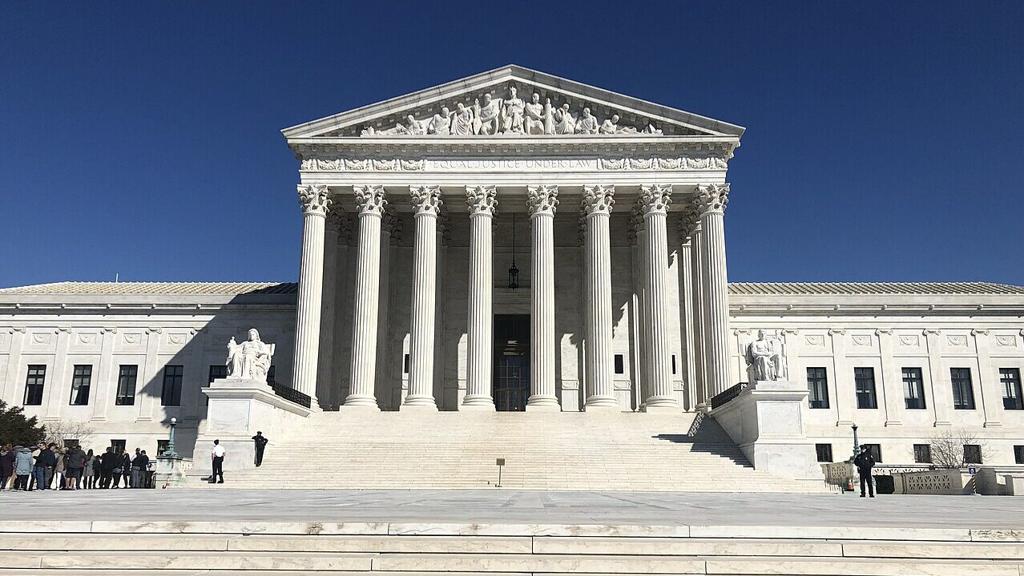
Days after a man attempted to assassinate Supreme Court Justice Brett Kavanaugh and received a light sentence, police arrested a 41-year-old man on bomb charges at a mass traditionally attended by Supreme Court justices. This mass marks the beginning of the high court's annual term and is a significant event in the judicial calendar.
Explainer Understanding the Transgender Discourse: Rights, Policies, and Challenges
According to the Washington, D.C. Metropolitan Police Department, authorities engaged an individual who had set up a tent on the steps of Saint Matthew’s Cathedral ahead of the Red Mass. The suspect, identified as Louis Geri, refused to vacate the premises when asked by police and was subsequently arrested. During the arrest, officers observed multiple suspicious items inside Geri's tent, including vials of liquid and possible fireworks, raising concerns about his intentions.
Geri was charged with unlawful entry, threats to kidnap or injure a person, and possession of a Molotov cocktail. The incident occurred as the church was preparing to celebrate its 73rd annual Red Mass, an event intended to invoke blessings on those responsible for the administration of justice and public officials. The timing of this arrest has drawn attention, particularly in light of recent events surrounding threats to Supreme Court justices.
The Red Mass event gained additional scrutiny following the recent sentencing of Nicholas Roske, who attempted to assassinate Justice Kavanaugh. Roske, who now identifies as 'Sophie,' was sentenced to eight years in prison after he showed up at Kavanaugh’s home armed with a Glock 17 pistol, ammunition, and other items intended for a violent act. This case has raised questions about the adequacy of the legal response to threats against public officials.
Roske told investigators that he would have attempted to murder Kavanaugh had U.S. Marshals not spotted him outside the justice's home. Court documents reveal that Roske aimed to kill three conservative justices to influence the court's balance of power following the leak of the Dobbs decision, which overturned Roe v. Wade. Prosecutors described Roske's actions as requiring extensive premeditation, arguing that his objective constituted a form of terrorism that undermines the U.S. Constitution and the government system. Despite the serious nature of Roske's actions, he was sentenced to only eight years in prison, a decision that has drawn criticism from various quarters.