A federal study commissioned by the Department of Health and Human Services (HHS) has drawn sharp criticism from the Human Rights Campaign (HRC), which labeled the report “junk” and accused its authors of political bias. The study, conducted by researchers from Rutgers University, the Manhattan Institute, and the Network Contagion Research Institute, surveyed 1,208 U.S. adults to examine links between support for transgender medical procedures, left-wing authoritarianism, and justifications for political violence.
Explainer Political Violence in America: Understanding the Rising Threats and Their Implications
The report’s findings have intensified debate over the intersection of transgender rights, political rhetoric, and violence, with both sides accusing the other of misusing data and stoking division.
The study found a correlation—though not causation—between strong support for sex-rejecting procedures and increased approval of aggression toward perceived oppressors, enthusiasm for censorship, and hostility toward traditional institutions. It also reported that those supporting such procedures were more likely to justify violence against figures including Charlie Kirk, Donald Trump, and police officers. The study did not examine whether transgender individuals themselves commit violence.
HRC’s Response and Criticism
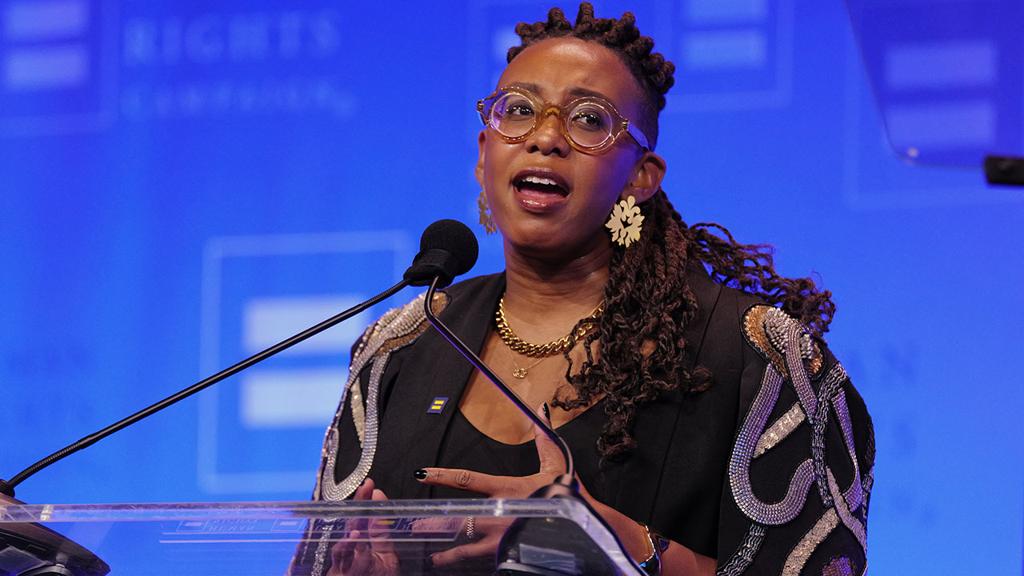
HRC, the nation’s largest LGBTQ+ advocacy group, condemned the study and its authors, calling the research outcome-driven and politically motivated. HRC President Kelley Robinson said the study was “sponsored by an extreme right-wing advocacy organization” and accused the Trump administration and officials like Robert F. Kennedy Jr. of using government resources to target LGBTQ+ people, especially the transgender community.
"This so-called study, sponsored by an extreme right-wing advocacy organization, is another example of the outcome leading the research—MAGA Republicans want to sow hatred against our fellow Americans in a desperate attempt to distract from their failures ahead of the midterms."
— Kelley Robinson, Human Rights Campaign president
Robinson further stated, “Let us all be absolutely clear on this point: political violence is not, and must never become, acceptable in our society. But neither should demonizing entire groups of people for political gain. Trans people are not an ideology, they are human beings and our fellow Americans who deserve the same dignity as anyone else.”
HRC also criticized the Manhattan Institute and the Network Contagion Research Institute as “conservative-leaning think tanks with track records of producing reports that align with extremist right-wing positions.”
Study Authors and HHS Defend Methodology
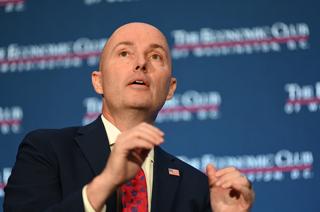
Colin Wright, a Manhattan Institute fellow and study co-author, rejected HRC’s characterization, arguing that HRC itself has promoted “extreme rhetoric” about violence against transgender people. Wright said, “The homicide data demonstrate this narrative is false, but it’s likely effective at stirring up fear and attracting donor money.” He acknowledged the study does not prove causality but said future reports would address that question.
HHS defended the research as rigorous. Senior press secretary Emily Hilliard said the authors “propose a potential mechanism in which clinical and professional institutions lend authority to frameworks that identify victims, sources of harm, and appropriate responses, potentially providing individuals already disposed toward authoritarianism with moral justification for coercive or punitive action.” Hilliard added that HHS would continue to pursue research into the relationships among ideological beliefs, authoritarian attitudes, and justification of political violence.
Broader Debate and Recent Incidents
The debate over the study comes amid heightened national attention to transgender issues and political violence. HRC has repeatedly claimed that transgender people face an “epidemic of violence,” though its own data show a homicide rate for transgender people lower than other groups. The Trevor Project, another LGBTQ+ advocacy group, has cited its own research claiming that “anti-transgender laws” increase suicide risk among transgender and nonbinary youth, though critics dispute those findings.
Recent high-profile violent incidents have involved perpetrators with transgender identities or issues. These include Tyler Robinson, charged in the killing of Charlie Kirk; Robin Westman, who shot two children in Minneapolis; Julia Grace Egler, accused of killing her mother and her mother’s boyfriend; and Audrey Elizabeth Hale, who killed six in Nashville in 2023. The HHS-commissioned study did not examine whether transgender individuals are more likely to commit violence.
The Daily Signal reported that neither HRC nor The Trevor Project responded to questions about whether rhetoric emphasizing threats to transgender people could contribute to perceptions of danger measured in the study. Rutgers University, the Manhattan Institute, and the Network Contagion Research Institute did not immediately respond to requests for comment.