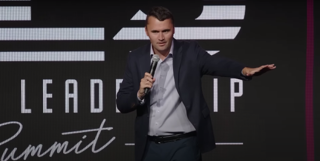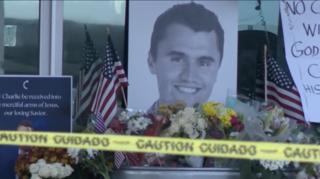
Protesters at a recent "No Kings" demonstration expressed extreme sentiments, including calls for violence against political opponents, particularly former President Donald Trump. Signs carried by attendees included direct threats and references to the assassination of conservative figure Charlie Kirk, who was recently killed. One sign read, "Which one heals faster? (A) Trump’s ear (B) Erika’s heart," referring to Kirk's widow.
Videos from the event showed individuals mocking Kirk's death, with one woman acting out the moment he was shot. Reports have identified her as Lucy Martinez, a teacher at Nathan Hale Elementary School in Chicago, prompting her school to shut down its website and social media accounts following public backlash.
Critics have raised concerns about the implications of hiring educators who engage in political activism rather than focusing on academic achievement. Observers noted that the protest atmosphere encouraged children to embrace violence as a form of political expression, with one child seen celebrating after hitting a likeness of Trump.
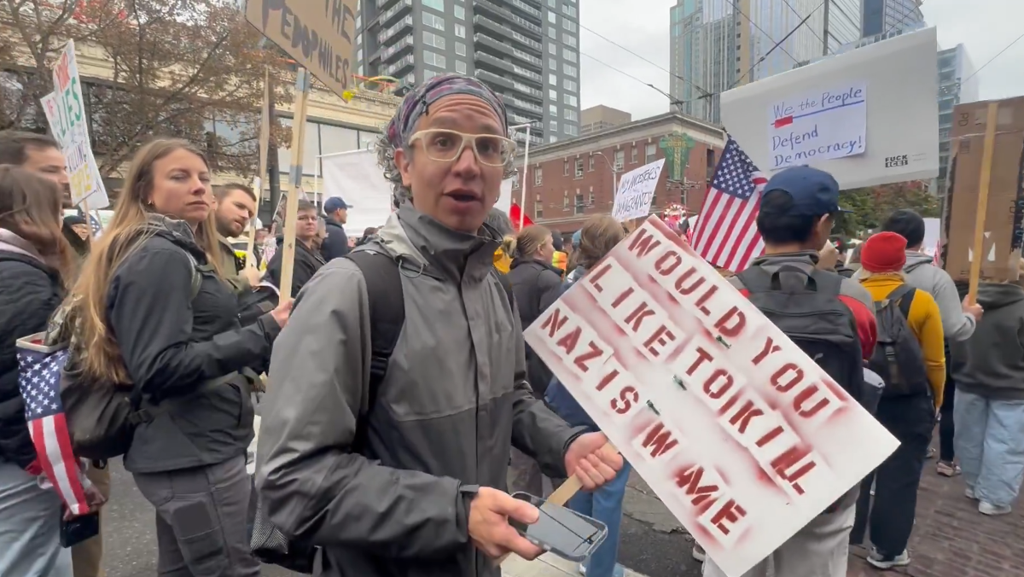
Protesters displayed signs with messages such as "Would you like to kill Nazis with me?" and called for violence against U.S. Immigration and Customs Enforcement (ICE) agents. One individual was recorded urging others to "grab a gun" and shoot ICE agents, while another held a sign depicting Trump in a sniper's crosshairs.
The rhetoric at the protest has drawn criticism for its lack of compassion and its embrace of violence as a political tool. Many attendees expressed a desire for Trump's death, with one woman stating her wish to see his obituary in the newspaper.
The "No Kings" protest has sparked discussions about the normalization of violent rhetoric in political discourse. Calls for an investigation into the threats made during the protest have been made, but the FBI has not confirmed any ongoing inquiries.
In response to inquiries about potential prosecutions, a Department of Justice spokesperson stated that law enforcement would take action against those who break the law. The protest's messaging has been characterized as extremist, raising concerns about the broader implications for political dialogue in the country.
As the political climate continues to polarize, the events at the "No Kings" protest serve as a stark reminder of the potential for violence in political expression. The lack of accountability for such rhetoric may contribute to a culture where threats against political figures are increasingly accepted.