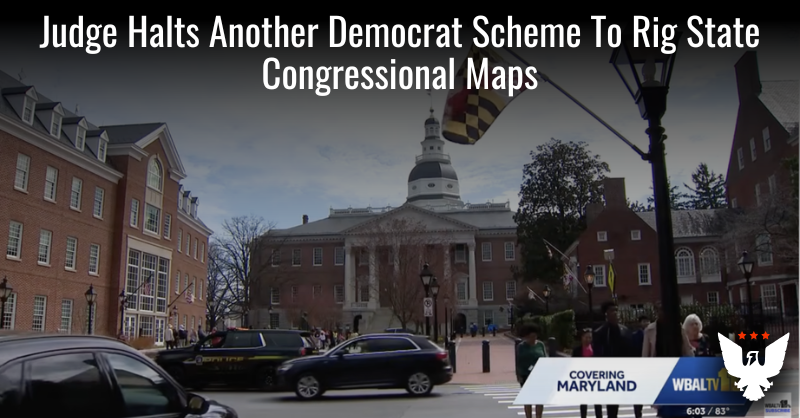
A Maryland circuit court judge has blocked a proposed constitutional amendment on congressional redistricting from appearing on the November ballot, ruling that state lawmakers failed to follow their own legal procedures when advancing the measure. The Maryland State Board of Elections has already appealed the decision to the Maryland Supreme Court, setting up a high-profile legal battle over the state’s redistricting process.
Explainer Redistricting Battles: How Maps Shape American Political Power
The dispute centers on whether the Democratic-led General Assembly complied with a recently enacted law that sets deadlines and requirements for ballot questions. Republican lawmakers argue that the process was rushed to benefit Democrats, while Democrats maintain that the measure was necessary to clarify the state’s redistricting rules and ensure fair representation.
The ruling comes as both parties across the country engage in legal and legislative battles over congressional maps, with control of the U.S. House of Representatives at stake. Maryland’s sole Republican-held district has been a particular focus in these efforts, and the outcome of this legal fight could have implications for the state’s political landscape and beyond.
Judge’s Ruling on HB2100
Anne Arundel County Circuit Court Judge Robert J. Thompson issued the injunction on Wednesday, finding that the legislature did not adhere to the July 1 deadline established by a law it passed earlier in the year for submitting statewide ballot questions. In his opinion, Thompson wrote, “Because the legislature did not follow the very laws it enacted, the court finds the enactment of HB2100 to be legally deficient.”
The proposed amendment, which was passed during an August special legislative session called by Governor Wes Moore, sought to clarify that certain state constitutional standards apply only to legislative districts, not congressional ones. It also aimed to give the Maryland Supreme Court original jurisdiction over congressional redistricting disputes. The bill cleared the House 96-38 and the Senate 32-13 before being signed by Moore earlier this month, according to Maryland Matters and CBS Baltimore.
Judge Thompson found the ballot question’s language misleading and its process flawed, stating, “Even if the legislature’s reading of the constitution is correct and they are exempted from following the laws they impose on all other Marylanders, the court finds the ballot question itself to be deficient.”
Legal Arguments and Political Stakes
Republican lawmakers, the Maryland Freedom Caucus, and the Oversight Project filed suit to block the measure, arguing that Democrats ignored the law’s requirements for ballot question content and deadlines. The plaintiffs contended that the rushed process was designed to eliminate Maryland’s only Republican congressional district, raising concerns about partisan gerrymandering and the integrity of the state’s electoral process.
The state’s attorney argued that the General Assembly could exempt itself from the deadline using so-called “notwithstanding” language in the bill. Judge Thompson rejected this argument, emphasizing that the legislature is bound by the laws it enacts and cannot simply bypass them for political convenience.
“This lawsuit simply asks whether the government must follow the laws it passes before asking the voters to amend the Constitution.”
— Steve Hershey, Maryland Senate Minority Leader
Governor Moore’s office responded to the ruling, stating, “At a moment when states across the country are manipulating congressional maps to silence voters and undermine fair representation, Maryland cannot afford to sit on our hands.” The office said it “respectfully disagrees” with the decision and has appealed to the Maryland Supreme Court, underscoring the high stakes involved in the case.
Broader Redistricting Battles
The Maryland case is part of a wider national fight over redistricting, as both major parties seek to shape congressional maps in their favor ahead of the next election cycle. Earlier this year, Virginia’s Supreme Court struck down a Democratic redistricting plan that would have shifted the state’s congressional balance, highlighting the contentious nature of redistricting battles across the country.
In Maryland, the proposed amendment would have allowed the General Assembly to set congressional district boundaries without being bound by the same criteria as legislative districts, as outlined in HB2100. Supporters of the amendment argued that it would provide clarity and streamline the redistricting process, while opponents warned that it could open the door to partisan gerrymandering and undermine fair representation for voters.
Republican National Committee Election Integrity spokeswoman Ally Triolo said, “The RNC is leading the fight to stop these partisan redistricting schemes, defend fair representation, and make sure elections are decided by voters, not politicians manipulating district lines for political gain.”
A separate legal challenge to the Maryland amendment is scheduled to be heard in Dorchester County later this week, indicating that the legal battle over redistricting is far from over. The Maryland Supreme Court is expected to take up the state’s appeal in the coming weeks, and its decision could have far-reaching consequences for how congressional districts are drawn and how ballot measures are advanced in Maryland.
As the legal process unfolds, both parties are closely watching the outcome, recognizing that the stakes extend beyond Maryland’s borders. The fight over redistricting in Maryland reflects broader national debates over electoral fairness, legislative authority, and the rules that govern the democratic process.