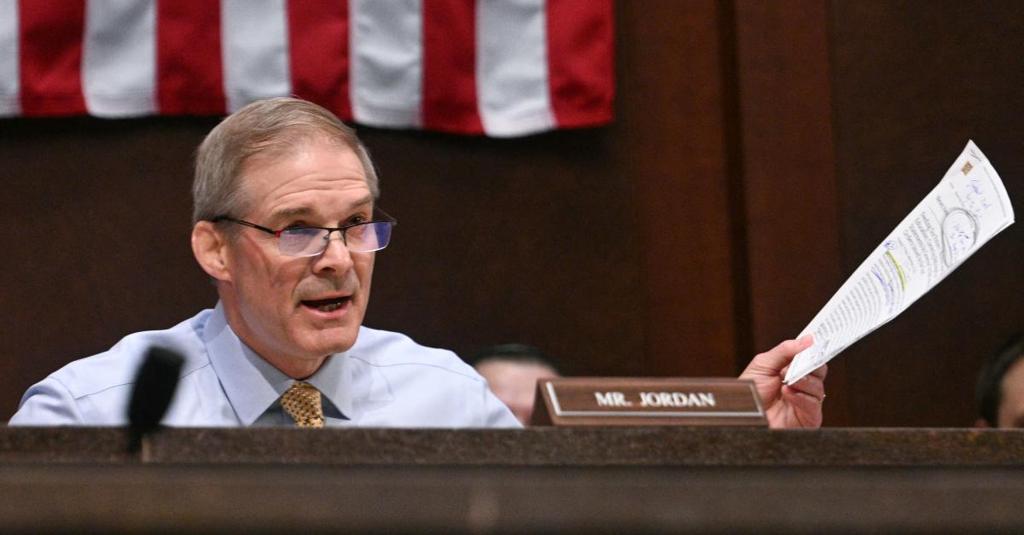
House Republicans are moving forward with the Shut Down Sanctuary Policies Act, a bill designed to allow victims of crimes committed by individuals in the country illegally to file lawsuits against local officials and municipalities that released those individuals from custody. The legislation, which advanced through the House Judiciary Committee last month, is being positioned for a potential vote after the upcoming election, according to committee chairman Jim Jordan, R-Ohio.
The measure underscores a longstanding conflict between federal immigration enforcement and local jurisdictions that limit cooperation with federal authorities. This ongoing debate centers on the question of accountability when crimes are committed by individuals who were released despite federal requests to detain them. The issue has become a flashpoint in the broader national conversation over immigration policy and public safety.
Sanctuary policies, which restrict local law enforcement from cooperating with federal immigration authorities, have been adopted by various cities and states across the country. Supporters of these policies argue that they help protect immigrant communities by encouraging cooperation with local police without fear of deportation. Critics, however, contend that such policies undermine public safety by allowing potentially dangerous individuals to avoid removal from the United States.
Lawsuit Provision and Immunity Changes
A central feature of the Shut Down Sanctuary Policies Act is its provision granting a private right of action. Under this provision, victims of crimes—or their families—would be able to sue state and local officials who release violent offenders in defiance of federal immigration detainers. These detainers are requests from the Department of Homeland Security (DHS) to hold individuals who are subject to deportation.
Chairman Jim Jordan explained that the bill would remove certain civil immunity protections currently afforded to local officials. In some jurisdictions, these officials enjoy what Jordan described as "absolute immunity" from civil lawsuits related to their official actions. The proposed legislation aims to make it possible for victims to seek legal recourse against cities or states that decline to honor federal detainers.
"It allows people who've been harmed, where local political leaders tell the local law enforcement they can't work with federal law enforcement, detainers aren't honored … to go take that city, take that state to court, and say, 'look, this was ridiculous. What happened and was so wrong, so tragic,'"
— Jim Jordan, House Judiciary Committee Chairman
Jordan characterized the bill as the result of significant effort, stating, "We just got to try to get it passed in the lame duck [period]." The bill's supporters argue that it would provide a measure of accountability for decisions that result in harm to the public, while opponents warn it could expose local governments to costly litigation and undermine local control.
Federal Supremacy and Funding Penalties
Another major component of the legislation is its reassertion of federal authority over state and local laws that restrict cooperation with DHS on immigration enforcement. The bill would require local law enforcement agencies to honor federal detainers for individuals arrested for criminal or motor vehicle offenses who are subject to deportation proceedings.
To encourage compliance, the bill proposes withholding certain federal funds from states and municipalities that do not adhere to these requirements. Those funds would instead be reallocated to jurisdictions that cooperate with federal immigration authorities. This approach is intended to incentivize localities to align their policies with federal immigration enforcement priorities.
The full text and legislative status of the Shut Down Sanctuary Policies Act is available on 7640 — congress.gov.
Recent Cases and Political Response
The renewed legislative push comes amid claims that crimes committed by released unauthorized immigrants are on the rise. However, available data on the prevalence and impact of such crimes remains mixed, with some studies suggesting that immigrants are no more likely to commit crimes than native-born citizens. Nevertheless, high-profile cases have fueled calls for stricter enforcement.
One recent case cited by DHS involved Rohit Rohit, an Indian national who was in the country illegally. Rohit was accused of stalking and killing a woman in Sacramento after being released from custody. DHS officials pointed to this incident as an example of the dangers posed by sanctuary policies, urging "sanctuary politicians" to reconsider what they described as "reckless policies that play Russian roulette with American lives."
Despite the renewed attention, Democratic leaders and supporters of sanctuary policies have not publicly responded to the latest Republican proposal. The bill's prospects in the Democratic-controlled Senate remain uncertain, and it is unclear whether it will advance beyond the House. Supporters of sanctuary policies maintain that cooperation with federal immigration enforcement can erode trust between immigrant communities and local law enforcement, making it harder to investigate and prevent crime.