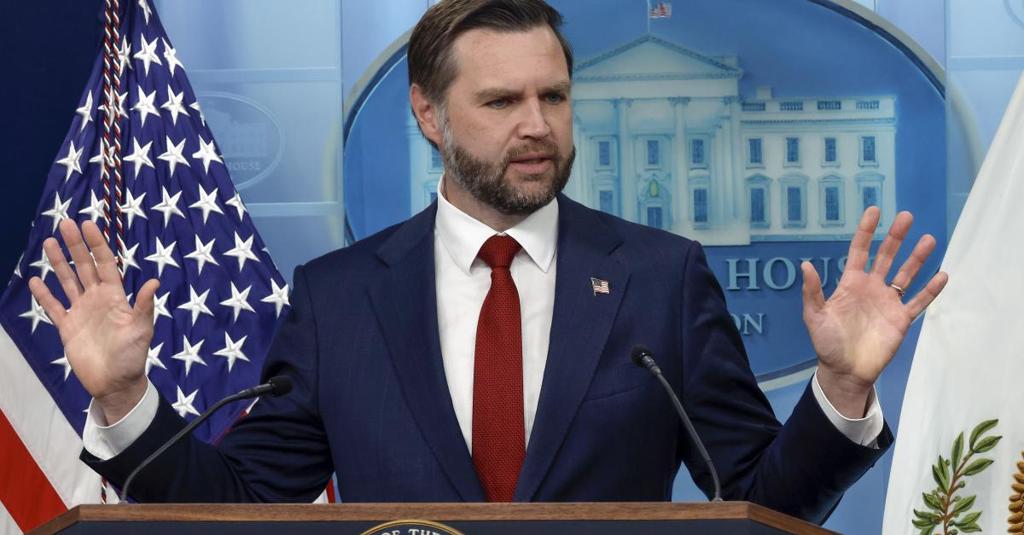
Vice President JD Vance announced Tuesday that the Trump administration has invoked the Defense Production Act (DPA) to expand operations at the Delek refinery in Tyler, Texas. The move is designed to boost both commercial and military fuel production, and comes as part of a broader effort to stabilize energy supplies amid instability in global markets. Vance made the announcement during a campaign event in support of Texas Attorney General Ken Paxton.
Explainer Attorney General Ken Paxton’s Legal Impact on Texas Policies and Public Safety
The administration’s decision to use the DPA at the Tyler refinery reflects ongoing concerns about disruptions in global energy markets following the outbreak of war involving Iran. The conflict has contributed to volatility in oil and fuel prices, raising concerns about the reliability of fuel supplies for both civilian and military needs.
The Defense Production Act, a law dating back to the Korean War era, allows the federal government to direct private industry to prioritize contracts and expand production for national defense purposes. The Trump administration has previously invoked the DPA to address shortages in munitions, citing the need to ensure adequate supplies for U.S. and allied forces amid fighting in the Middle East. The latest move marks a shift in focus from munitions to fuel, as the administration seeks to address potential vulnerabilities in energy supply chains.
Delek Refinery Expansion Details
Vance said the expansion at the Delek refinery will enable the facility to produce millions of additional gallons of both commercial-grade and military-specification fuel. This increase in capacity is intended to supplement the refinery’s current output and help meet growing demand from both the private sector and the U.S. military.
"We want millions of gallons of commercial grade and military spec fuel to come out of this refinery in addition to what it's already producing!"
— JD Vance, Vice President
Energy Supply Stabilization Efforts
The vice president linked the refinery expansion to broader administration efforts to stabilize energy supplies in the face of international conflict. He noted that President Donald Trump recently negotiated an agreement with Russia to inject diesel fuel into the global market, despite ongoing U.S. sanctions against Russia related to the Ukraine conflict. According to Vance, Trump has also pressed Ukraine to avoid striking Russian energy infrastructure, with the goal of maintaining steady fuel supplies and preventing further disruptions in the global market.
The administration’s earlier use of the Defense Production Act this year focused on increasing munitions output, responding to reports of shortages due to fighting in the Middle East. The decision to expand the Tyler refinery represents a new phase in the administration’s response, shifting attention to the stability of fuel supplies as a critical component of national security and economic stability.
Vance made the announcement while campaigning for Ken Paxton, who is facing a competitive race against Democratic Senate candidate James Talarico. Texas is typically considered a Republican stronghold, but the race has drawn increased attention from both parties. The administration did not immediately respond to questions from critics who argue that working with Russian fuel suppliers could undermine the effectiveness of U.S. sanctions policy.
The expansion of the Delek refinery is expected to increase the availability of both commercial and military fuels. The administration is positioning the move as a step toward stabilizing energy markets and ensuring reliable fuel supplies amid ongoing international conflicts. Officials have not yet provided a timeline for the expansion or detailed how much additional fuel capacity will be added, but they emphasize that the action is part of a coordinated effort to address both immediate and long-term energy security challenges.
The use of the Defense Production Act to expand refinery operations is seen as a significant intervention in the energy sector, reflecting the administration’s assessment that current global conditions require extraordinary measures. As conflicts continue to affect key oil-producing regions, the administration is likely to face ongoing scrutiny over its approach to balancing national security priorities with international diplomatic and economic considerations.