Understanding Voter Fraud in America: Legal Battles and Election Integrity
An in-depth exploration of voter fraud, highlighting federal investigations, court rulings, and ongoing debates over election security and integrity.
Additional reporting by April Clark
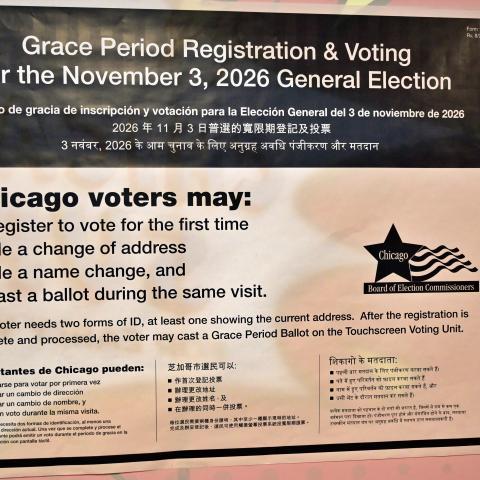
Voter fraud has long been a critical topic in American politics and law, encompassing various illegal acts that threaten the sanctity of elections. These acts range from fraudulent registration to illegal voting by ineligible individuals, including noncitizens or felons, and interference with ballots or election procedures. While studies show that voter fraud remains relatively rare compared to the millions of lawful votes cast nationwide, the issue continues to provoke extensive scrutiny, legal challenges, and legislative responses.
This explainer will present a thorough overview of voter fraud in the United States, focusing on what has been prosecuted, litigated, and investigated at the federal and state levels. It will clarify what courts and officials have determined, the scope of law enforcement actions, and what questions remain disputed or unresolved in public debate.
Defining Voter Fraud and Its Legal Boundaries
"Voter fraud remains rare but rigorously prosecuted to protect election integrity without disenfranchising lawful voters."
Voter fraud broadly refers to illegal actions aimed at manipulating the electoral process. It includes voter impersonation, registering or voting by individuals not eligible to vote, fraudulent absentee ballots, duplicate voting, and tampering with ballot counts or election equipment. Legal definitions vary somewhat state by state, but federal law criminalizes fraudulent voting, false claims of citizenship when registering, and conspiracy to interfere with elections among other offenses.
The Department of Justice (DOJ) and state prosecutors enforce these laws, focusing on proven schemes that undermine election integrity. Despite popular impressions, comprehensive research shows that verified cases of voter fraud constitute a tiny fraction of votes cast overall. A 2023 report by the Heritage Foundation documented 1,465 proven incidents of voter fraud since 1979, averaging roughly 33 cases annually nationwide. This highlights both the existence of illegal acts and their rarity relative to the size of the electorate.
Legal challenges often arise over evidence standards, the extent of fraud instances, and the impact fraudulent votes may have on election outcomes. Courts have repeatedly required concrete proof of intentional wrongdoing for penalties or ballot disqualifications. This balance aims to protect lawful voters from being disenfranchised due to unproven fraud allegations.
Recent Federal Investigations and Enforcement Actions
Federal authorities have made several high-profile prosecutions targeting voter fraud and related election crimes across multiple states. In September 2026, the DOJ charged 16 individuals for offenses including illegal voting by noncitizens and false citizenship claims to register. These cases spanned different jurisdictions and exemplified coordination between federal prosecutors and local law enforcement in combating illegal voting.
Further intensifying its efforts, the DOJ announced in early November charges against 63 individuals involved in election-related crimes in 15 states. The allegations covered voter registration fraud, misuse of absentee ballots, and unlawful votes cast by ineligible persons. These enforcement actions aim to preserve the integrity of elections and serve as a deterrent against similar offenses.
Additionally, investigations have targeted specific localities where suspicious voting patterns emerged. For example, the DOJ subpoenaed election workers in Los Angeles amid probes into possible noncitizen voter participation. The complexity of such cases often involves deep analysis of voter records, citizenship databases, and cross-jurisdictional collaboration.
Though many ineligible voters have been removed from rolls, prosecutions remain relatively uncommon compared to removals. For instance, a recent report highlighted that states are systematically removing deceased voters and felons from registration lists but only a few face criminal charges for fraudulent voting behaviors or registration abuses. This reflects a distinction between administrative corrections to voter files and the need for criminal intent in prosecutions.
Notable Court Cases and Legal Outcomes
Courts have played a decisive role in adjudicating voter fraud allegations, balancing electoral fairness, individual voter rights, and procedural safeguards. A notable recent case involved the DOJ's attempt to disqualify California ballots over claims of noncitizen votes. The appeals court rejected the DOJ’s effort, citing insufficient evidence to warrant invalidating votes—illustrating judicial caution in overturning election results absent compelling proof.
Other rulings have upheld penalties against individuals found guilty of voting illegally. For example, a Kentucky felon was indicted for repeated voter registration offenses, highlighting enforcement at the state level. Similarly, a Russian national received a six-year sentence for a sophisticated voter fraud and identity theft scheme, demonstrating federal courts’ willingness to impose severe penalties for serious election crimes.
Legal controversies also surround allegations of voting in multiple states, such as the scrutiny faced by a Georgia House candidate accused of double voting. Such cases raise questions about residency requirements and legal thresholds for fraud.
Importantly, courts have emphasized evidentiary standards and due process, often rejecting claims that rely on statistical anomalies or unsubstantiated evidence. Judges have reaffirmed that fraud must be proven on an individual basis, respecting both electoral integrity and constitutional rights.
Challenges of Detecting and Preventing Voter Fraud
Detecting voter fraud involves considerable challenges, including the scale of election systems, data coordination difficulties, and ensuring privacy protections. Election officials rely on databases maintained at multiple governmental levels to verify voter eligibility, remove ineligible registrations, and ensure accurate voter rolls. However, imperfect recordkeeping, citizenship data discrepancies, and errors sometimes complicate these efforts.
Initiatives to improve election security include the implementation of more rigorous identification requirements, audits of voter files, and the use of technology to cross-check registrations and votes. For example, the Trump administration previously rolled out extensive election security measures aimed at safeguarding against fraud and cyber threats.
Still, concerns exist over balancing fraud prevention with accessibility. Critics argue that overly stringent requirements may disenfranchise eligible voters, especially marginalized groups. This tension has triggered legal battles over voter ID laws, purging practices, and early voting rules.
Federal and state authorities continue to develop investigative techniques, such as analytics to detect unusual voting patterns, and partnerships with agencies like the Department of Homeland Security, which launched election fraud investigations in nine states ahead of federal elections. These efforts aim to preempt fraudulent activities while maintaining voter confidence.
Ongoing Debates and Public Perceptions
Despite documented cases and enforcement, voter fraud remains a highly contentious issue politically and socially. Supporters of stricter election laws often emphasize the need to root out illegal votes to protect electoral integrity. Opponents express concern that exaggerated claims of widespread fraud may be used to justify restrictive measures that suppress voter turnout.
The media’s portrayal of voter fraud also influences public opinion. Some outlets have highlighted large-scale prosecutions, such as the Justice Department charging dozens in election crimes, while others have questioned the extent of the problem based on research and data analyses.
Public trust in elections remains fragile, making transparent investigations and judicial oversight critical. The balance between ensuring accessible voting and preventing illegal votes continues to provoke debate among policymakers, election officials, and advocacy groups.
Meanwhile, states vary significantly in their approaches to maintaining voter rolls. For example, a recent report showed thousands of deceased voters still registered in key battleground states, prompting administrative removal efforts but little direct prosecution. These discrepancies underline the complexity of election administration and the multifaceted nature of voter fraud concerns.
Pull Quote
Voter fraud remains rare but rigorously prosecuted to protect election integrity without disenfranchising lawful voters.
Frequently asked questions
How common is voter fraud in the United States?
While voter fraud does occur, studies show it is very rare relative to the total number of votes cast. Verified cases typically number in the dozens annually nationwide.
What types of actions are considered voter fraud?
Voter fraud includes illegal voting by noncitizens or ineligible felons, duplicate voting, fraudulent registration, ballot tampering, and false claims of residency or citizenship.
How do federal authorities investigate voter fraud?
The Department of Justice and agencies like the Department of Homeland Security investigate through subpoenaing election officials, analyzing voting data, and coordinating with state prosecutors.
Have courts ruled on cases involving voter fraud?
Yes, courts have both prosecuted individuals for fraudulent voting and ruled against invalidating ballots without strong evidence, upholding due process protections.
What challenges exist in preventing voter fraud?
Challenges include imperfect voter databases, balancing security with voter access, and the complexity of coordinating data across jurisdictions.
Do voter fraud investigations affect voter rights?
While enforcement aims to protect election integrity, courts and officials strive to avoid disenfranchising lawful voters or imposing overly restrictive requirements.
How are ineligible voters removed from rolls?
States use data audits and crosschecks, including removing deceased individuals and felons, but removals do not always lead to criminal prosecutions.
Timeline of our coverage
- 2026-11-03 — Justice Department Charges 63 in Election-Related Crimes Across 15 States
- 2026-11-02 — Trump Administration Implements Sweeping Election Security Measures Ahead of Midterms
- 2026-10-30 — Thousands of Deceased Voters Remain on Rolls in Battleground States Ahead of Elections
- 2026-10-30 — Kentucky Felon Indicted for Repeated Voter Registration
- 2026-10-30 — DOJ Subpoenas Los Angeles Election Workers in Noncitizen Voter Probe
- 2026-10-27 — Appeals Court Rejects DOJ Effort to Disqualify California Ballots Over Noncitizen Claims
- 2026-10-27 — Cleta Mitchell Expands Election Integrity Network Amid Ongoing Criticism
- 2026-10-25 — States Remove Ineligible Voters, Few Face Prosecution
- 2026-10-21 — Indiana AG Charges DACA Recipient With Voting in Four Federal Elections
- 2026-10-20 — 28 Noncitizens Charged in California Voter Fraud Crackdown After CBS Segment Downplays Issue
- 2026-09-25 — Georgia House Candidate Faces Scrutiny Over Voting in Two States
- 2026-09-17 — Russian National Sentenced to Six Years for Voter Fraud and Identity Theft Scheme
- 2026-09-02 — DHS Launches Election Fraud Investigations in Nine States Ahead of Federal Vote
- 2026-05-21 — Canadian Citizen Charged with Voting Fraud in Massachusetts
- 2025-11-06 — Reelected Kansas Mayor Faces Charges Of Voting As Noncitizen
The Bottom Line
- Understanding voter fraud is essential to grasp ongoing legal and political debates around election security.
- Federal enforcement actions demonstrate the seriousness with which authorities address illegal voting and related crimes.
- Courts enforce evidentiary standards ensuring allegations do not undermine lawful voting rights without proof.
- Public confidence in elections depends on transparent investigations and balanced election administration.

Sources
- Department of Justice Charges 16 Individuals for Illegal Voting and Related Election Crimes
- Justice Department Announces Charges Involving 63 Individuals for Election-Related Crimes
- Woman Convicted for Voter Fraud Scheme
- U.S. Attorneys for Southern & Northern Ohio announce voter fraud cases
- U.S. Supreme Court
- Axios.com: Iowa Voter Fraud 2020 Election Kim Phuong Taylor (Jan 14, 2023)
- Apnews.com: 55d9a729d412ef45ba234d5397cc8839
- Apnews.com: A78617f78d5994ab5c3728d8367611f6
- Axios.com: Trump Election Interference Lawsuit Democrats (Oct 21, 2026)
- Apnews.com: 7b9e6d787ba892c2ba827189cd94cf8b
- Apnews.com: 65cec7780a22b2d1adc80560d75ce6c1