The Heritage Foundation: Championing Conservative Policy and American Values
Explore the Heritage Foundation’s enduring role as a conservative think tank driving policy reforms rooted in free enterprise, limited government, and national defense.
Additional reporting by Liam Walker, Oliver Brown
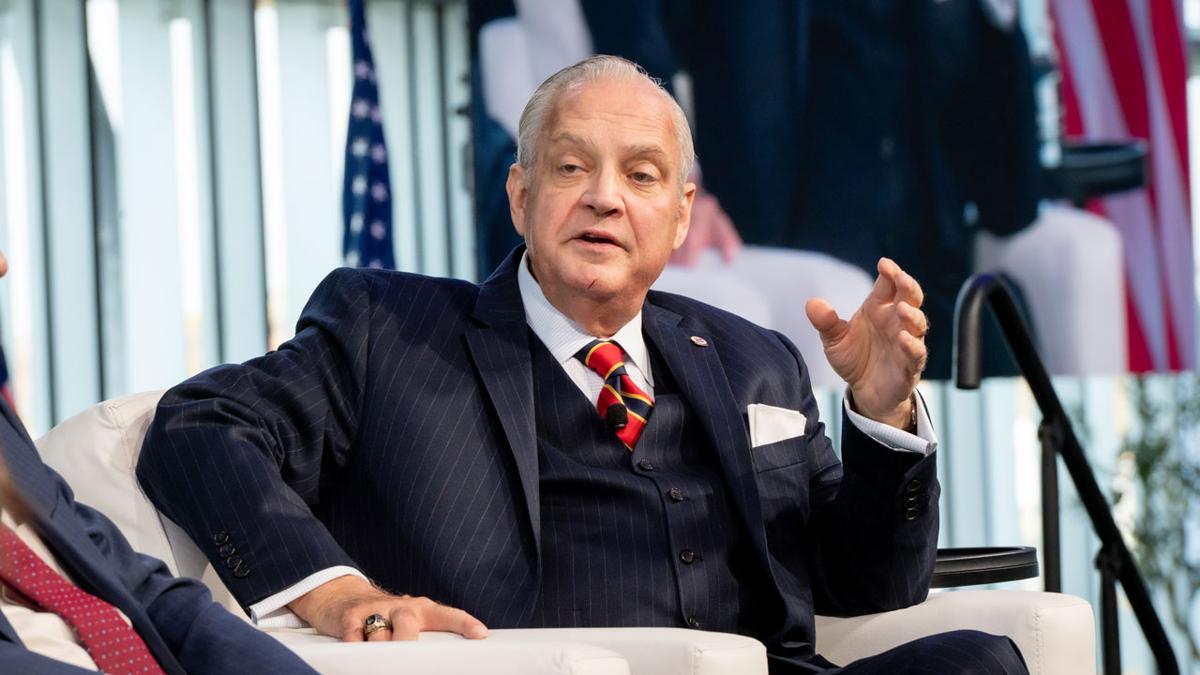
The Heritage Foundation stands as one of the most influential conservative think tanks in the United States, dedicated to advancing policies grounded in core American principles. Founded in 1973 and headquartered in Washington, D.C., Heritage has shaped the national policy debate for nearly five decades, promoting free enterprise, limited government, individual liberty, traditional values, and a strong national defense. Its work has impacted major legislative and administrative reforms that continue to affect American society today.
Over the years, the Heritage Foundation has expanded its scope from traditional conservative policy issues to address modern challenges such as economic freedom, energy independence, and national security in an increasingly complex global environment. The think tank’s commitment to independence and its funding model, relying on a broad member base, has allowed it to maintain an uncompromising conservative voice in the face of shifting political landscapes. This explainer gives a comprehensive overview of Heritage’s history, philosophy, policy initiatives, and enduring influence.
Origins and Philosophical Foundations
"The Heritage Foundation stands as the indispensable conservative engine defending free enterprise, limited government, and American values."
The Heritage Foundation was established during a transformative era in American politics, responding to a perceived drift away from constitutional principles and economic freedom. Its founders envisioned an organization dedicated to rigorous policy research that articulated conservative ideals clearly and effectively. Heritages’ mission is firmly rooted in belief in the free market as the best avenue for prosperity, the necessity of a limited but effective government, and the importance of traditional family and cultural values as the foundation of a stable society.
The institution's early work helped shape the Reagan era’s conservative resurgence, laying the intellectual groundwork for policies such as lower taxes, deregulation, and a stronger national defense. Heritage’s scholars produced studies, position papers, and briefs that offered legislators concrete alternatives to expansive government programs. This foundation remains critical: as Heritage continues to reaffirm the principles of individual rights and fiscal responsibility, it acts as a conservative compass amid the nation's political debates.
Major Policy Contributions and Legislative Impact
The Heritage Foundation’s influence is evident in numerous pivotal policy achievements over the decades. One of the most notable milestones was its role in the welfare reform movement culminating in the 1996 Personal Responsibility and Work Opportunity Reconciliation Act. This legislation fundamentally changed the welfare system by promoting work requirements and streamlining aid, emphasizing family structure as a critical element for long-term success and fiscal sustainability. Heritage’s research and advocacy provided the intellectual scaffolding for these reforms, showcasing conservative ideas in action.
Another key area of Heritage’s impact is in education policy, where it has vigorously championed school choice programs, including charter schools and vouchers. These efforts aim to empower parents and increase competition, fostering innovation and quality in education. Heritage’s involvement in promoting election integrity is an ongoing focus—highlighted by recent rankings such as the one that placed Washington State low on democratic security standards. Such evaluations underscore the foundation’s commitment to safeguarding the electoral process by advocating for transparent, accountable systems.
Advancing Economic Freedom and Energy Policy
In recent years, the Heritage Foundation has intensified its dedication to advancing economic liberty through initiatives such as the Free Enterprise Initiative launched in February 2026. This program underscores the importance of protecting private property rights, reducing regulatory burdens, and supporting entrepreneurship—all cornerstones of a thriving free-market economy. Heritage argues that robust economic freedom fosters innovation, job creation, and broad-based prosperity, countering the expansive government interventions advocated by its political opponents.
Energy policy has also become an area of focused research, particularly in light of global tensions and environmental challenges. The foundation’s Center for Energy, Climate, and Environment, recently bolstered by the addition of senior research fellow Jason Hayes, provides in-depth analysis advocating for energy policies that ensure American energy independence and economic security without compromising responsible stewardship. Heritage emphasizes technology-driven solutions and market-based approaches over heavy-handed regulations, which it sees as detrimental to both consumers and national competitiveness.
Engagement in National and Global Policy Discussions
Beyond policy papers, the Heritage Foundation plays a vital role in shaping public discourse and political strategy through events, lectures, and media engagement. The annual Feulner Lecture, named for the foundation’s longest-serving president, exemplifies Heritage’s commitment to intellectual rigor and leadership development. These events bring together policymakers, intellectuals, and activists to discuss pressing issues ranging from fiscal policy to cultural values, reinforcing the think tank’s position at the center of conservative policymaking.
Moreover, Heritage actively addresses international economic and security issues. For example, hosting dialogues with global figures such as Ben Black of the U.S. International Development Finance Corporation highlights its emphasis on leveraging private capital to strengthen the national economy and secure critical resources amid intensified global competition. Such engagements demonstrate how Heritage’s policy expertise extends beyond domestic borders and how it shapes U.S. responses to evolving geopolitical dynamics.
Independence and Funding Integrity
The Heritage Foundation’s operational model ensures its ideological independence and credibility within the conservative movement. Unlike some organizations that accept government grants or perform contract work, Heritage is proudly membership-driven, relying on over 500,000 individual supporters who fund its research and advocacy. This structure empowers Heritage to maintain a distinct voice free from federal influence or corporate strings, allowing it to challenge prevailing narratives with uncompromising clarity.
This autonomy has proved essential at a time when many institutions face pressures to conform to partisan, donor, or bureaucratic interests. Heritage’s commitment to factual accuracy, rigorous scholarship, and principled conservatism continues to attract a diverse coalition of supporters who prioritize liberty and opportunity. It also permits Heritage to address controversial topics candidly, including election integrity concerns, opposition to expansive government spending, and the defense of traditional social structures.
Criticisms and Conservative Challenges
While the Heritage Foundation commands respect within conservative circles, it is not without its critics. Skeptics on the left decry its positions as overly ideological, resistant to social progress, or dismissive of climate science. Even within conservative ranks, there can be debates over priorities and methods, such as the extent to which the foundation should engage on cultural issues or foreign policy complexities. Some conservatives argue that think tanks like Heritage must evolve strategies to address emerging political realities without sacrificing core principles.
Nevertheless, Heritage’s steadfastness on issues like limited government spending, free markets, and election integrity resonates with many grassroots conservatives. The foundation’s recent push for greater transparency on ESG investment returns underscores its effort to challenge trends in corporate governance perceived as hostile to shareholder interests and economic freedom. Moreover, its vigilance on election issues, as seen in their assessment of Washington State’s electoral policies, places it at the frontlines of protecting democracy against potential abuses.
The Role of Heritage in Contemporary Conservative Politics
Within today’s political ecosystem, the Heritage Foundation serves as a vital policy resource for Republican lawmakers, conservative activists, and opinion leaders. Heritage is often called upon to provide timely, research-backed responses to government policy proposals, regulatory shifts, and social debates. Its analysts contribute to legislative drafting, provide expert testimony, and engage in public education campaigns, helping conservatives articulate and implement their vision for America.
By addressing complex issues ranging from economic statecraft, energy policy, to family structure reform, Heritage continues to galvanize the conservative base while informing broader public conversations. Attention to national security concerns, such as warnings about ideological alliances in global conflicts, reveals its multifaceted approach to safeguarding American interests. For those aligned with limited government and constitutional governance, the foundation offers both intellectual ammunition and practical policy solutions—a combination difficult to find elsewhere.
Heritage’s Influence on Public Discourse and Media
Heritage’s outreach extends to influencing media narratives and cultural debates. In a media landscape scrutinized for bias and ideological slants, Heritage strives to offer robust conservative viewpoints grounded in research and traditional values. The foundation’s scholars regularly appear in media interviews, contribute opinion pieces, and respond to cultural shifts that affect American society, politics, and law.
This role is crucial as conservatives face challenges on multiple fronts—from debates over freedom of speech and religion, as reflected in the call for more clergy engagement in politics, to the assessment of government overreach blamed for high costs urging free-market solutions. Heritage’s voice offers a consistent counterbalance to progressive narratives, helping shape the ideological battlefield where American policies are forged.
Conclusion: Heritage’s Enduring Commitment
From its founding days to the latest initiatives, the Heritage Foundation remains a bulwark of principled conservatism. Its ongoing work defending free enterprise, traditional American values, and national security ensures that conservative ideas continue to play a dominant role in shaping public policy. In an era of cultural and political turbulence, Heritage provides clarity and direction founded on a vision of America as a land of freedom, opportunity, and limited government.
Conservatives and policymakers who value intellectual rigor, independence, and a commitment to foundational principles will continue to find in the Heritage Foundation a trustworthy ally. Whether confronting issues of election integrity, economic policy, or national defense, the foundation’s work exemplifies the conservative movement’s best traditions—fighting for an America where liberty flourishes.
For further exploration of Heritage’s contemporary efforts, readers can review the foundation’s push for transparency on ESG investments, their assessment of election integrity concerning Washington State, and related conservative takes on government costs and free markets.
Frequently asked questions
What is the Heritage Foundation’s mission?
Its mission is to promote conservative public policies based on free enterprise, limited government, individual freedom, traditional American values, and a strong national defense.
How does Heritage influence policy-making?
Heritage produces research, policy proposals, and legislative guidance that lawmakers and activists use to advocate for conservative reforms.
Is the Heritage Foundation a government-funded organization?
No, Heritage relies on private membership support and does not accept government funds or contract work, preserving its independence.
What are some major reforms Heritage contributed to?
Notably, Heritage influenced the 1996 welfare reform and has promoted school choice, election integrity, and economic freedom initiatives.
How does Heritage address contemporary issues like energy policy?
Heritage's Center for Energy, Climate, and Environment researches market-based solutions that support American energy independence and economic security.
Does Heritage engage in public events and discourse?
Yes, through lectures like the annual Feulner Lecture and discussions with policy leaders, Heritage fosters conservative dialogue and leadership.
What role does Heritage play in election integrity debates?
Heritage produces reports and rankings evaluating state election laws to promote transparent, accountable, and secure voting systems.
Timeline of our coverage
- 2026-11-13 — Religious Scholars Urge Clergy to Engage More in U.S. Politics
- 2026-11-13 — Nvidia CEO Resigns Amid China Chip Export Scandal
- 2026-11-12 — Conservative Panelists Blame Government for High Costs, Urge Free-Market Solutions
- 2026-11-08 — Heritage Foundation Pushes for Greater Transparency on ESG Investment Returns
- 2026-09-22 — Heritage Foundation Ranks Washington State Low on Election Integrity
- 2026-09-15 — Heritage Foundation Scholar Warns Congress on Alleged Islamist-Marxist Alliance
- 2026-09-04 — Fairfax County Ends Noncitizen Voter Referral Policy Amid Zero Prosecutions
- 2026-08-22 — Welfare Reform Architect Says Family Structure Is Key Legacy of 1996 Law
- 2026-07-29 — Fauci Invokes Fifth Amendment Over 100 Times in Senate COVID-19 Hearing
- 2026-07-27 — Experts Warn U.S. Missile Stockpiles Depleted by Iran Conflict
- 2026-07-21 — Appeals Court Rejects Biden’s Effort to Block Release of Memoir Interview Recordings
- 2026-07-19 — Colombia’s Incoming Foreign Minister Pledges Stronger U.S. Alliance, Pushback on China
- 2026-07-18 — Intelligence Documents: China Sought to Stoke 2020 BLM Riots to Undermine Trump
- 2026-07-10 — Cultural Shift in Obscenity Enforcement
- 2025-11-19 — Wikipedia Faces Criticism Over Alleged Bias Amid Culture Wars
- 2025-11-04 — Internal GOP Struggles Focus on J.D. Vance's Foreign Policy Views
The Bottom Line
- Heritage shapes conservative policy nationally, offering rigorous research grounded in fundamental American principles.
- Its advocacy has directly influenced landmark reforms in welfare, education, and economic freedom.
- By maintaining financial independence, Heritage preserves an uncompromised conservative voice amid shifting political winds.
- The foundation’s engagement in election integrity and economic debates defends the foundations of democracy and prosperity.


Sources
- Congress.gov
- Thedailybeast.com: Maga Aide Accused Of Trying To Bring Drugs Into Senate
- Founded in 1973, The Heritage Foundation is a conservative think tank based in Washington, D.C., focusing on public policies rooted in free enterprise, limited government, individual freedom, traditional American values, and a strong national defense. (https://www.heritage.org/2017 index culture and opportunity/about the heritage foundation?utm source=openai)
- In February 2026, Heritage launched the Free Enterprise Initiative to advance and defend economic freedom, emphasizing private property rights and business growth. (https://www.heritage.org/press/heritage enhances free enterprise efforts new initiative and expanded team?utm source=openai)
- In July 2026, Jason Hayes joined Heritage as a senior research fellow in the Center for Energy, Climate, and Environment, highlighting the foundation's commitment to energy and environmental issues. (https://www.heritage.org/press/heritage welcomes new senior research fellow the center energy climate and environment?utm source=openai)
- In August 2026, Heritage honored Dr. Edwin J. Feulner, its longest serving president, by hosting the annual Feulner Lecture with keynote speaker Charles R. Kesler. (https://www.heritage.org/press/the heritage foundation honors edwin j feulners legacy 2026 feulner lecture?utm source=openai)
- In October 2026, Heritage hosted a discussion with Ben Black, CEO of the U.S. International Development Finance Corporation, on leveraging private capital to strengthen the economy and secure critical resources. (https://www.heritage.org/international economies/event/investing americas future economic statecraft age global competition?utm source=openai)
- Heritage relies on the support of over 500,000 members and does not accept government funds or perform contract work, maintaining its independence. (https://www.heritage.org/about heritage/membership?utm source=openai)