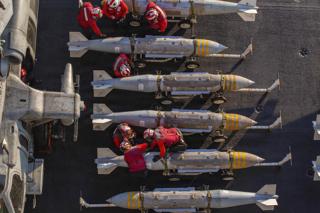
U.S. missile stockpiles have dropped to critical levels following extensive use in the recent conflict with Iran, according to national security experts and defense analysts. While President Donald Trump and White House officials insist the nation maintains ample munitions, independent estimates and defense specialists warn that inventories of key missile systems, such as Patriot interceptors, are now significantly reduced.
The debate centers on whether the U.S. can sustain its global defense commitments after expending large quantities of munitions in multiple theaters. The issue comes as the U.S. faces mounting security challenges in Europe, the Middle East, and Asia, with concerns that depleted missile reserves could limit the military’s ability to deter or respond to new threats.
Declining Missile Inventories
The Center for Strategic and International Studies (CSIS) estimates that at least 1,500 Patriot interceptors have been used during the Iran war, leaving fewer than 1,000 in stock for critical missile defense operations abroad. CSIS previously conducted a war game that projected U.S. missile supplies could last less than a week in a high-intensity conflict with China. Robert Peters, a missile defense expert at the Heritage Foundation, said the U.S. has used “an enormous amount of missiles, both offensive and defensive during Epic Fury,” the codename for the Iran operation.
"We’ve used an enormous amount of missiles, both offensive and defensive during Epic Fury."
— Robert Peters, Heritage Foundation missile defense expert
Peters noted that U.S. missile stocks have also been strained by transfers to Ukraine and Israel, and warned that rebuilding inventories could take years. “You’ve got to appropriate the money to build more missiles at a higher rate than what we’re building today, and then the companies that build those interceptors have to expand production lines, which will take a few years,” he said.
The process of replenishing missile inventories is complex and time-consuming. Defense manufacturers must secure funding, expand production lines, and train additional workers. Even with increased appropriations, industry experts say it could take several years before stockpiles return to pre-conflict levels. This lag time raises concerns about the U.S. military’s ability to respond to unforeseen crises or simultaneous conflicts in different regions.
CSIS’s war game simulations have highlighted the vulnerability of current U.S. missile inventories. In scenarios involving high-intensity warfare, such as a potential conflict with China over Taiwan, the U.S. could exhaust its missile supplies in less than a week. These findings have prompted calls from defense analysts for urgent action to boost production and build up reserves.
White House and Industry Response
White House spokeswoman Anna Kelly rejected reports of dwindling munitions as “totally false.” She stated that the U.S. has “far more munitions than anyone in the world, and far more than we need,” and emphasized that defense companies are “making more munitions than they have ever made before, in addition to expanding their plants and equipment at record levels.” Kelly added that as production increases, the U.S. will “start issuing more to our allies in Europe and elsewhere.”
A D.C.-based national security expert argued that the main risk is not a lack of munitions, but insufficient support from traditional European allies. The expert credited the Trump administration for pushing allies to contribute more missiles and for identifying gaps in allied capacity.
Industry officials also point to recent investments in expanding manufacturing capacity. Major defense contractors have announced plans to hire additional workers, upgrade facilities, and streamline supply chains. These efforts are intended to accelerate the production of both offensive and defensive missile systems, but experts caution that such changes will not yield immediate results.
Broader Security Implications
Gregg Roman, executive director of the Middle East Forum, said there is currently no shortfall in weapons to counter the Iranian threat, but warned that shortages could emerge if the U.S. is forced to respond to a Chinese invasion of Taiwan or a major Russian offensive in Ukraine. Roman questioned whether the U.S. has a strategy to eliminate adversaries’ missile capabilities at the source, rather than relying solely on interception.
The CSIS report, Last Rounds: The U.S. Munitions Problem, corroborates concerns about the time and investment required to rebuild missile stockpiles, noting that expanding production capacity involves new construction, equipment, and workforce training. The report also highlights the risk that current inventories may be insufficient for simultaneous conflicts in multiple regions.
While critics argue that U.S. munitions policy has left the country vulnerable, administration officials maintain that production is ramping up and that the U.S. remains the world’s leading missile power.