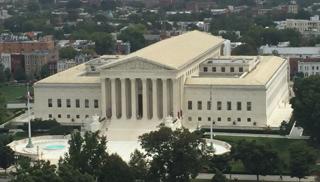
The Voting Rights Act: Judicial Battles Over Race and Redistricting
Explore the complex legal landscape of the Voting Rights Act, its impact on racial gerrymandering, and ongoing Supreme Court decisions shaping American elections.
Additional reporting by Liam Walker

The Voting Rights Act (VRA) of 1965 stands as a landmark federal law designed explicitly to eradicate racial discrimination in voting across the United States. Passed during the height of the civil rights movement, the legislation targeted deeply entrenched practices like literacy tests, poll taxes, and other barriers that disenfranchised minority voters, particularly African Americans. These obstacles were institutionalized in many southern states, effectively excluding millions from the political process. The VRA’s historic enactment reflected a significant federal commitment to reassert and enforce the constitutional right to vote for all citizens, irrespective of race.
Over the decades, the VRA has been pivotal in expanding minority political representation and ensuring greater electoral participation among racial and language minorities. Its enforcement mechanisms, including preclearance requirements and the prohibition of discriminatory voting practices, brought measurable progress. Yet, as the nation evolved, so did the challenges to the VRA’s provisions. Increasingly, litigation over how electoral district lines are drawn—particularly with respect to race—has become a central battleground, revealing tensions between the Act’s protections against discrimination and constitutional limits on racial considerations in politics. These disputes reflect broader questions about the balance between race-conscious remedies and the principle of equal representation.
Redistricting, the process conducted every ten years following the census, shapes the political landscape by determining how populations are grouped into congressional, state legislative, and local districts. The way these lines are drawn can substantially influence electoral outcomes, party control, and minority representation. Under the VRA, jurisdictions cannot adopt redistricting plans that dilute the voting power of racial minorities, often leading to the creation of majority-minority districts—districts where a racial minority group forms the majority. The rationale has been that such districts empower minorities to elect candidates who represent their interests, correcting historical underrepresentation.
"The Voting Rights Act’s future hinges on balancing anti-discrimination with constitutional limits on racial classifications in redistricting."
However, the specific standards that govern when and how these districts must be drawn remain highly contentious and subject to evolving court interpretations. Challenges revolve around distinguishing permissible remedies from unconstitutional racial gerrymandering—where race is the predominant factor without sufficient justification. Recent Supreme Court decisions have begun to refine and, in some instances, narrow the reach of the VRA in this context, requiring states and courts to carefully navigate the fine line between protecting minority voters and adhering to constitutional constraints.
The Foundational Principles and Legal Framework of the VRA
The VRA's legal foundation rests substantially on Section 2, which prohibits voting standards or procedures that result in discrimination against racial or language minorities. Notably, this section bans discriminatory effects regardless of intent: a practice can violate the law if it leads to unequal voting opportunities. This results-oriented approach has made Section 2 the primary vehicle for challenging redistricting maps that fragment minority populations to weaken their electoral influence—a practice widely known as vote dilution.
The enforcement of Section 2 over time spurred the construction of numerous majority-minority districts across the country, fundamentally altering political power dynamics. These districts have enabled minority communities, especially African Americans, to elect representatives of choice and gain legislative influence. Supreme Court precedents, such as Thornburg v. Gingles, have set stringent criteria for when race can be a decisive factor in districting, ensuring that the VRA’s protections support rather than undermine democratic principles.
Nevertheless, courts face inherent tensions when applying these principles. On one side, minority advocates stress the ongoing necessity of majority-minority districts to counteract persistent discriminatory effects in elections. On the other, critics—often including conservative legal scholars and justices—contend that excessive reliance on race in drawing districts fosters racial classifications that the Equal Protection Clause aims to prevent, potentially engendering electoral tribalism and diminishing overall representational fairness. The Supreme Court’s evolving jurisprudence reflects continuous judicial efforts to balance these competing concerns.
Recent Supreme Court Decisions Reshaping the VRA’s Application
A critical turning point in the modern VRA landscape came with the Supreme Court’s 2023 decision in Allen v. Milligan. The case addressed Alabama’s congressional map, which concentrated Black voters into a single majority-Black district despite the state's Black population being roughly one-third. The Court, in a narrow 5-4 ruling, concluded that this likely violated Section 2 because it effectively diluted Black voters’ influence in other districts, depriving them of the opportunity to elect candidates of choice in proportion to their population.
The ruling upheld the injunction against Alabama’s map, mandating the creation of a second majority-Black district. This reinforced the continued vitality of the VRA’s anti-dilution provisions, signaling that states cannot evade responsibilities to minority voters through so-called 'race-neutral' maps that nonetheless reduce minority voting strength. The decision also highlighted the Court's complex stance: reaffirming protections against minority vote dilution while emphasizing that race cannot be the predominant factor without strong justification, thereby signaling constitutional limits.
In the aftermath, Alabama’s legislature attempted compliance by redrawing its districts, but the subsequent map again faced judicial rebuke for falling short of VRA standards. A federal court explicitly rejected the revised plan, appointing a special master to produce a map that effectively balanced minority representation and legal requirements. This drawn-out, complex process illustrates the continuing difficulties states encounter in reconciling judicial mandates with political realities and local preferences—a dynamic that exacerbates debates over states’ rights and perceived judicial activism.
Meanwhile, in Louisiana, the Supreme Court took decisive action amidst similar allegations of racial vote dilution. The Court lifted a stay on litigation challenging Louisiana’s congressional map, potentially paving the way for a second majority-Black district. This move comes after earlier rulings such as Cooper v. Harris, where the Court struck down districts deemed unconstitutional racial gerrymanders. Current rulings demonstrate a nuanced judicial effort to enforce the VRA’s protections without endorsing race as the sole or predominant factor in districting decisions.
Our in-depth coverage probes how the Supreme Court limited racial gerrymandering in redistricting and recently upheld Alabama’s congressional map amid controversial debate. These rulings collectively recalibrate how race-conscious redistricting fits within constitutional parameters, impacting the electoral calculus for states and minority communities alike.
The Broader Political Implications and Party Strategies
The VRA’s application in electoral mapmaking has significant political ramifications beyond legal doctrine. Majority-minority districts, while historically instrumental in enhancing minority representation, also play into partisan strategies. Democratic lawmakers have traditionally supported robust majority-minority districts as a way of empowering minority voters and consolidating political gains. In contrast, Republican legislators frequently challenge such maps as racial gerrymanders inconsistent with constitutional equal protection guarantees and harmful to electoral competitiveness.
Yet, political strategies are adapting. Recent polling reveals some Democratic openness to redistricting Black majority districts in ways that might diffuse minority voters across multiple districts. This approach reflects a pragmatic recognition that concentrating minority voters too heavily can paradoxically diminish overall minority influence by ceding additional districts to opposing parties. It highlights the tension between racial representation and partisan advantage, underscoring complex intra-party debates about optimizing electoral outcomes within the VRA’s legal constraints.
Republican advocates emphasize the importance of neutral, traditional redistricting criteria—such as respect for political subdivisions, compactness, and communities of interest—over race-based considerations. They argue that this approach better preserves electoral integrity and fairness, while avoiding constitutional pitfalls associated with racial tribalism. Such perspectives align with recent Supreme Court decisions curtailing predominant racial considerations, underscoring the need for electoral maps to reflect geographic and political realities rather than overly racialized metrics.
These evolving dynamics underscore ongoing questions about the proper role of federal courts and agencies in election administration. Conservative voices often critique the VRA's application as an instrument of federal overreach into state election laws, advocating for more deference to states’ authority. Conversely, supporters maintain that vigilant judicial enforcement is essential to dismantle subtle, persistent barriers to minority voters—a debate that remains a defining feature of American voting rights policy.
Navigating the Complexities of Voting Rights Enforcement Today
Today’s enforcement of the Voting Rights Act is a legal and political tightrope. Courts must protect minority voters from discriminatory practices while simultaneously respecting constitutional limits that prohibit racial classifications lacking strict scrutiny justification. This complexity renders redistricting litigation among the most contentious arenas of currently charged political battles with far-reaching implications for representation and governance.
Besides redistricting, the VRA also informs challenges against voter ID laws, early voting restrictions, registration procedures, and other election protocols that vary widely by state. Our extensive tracker of voting rules by state documents these variations, illuminating how differing policies affect minority voters’ access to the ballot. Conservative concerns about some enforcement policies include overburdening state election systems and raising the specter of voter fraud, though proponents counter that easing access undermines election security—a contentious policy debate intertwined with VRA enforcement.
The future of the VRA is intimately tied to developments at multiple levels: upcoming Supreme Court vacancies, shifting state legislative landscapes, and public advocacy efforts. As courts continue to refine the legal contours surrounding race and electoral maps, sustained engagement and scrutiny will be essential. Equally, legislative debates over potential reforms or restorations highlight the broader ideological divide over how to safeguard democracy while respecting constitutional principles.
Conclusion: The Enduring Debate Over Race, Representation, and the VRA
The Voting Rights Act remains one of the most consequential yet polarizing statutes shaping American democracy. While its core mission has been to ensure equal access to voting rights regardless of race, its application—especially in redistricting—continues to provoke legal and political contention. Supreme Court rulings have reinforced the need to prevent racial vote dilution yet also placed meaningful limits on how race can be factored into districting to avoid unconstitutional racial gerrymandering.
These legal frameworks compel states continually to rethink electoral maps and prompt voters and political actors to adapt to evolving standards. Although the VRA’s intent is indisputably to advance fair minority representation, the practical challenges of race-conscious districting provoke difficult constitutional questions and competing partisan interests. As we document extensively in our reports on the Supreme Court hearing key redistricting cases and the limits on racial redistricting, the debate over racial justice and equal representation in voting rights law is ongoing and will shape American politics for generations to come.
Frequently asked questions
What is the primary purpose of the Voting Rights Act?
The VRA aims to eliminate racial discrimination in voting and ensure minority voters can participate fully and fairly.
What does Section 2 of the VRA prohibit?
Section 2 prohibits voting practices or redistricting plans that result in racial discrimination or dilute minority voting power, even without intentional discrimination.
How has the Supreme Court impacted the VRA’s enforcement recently?
The Court has reaffirmed protections against racial vote dilution but also imposed limits on how race can be used in redistricting to avoid racial gerrymandering.
Why are majority-minority districts controversial?
Although designed to empower minorities, majority-minority districts can sometimes concentrate minority voters excessively, reducing influence in surrounding districts and raising constitutional concerns.
How do political parties influence redistricting under the VRA?
Both major parties weigh racial and political factors when drawing district lines, seeking to maximize electoral advantage while complying with or challenging VRA requirements.
What role do federal courts play in enforcing the VRA?
Federal courts evaluate and can block redistricting plans that violate the VRA or constitutional standards, often appointing special masters to draw compliant maps if necessary.
Can states enforce voting rules independently of the VRA?
While states control many election procedures, they must comply with the VRA and constitutional protections against racial discrimination.
Timeline of our coverage
- 2026-06-03 — Supreme Court Upholds Alabama's Congressional Map Amid Controversy
- 2026-05-14 — Poll Reveals Democrats' Willingness to Redistrict Black Majority Districts
- 2026-05-12 — Supreme Court Allows Alabama to Move Forward with Race-Neutral Congressional Map
- 2026-05-01 — Supreme Court Declares Louisiana's Racial Gerrymandering Unconstitutional
- 2026-04-30 — Supreme Court Ruling Limits Racial Gerrymandering in Redistricting
- 2026-04-29 — Supreme Court Limits Race-Based Redistricting in Louisiana Case
- 2025-10-17 — Supreme Court Hears Arguments in Key Redistricting Cases
- 2025-10-15 — Supreme Court Hears Arguments on Racial Discrimination in Redistricting
- 2025-10-13 — Louisiana Appeals to Supreme Court on Race-Based Redistricting
- 2025-09-11 — Voter Intimidation Case Highlights Concerns Over Political Violence
The Bottom Line
- The VRA protects minority voters from racial discrimination and vote dilution, preserving democratic fairness.
- Supreme Court rulings are redefining how race can be used in drawing electoral districts, impacting future elections.
- Redistricting disputes influence party control and the balance of political power in Congress and state legislatures.
- Efforts to enforce or reshape the VRA reflect broader debates over states’ rights, federal oversight, and election integrity.