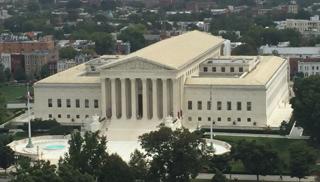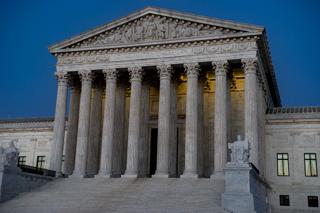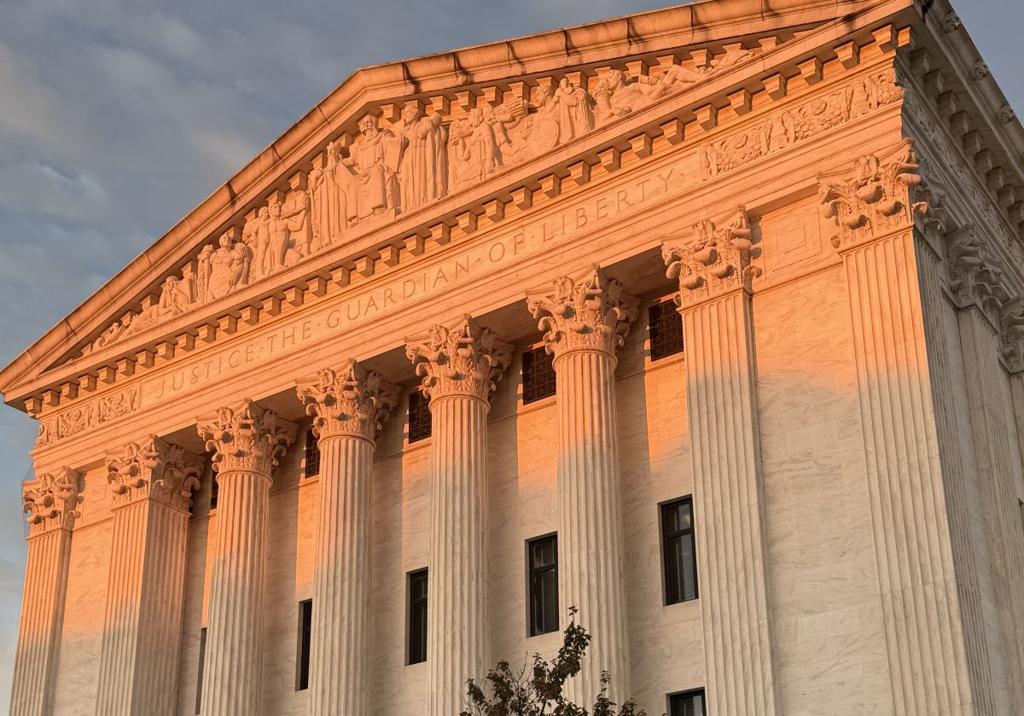
The U.S. Supreme Court heard oral arguments on October 15, 2025, in two significant redistricting cases, Louisiana v. Callais and Robinson v. Callais, which could have far-reaching implications for electoral politics in the United States.
The cases revolve around the use of race in Louisiana's congressional map. Initially, the map included one black-majority district, but a lawsuit prompted lawmakers to redraw it, creating a second black-majority district. This change has led to further legal challenges regarding the legality of using race in redistricting.
"We are responding to current-day manifestations of past and present decisions that disadvantage minorities."
— Ketanji Brown Jackson, Associate Justice
During the proceedings, justices questioned the parties involved about the facts of the cases and the ongoing judicial debate surrounding the Voting Rights Act's Section 2 and the equal protection clause of the 14th Amendment.
Associate Justice Ketanji Brown Jackson suggested that states should consider race in redistricting, arguing that systemic barriers have historically limited access to the electoral process for black Americans. "We are responding to current-day manifestations of past and present decisions that disadvantage minorities," (U.S. DOJ) Jackson stated, emphasizing the need for remedies to ensure equal access to voting.
Justice Clarence Thomas raised critical questions about the federal district court's influence on the new map. He asked Louisiana Solicitor General Ben Aguiñaga about the court's order that led to the creation of the second black-majority district. Aguiñaga confirmed that the court's decision was the sole reason for the new map's existence, stating, "We fought tooth and nail in the Robinson litigation... [the new map] exists because of that court decision." (U.S. DOJ)
Principal Deputy Solicitor General Hashim Mooppan, representing Louisiana, engaged in a contentious exchange with Justice Sonia Sotomayor. Mooppan argued that if the voters in question were white, there would be no debate about creating an additional district. "If these were white Democrats, there’s no reason to think they would have a second district," (U.S. DOJ) he asserted, highlighting what he described as a racial double standard in the arguments for the second district.
Justice Neil Gorsuch questioned NAACP Legal Defense Fund lawyer Janai Nelson about the implications of allowing federal district courts to order maps that may intentionally discriminate based on race. Gorsuch noted, "Do they have the ‘breathing room’ to intentionally discriminate on the basis of race?" (U.S. DOJ) Nelson responded that states do not have the leeway to intentionally discriminate but can use race to address their own discrimination.
Justice Brett Kavanaugh raised the issue of an "end point" (U.S. DOJ) for race-based remedies in redistricting. He asked Nelson how long such remedies should last, to which she replied that a race-based remedy should have a time limit, but she did not specify what that limit should be. Kavanaugh pressed further, indicating that the application of race in redistricting should not be indefinite.
The arguments highlighted the complexities of balancing the need for fair representation with the principles of equal protection under the law. As the justices deliberate, the outcomes of these cases could reshape how states approach redistricting and the role of race in electoral maps.
The Supreme Court's decision in these cases is expected to be issued in the coming months, potentially setting a precedent for future redistricting efforts across the country.