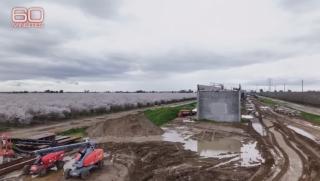
NextEra Energy Resources has announced plans to build a $13 billion natural gas power plant in Luzerne Township, Fayette County, Pennsylvania. The project, known as the East Riverside Energy Center, is part of a broader $17 billion investment tied to the U.S.-Japan trade agreement. The plant will be constructed on reclaimed coal mine land along the Monongahela River, with commercial operations scheduled to begin in phases starting in 2030.
Explainer The Attorney General’s Role in Upholding Justice and Election Integrity
The development marks a significant economic shift for Fayette County, a rural area that has faced decades of economic decline, high poverty rates, and population loss. Local officials and residents are weighing the promise of new jobs and increased tax revenue against concerns about environmental impact and potential opposition from the community.
Fayette County was once a hub for the coal and coke industry but now has a poverty rate near 16.8%. County commissioner Scott Dunn described the project as "absolutely the most significant investment in the county," emphasizing its potential to transform the local economy. The plant is expected to create approximately 2,000 construction jobs during the building phase and 100 permanent positions once operational. NextEra has secured purchase options on about 700 acres of land, with the plant itself planned to occupy roughly 150 acres.
Project Details and Timeline
The East Riverside Energy Center will consist of three combined-cycle power blocks. Each block will feature two gas turbines that feed a single steam turbine, resulting in a total generating capacity of 4.3 gigawatts. The facility will connect to the PJM Interconnection grid, which serves a large portion of the eastern United States. Commercial operations are planned to begin in three phases, with target dates in 2030, 2031, and 2032.
Of the $17 billion investment allocated to Pennsylvania under the U.S.-Japan agreement, $13 billion is dedicated to the Fayette County project. The first tranche of funding, announced on August 12, will be used for down payments on turbines and for selecting engineering and construction contractors. The plant will be developed and operated by NextEra, but ownership will be held by a special-purpose vehicle representing both the U.S. and Japanese governments. Financing for the project comes from Japanese capital, which will be repaid through the plant's electricity sales rather than by local ratepayers.
Supply agreements for natural gas, which will be sourced from the Marcellus Shale region, are still under negotiation. Contracts with engineering and procurement firms are also being finalized. The plant's connection to the PJM grid is seen as a strategic move, as the grid operator has warned of a projected shortfall of 6.8 gigawatts for the 2028-29 delivery year and potential reliability issues starting in June 2027.
Local Impact and Community Response
Commissioner Dunn said that property owners in the area were offered "life-changing money" for their land, and that the county's history of coal mining made it an attractive site for redevelopment. "If you’re going to build something like this, what a better place than reusing a property that otherwise has no use, and you’re so far away from neighbors that you’re not going to bother anybody," Dunn said. NextEra confirmed that the site consists of reclaimed surface-mined land, with other inactive mines nearby.
"This is absolutely the most significant investment in the county—and that’s not to disrespect anybody who’s made investments and started businesses in the county. I mean, this scale. This is beyond anything that we kind of comprehend could be here."
— Scott Dunn, Fayette County Board of Commissioners chairman
Dunn also noted that Fayette County already hosts a smaller gas-fired plant and has not received complaints about noise or air quality from that facility. He acknowledged that opposition to the new project is expected and said the county is preparing to address concerns as they arise. Importantly, the plant's owner will be a taxpaying entity, which is a key consideration for local schools and government services that rely on property tax revenue.
Broader Energy and Economic Context
The announcement of the East Riverside Energy Center comes at a time when the PJM Interconnection grid is facing reliability challenges due to projected capacity shortfalls. The new plant is expected to help address these issues by providing a significant source of electricity generation. The project is also seen as an opportunity to utilize Pennsylvania's abundant Marcellus Shale natural gas resources locally, rather than exporting them out of state.
Sen. Dave McCormick, R-Pa., commented on the region's industrial legacy, saying, "The Mon Valley region built the steel that built America. Now it’s going to build the power that fuels America’s future."
While many local officials and residents have expressed support for the investment and the jobs it will bring, some details remain unresolved. Contracts with end users for the plant's electricity have not yet been finalized, and environmental permitting processes are still underway. Community engagement and outreach efforts are expected to continue as the project moves forward, with supporters arguing that the plant will help revitalize a struggling region.