The U.S. Supreme Court is set to review Suncor v. Boulder, a high-profile climate litigation case, as scrutiny intensifies over major law firms representing energy companies while supporting organizations that train judges to rule in climate lawsuits. The case, docketed in August, centers on whether local governments can pursue state-based claims against energy firms for alleged climate damages, with the potential to trigger billions in liability for the industry, according to the Court’s official docket.
Explainer Understanding the Supreme Court’s Impact on Law and Liberty
The core dispute involves claims that leading law firms are defending energy companies in court while simultaneously supporting the Environmental Law Institute (ELI), a nonprofit that provides climate-focused judicial training. Critics argue this creates a conflict of interest and could influence judicial outcomes in cases that threaten the financial stability of major energy producers.
The litigation comes amid a surge in climate lawsuits targeting energy companies such as ExxonMobil, Suncor, BP, ConocoPhillips, and Phillips 66. If the Supreme Court rules in favor of Boulder, similar lawsuits could proliferate, raising the stakes for both the energy sector and the legal industry.
Law Firms’ Dual Roles Under Fire
Former Arizona Supreme Court justice Andrew Gould and former Arizona Attorney General O.H. Skinner have raised concerns that top law firms—WilmerHale, Arnold & Porter, and Latham & Watkins—are not only defending energy companies in climate cases but are also institutional members of ELI. Partners from these firms sit on ELI’s board, and the firms have hosted or contributed to ELI’s judicial training programs. Gould stated, “The pertinent question is not just whether firms’ relationships with ELI are technically permissible, but whether those commitments could create divided loyalties or constrain their professional judgment.”
"Adverse verdicts could extract tens of billions of dollars from the energy sector and effectively impose a national carbon tax on American consumers. Gas prices and utility bills would soar, left-wing activists and green advocates would cheer, and working families would bear the cost."
— O.H. Skinner, former Arizona Attorney General
WilmerHale represents ConocoPhillips in the Honolulu v. Sunoco litigation, Arnold & Porter represents BP in over 30 similar lawsuits, and Latham & Watkins represents Phillips 66 in multiple cases. All three firms are linked to ELI through board memberships and institutional support. None of the firms responded to repeated requests for comment, while a Phillips 66 spokesperson said the company is “confident in its legal representation” but declined further comment due to ongoing litigation.
Judicial Training and Influence Concerns
ELI’s Climate Judiciary Project claims to have trained 2,000 judges since 2018, a point of contention for critics who allege the training is designed to sway judges toward climate activist litigation. The attorneys general of 23 states previously called for an end to federal grants to ELI, alleging the group lobbies judges to make climate policy from the bench. ELI has denied these claims, stating its collaborators are impartial and leaders in their fields.
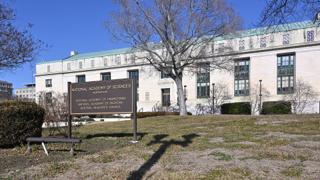
Gould and others argue that judges, often unfamiliar with complex climate litigation, may be unduly influenced by advocacy-driven training and studies. The Federal Judicial Center and National Academies of Sciences recently retracted a climate training manual for federal judges after criticism of bias, which included a foreword by Supreme Court Justice Elena Kagan. Kagan has not recused herself from Suncor v. Boulder, while Justice Samuel Alito has recused himself from the case.
Political and Foreign Influence Allegations
Congressional scrutiny has also focused on ELI’s alleged connections to the Chinese government, with Sen. Ted Cruz presenting evidence in a hearing that Communist China funds climate lawfare against U.S. energy companies. Cruz claimed these efforts have resulted in over $500 million in adverse judgments and are supported by more than $1 billion in foreign funding. The congressional investigation has not resulted in formal action against ELI, but the allegations have heightened concerns about foreign influence in U.S. climate litigation.
In March, President Donald Trump issued an executive order cutting off federal contracts with WilmerHale and suspending security clearances for its lawyers, citing alleged discriminatory hiring and support for partisan causes. The order was later struck down by a federal judge as unconstitutional, and the administration declined to appeal. Latham & Watkins and other firms avoided similar action by pledging $125 million each in pro bono work for non-leftist causes, according to a White House statement.
Broader Legal and Financial Stakes
The outcome of Suncor v. Boulder could set a precedent for more than 40 ongoing climate lawsuits against the energy industry, with potential damages that critics say could threaten the existence of major firms and raise costs for consumers. The American Petroleum Institute and other industry groups have filed amicus briefs urging the Supreme Court to limit state-based climate claims. The Court has requested responses from the parties, with filings and briefs continuing into the fall.
Supporters of ELI and the climate litigation argue that the legal actions are necessary to hold companies accountable for environmental harm. ELI has stated its training is impartial and focused on judicial education, not advocacy. The Supreme Court’s decision on whether to hear the case is expected to shape the future landscape of climate litigation in the United States.