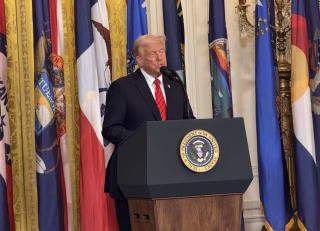
President Donald Trump said the White House is seriously considering a ban on U.S. diesel exports, as persistently high fuel prices put pressure on American consumers and businesses. Trump told Fox News last week that the administration is weighing the move, acknowledging it could also impact gasoline prices for drivers.
The proposal has sparked debate over whether such a ban would deliver meaningful relief or risk unintended economic consequences.
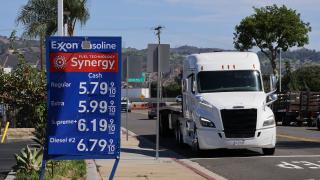
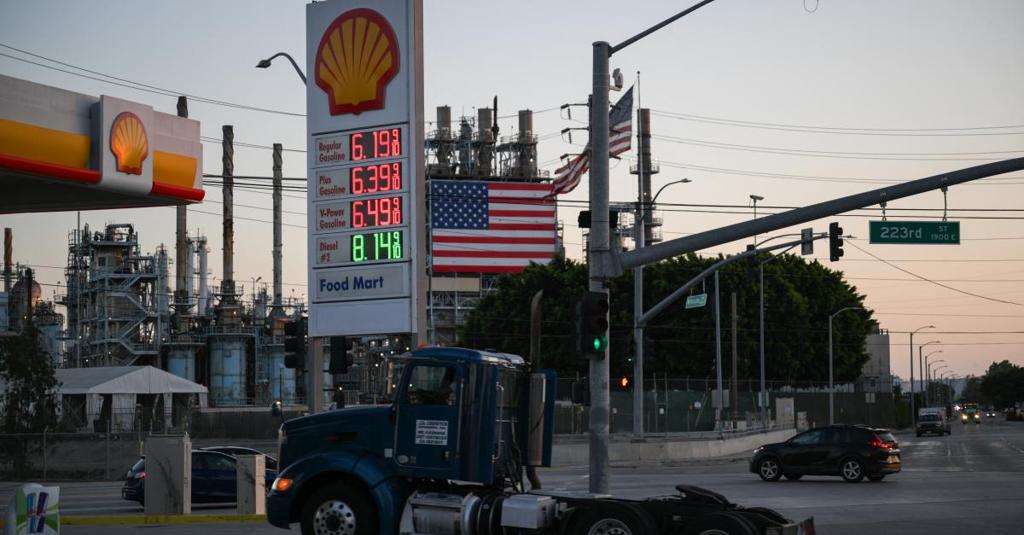
The discussion comes as diesel prices remain at historic highs, with U.S. averages dropping slightly from $6.52 to $6.41 per gallon this week, but still far above the $3.71 per gallon seen one year ago, according to AAA. The U.S. Energy Information Administration (EIA) reports that domestic distillate fuel stocks are at their lowest seasonal levels since records began in 1982, with the usual summer stock build failing to materialize. EIA weekly data confirms the sharp drop in inventories.
Lawmakers and Industry Response
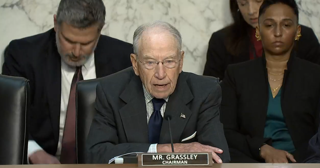
Support for the export ban has emerged among Iowa Republicans, including Sen. Chuck Grassley and Rep. Ashley Hinson. Grassley urged the White House to ignore oil industry opposition, arguing that domestic diesel prices should be prioritized for U.S. farmers and truckers.
"Big Oil doesnt need 2 charge sky-high diesel prices 4 Iowa farmers + truckers just filling up They shld cut price 4 US diesel&get the $$ frm other countries IF U CAN EMBARGO CHIPS U CAN EMBARGO DIESEL"
— Chuck Grassley, U.S. Senator
Hinson called for Congress to reconvene to pass a pause on diesel exports, stating, "Americans need relief and I’ll work with anyone to deliver."
Industry groups and analysts, however, warn that a ban could backfire. The Institute for Energy Research (IER) attributes high diesel costs to global supply disruptions, including conflicts in Russia and the Middle East, and the depletion of global stockpiles. The IER argues that restricting exports would not add supply to the world market and could raise prices in some U.S. regions due to logistical constraints.
Economic and Global Factors
Recent shutdowns and attacks on refineries in Russia and the Middle East have reduced global diesel output, driving up prices worldwide. Ukraine has increased drone strikes on Russian refineries, with half of Russia’s six largest diesel refineries cutting or halting production in September. Russia also imposed its own export ban in July. In the Middle East, nearly 3.52 million barrels per day of refining capacity had been shut down by May due to conflict in Iran, according to industry monitors.
These disruptions have contributed to the lowest U.S. distillate stocks for this time of year in over four decades, as confirmed by EIA data. The global nature of the diesel market means that supply shocks abroad quickly impact U.S. prices and availability.
Studies on Export Ban Impact
Analyses by the American Council for Capital Formation and McKinsey indicate that a diesel export ban would likely provide only short-term, regional price relief. The Council’s July 2022 study estimated that a ban without Jones Act waivers could shutter about 1.3 million barrels per day of refining capacity, raising prices on the East Coast, West Coast, and Rocky Mountains by 45 to 51 cents per gallon and reducing GDP by $44 billion. The McKinsey report found that while Gulf Coast and Midwest prices could drop by 20 to 25 cents per gallon, international prices would rise by about 60 cents, and import-dependent U.S. regions could see higher prices due to transportation bottlenecks.
The IER cautions that a ban could prompt U.S. refineries to close for deferred maintenance, further tightening supply. Refineries have been operating at 95% capacity for months, and if exports are blocked, some may shut down for repairs, putting upward pressure on prices.
Long-Term Risks and Policy Debate
Energy analyst David Blackmon wrote that government intervention in diesel markets could deter investment in new U.S. refining capacity, which already faces regulatory and permitting hurdles. Blackmon argued that a politically motivated export ban would add uncertainty for investors, potentially undermining future domestic production.
"Any ban on exports for any length of time implemented for transparently political reasons would almost certainly answer that question in the negative. America cannot afford for that to happen."
— David Blackmon, energy analyst
The IER maintains that only an end to global conflicts restricting refinery output would meaningfully lower diesel prices. The group recommends that policymakers focus on increasing supply and easing transportation restrictions, such as waiving the Jones Act, rather than imposing export bans. The White House has not announced a final decision on the proposal.