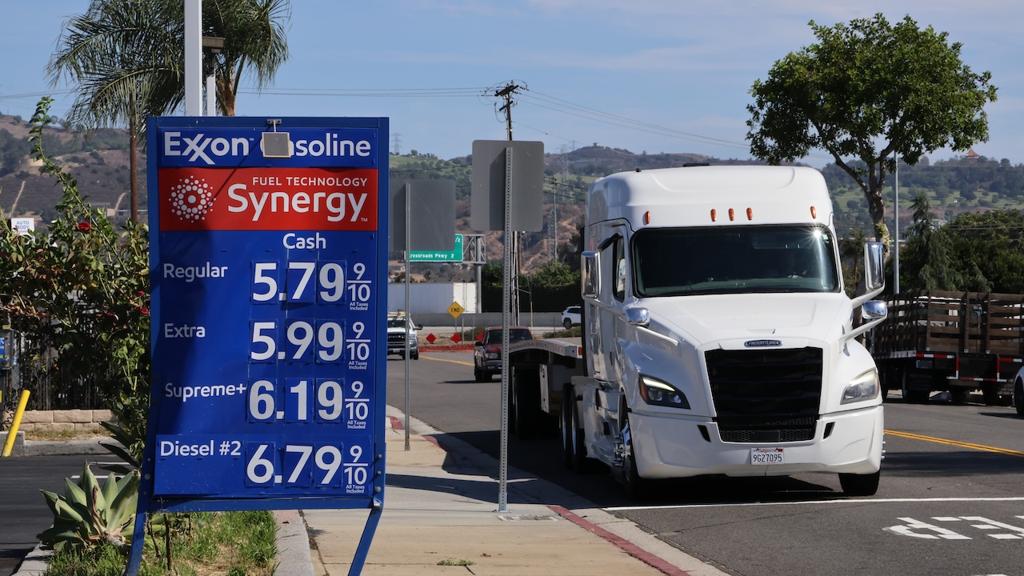
California drivers are facing the highest gasoline and diesel prices in the country, with the state average for regular gas reaching $5.88 per gallon and diesel hitting a record $7.87, according to AAA data as of Wednesday. The national average for regular gas stands at $4.22 per gallon, leaving California families paying nearly $1.70 more per gallon than the rest of the country.
Explainer California Elections: Low Turnout, Vote Counting Controversies, and Political Implications
The price gap has intensified a political fight over the causes of California’s high fuel costs, with state officials and critics offering sharply different explanations.
California’s elevated gas prices have become a recurring issue, with the state consistently outpacing national averages. The stakes are high for families and businesses, as energy costs ripple through the broader economy and fuel ongoing policy debates.
Record Prices and Recent Trends
AAA data show that California’s average price for regular gas is $5.88 per gallon, compared to the national average of $4.22. Diesel prices in California have surged to $7.87 per gallon, the highest recorded average in the state. County-level data confirm that prices remain elevated across major metro areas, with Los Angeles-Long Beach reporting regular gas at $5.92 and diesel at $7.86, and Fresno at $5.85 for regular and $7.89 for diesel.
The surge comes as California’s fuel prices have climbed steadily over the past month, with regular gas up nearly 30 cents and diesel up more than $1 since last month, according to AAA. The state’s highest recorded average for regular unleaded was $6.44 in June 2022, while the current diesel price marks a new record.
Refinery Closures and Supply Constraints
Industry analysts and federal data point to shrinking refining capacity as a key factor behind California’s price spike. The U.S. Energy Information Administration (EIA) reports that two major refineries—Phillips 66’s Wilmington facility in the Los Angeles area and Valero’s Benicia refinery in the Bay Area—have recently ceased or announced plans to cease operations, together representing about 17% of California’s refining capacity and 11% of the West Coast’s.
The EIA warned that the loss of these refineries is likely to increase fuel price volatility on the West Coast, as California’s limited pipeline connections to other U.S. refining hubs make it difficult to replace lost supply. The state’s unique gasoline blend requirements further restrict sourcing options, with most replacement fuel likely to come from imports in Asia.
Political Blame and Policy Disputes
Gov. Gavin Newsom has attributed rising gas prices in part to global factors, including conflict with Iran and disruptions to world oil markets. On Monday, Newsom used social media to criticize President Donald Trump, sarcastically thanking him for the price increases.
However, Rep. Vince Fong, R-Calif., argues that state energy policies are to blame for the widening price gap. Fong cited refinery closures, restrictions on domestic production, and high state gas taxes as factors driving up costs for California drivers. He also pointed to the state’s reliance on foreign oil imports from Iraq and Brazil.
"California’s gas crisis is the result of poor policy and incompetent leadership. Gavin Newsom has shuttered refineries, blocked domestic production, driven the highest gas taxes in the country, and made California dependent on foreign oil from Iraq and Brazil."
— Rep. Vince Fong, R-Calif.
Fong called for a shift in policy, urging California to increase domestic energy production and expand refining capacity, echoing former President Trump’s push for greater American energy independence. "The resources are here. The workers are here. The only thing standing in the way is Gavin Newsom," Fong said.
Lack of State Response
The Daily Signal reported that Newsom’s press office did not respond to a request for comment on the criticism of state energy policies. The EIA and AAA data do not attribute the price gap to a single cause, noting that both market disruptions and state-specific factors play a role.
The EIA’s analysis underscores that California’s unique fuel blend requirements and limited supply connections make the state especially vulnerable to refinery losses and global market shocks. The agency notes that most replacement fuels will likely come from imports, particularly from Asia, due to the specialized nature of California’s gasoline.